Why Do My Knees Hurt When I Squat? A Strength Coach’s Guide
Table of Contents
ToggleIn my years of coaching clients through lower-body strength routines, one question comes up more than any other: “Why do my knees hurt when I squat?” The moment someone feels a pinch or ache in their joints, their immediate instinct is to assume their knees are “bad” or that squats are inherently dangerous.
Nine times out of ten, that isn’t the case. Knee pain during loaded or bodyweight squats is rarely a sign of permanent damage—it’s simply your body signaling that your movement mechanics, ankle flexibility, or hip tracking need a quick tune-up.
Below, I’ll break down why joint pain happens when you drop into a squat, how to pinpoint your exact symptoms, and the step-by-step form fixes I use on the gym floor to help lifters get back to squatting completely pain-free.
Why Do My Knees Hurt When I Squat?
Direct Answer
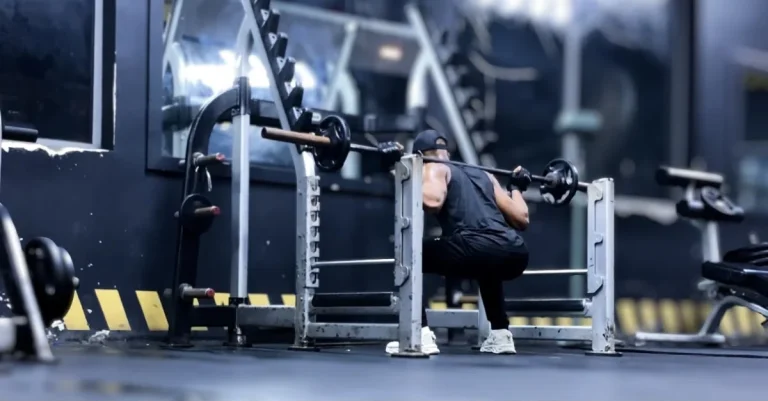
Quick Summary: Knee pain during squats is usually caused by knee valgus (inward knee collapse), restricted ankle mobility, or quad-dominant loading that shifts stress forward onto the patellar tendon. Correcting your stance width, pushing your knees outward over your toes, and initiating the squat with a hip hinge usually resolves joint discomfort.
Related Reading: How to Do Squats Correctly: Proper Form, Benefits & Common Mistakes
5 Main Reasons Why Your Knees Hurt When You Squat
1. Knee Valgus (Inward Knee Collapse)
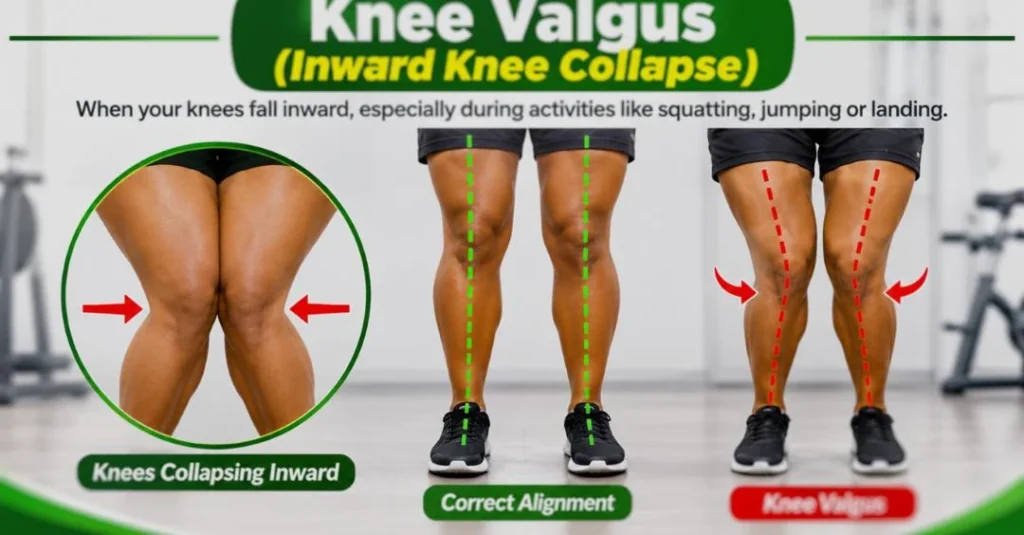
One of the single most frequent causes of front and inner knee pain I see in the gym is knee valgus.
This occurs when your knees cave inward toward each other during either the descent or the drive back up out of the bottom of a squat.
Clinical research on knee valgus and joint strain shows that this collapse unevenly distributes heavy compression forces across the joint capsule, placing intense shear stress on your ligaments and surrounding connective tissues.
- The Primary Cause: Weakness or under-activation of the gluteus medius (the outer glute muscle responsible for hip stability) combined with tight inner thighs.
- How to Spot It: Set up a camera or stand in front of a mirror. If your knees track inside your big toes instead of pointing out over your middle toes as you drive upward, your knees are caving in.
- Coach’s Note: Whenever I spot a client’s knees caving under a barbell, the first thing we do isn’t drop the weight—we slip a light mini-band right above their knees. Forcing them to push outward against the resistance instantly turns their glutes on.
2. Restricted Ankle Dorsiflexion (Tight Calves)
If your ankles lack the flexibility to bend forward (dorsiflexion), your body has to make up for that lost range of motion somewhere else in the chain.
When the ankle locks up mid-squat, your heels will either pop up off the floor, or your body will shift its entire center of gravity onto the balls of your feet.
This forward shift forces your knees to travel excessively far forward, significantly increasing patellofemoral joint stress.
- The Primary Cause: Tight Achilles tendons, stiff calf muscles (gastrocnemius and soleus), or old ankle injuries.
- How to Spot It: Your heels lift off the ground at the bottom of your rep, or you feel like you are going to fall backward unless you pitch your upper body dramatically forward.
- Coach’s Note: I’ve lost count of how many lifters thought they had broken knees, only to realize their ankles were completely locked up from sitting at a desk all day. Fix the ankle range, and the knee pain often vanishes instantly.
3. Quad Dominance and Lack of Hip Hinge
A solid squat requires a synchronized balance of knee flexion and hip extension.
A massive mistake many self-taught lifters make is initiating the squat by pushing their knees straight forward first, rather than sitting back into their hips.
This quad-dominant loading strategy transfers almost the entire exercise load directly onto the front of the knee joint, rather than sharing the work with your hamstrings and glutes.
- The Primary Cause: Faulty movement habits, sitting for long hours, or ignoring posterior chain development.
- How to Spot It: Your hips stay high while your knees break forward first, resulting in a dull ache or burning sensation across the top or front of the kneecap.
4. Incorrect Foot Stance and Outward Angle
Squatting with your feet pointing completely parallel works for a small percentage of people, but for most adults, it restricts natural hip room.
If your stance is too narrow or turned straight forward while your hip sockets naturally favor external rotation, that anatomical mismatch twists the knee joint under load.
- The Primary Cause: Forcing a rigid “one-size-fits-all” stance instead of tailoring your setup to your individual hip structure.
- How to Spot It: A pinching or grinding sensation deep inside the knee joint right as you reach parallel or deep depth.
5. Skipping Dynamic Warm-Ups and Rapid Weight Escalation
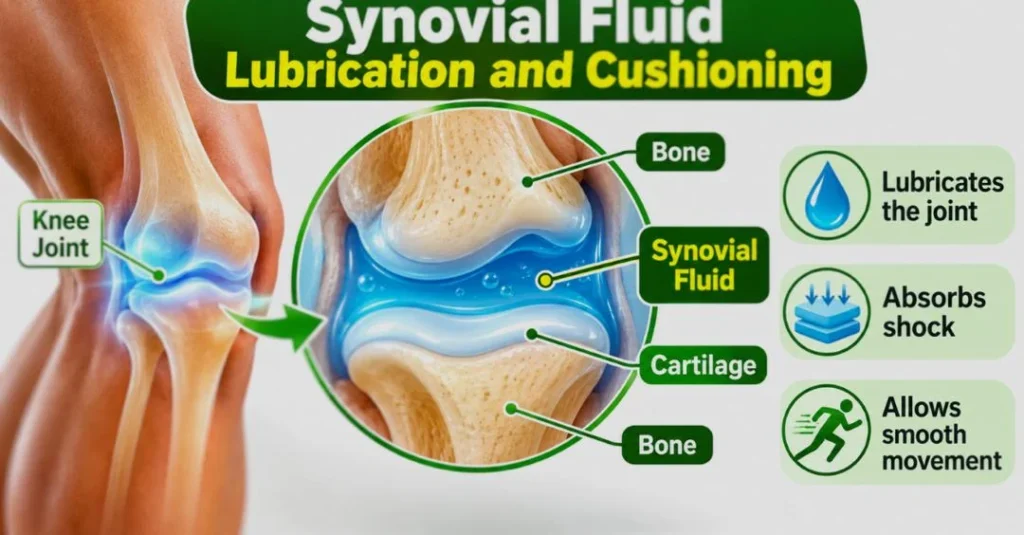
Jumping straight under a heavy barbell without warming up your joint fluid is a shortcut to tendon irritation.
Medical studies on synovial fluid lubrication demonstrate that articular cartilage requires movement and body heat to properly cushion the joint space under heavy mechanical load.
- The Primary Cause: Cold joint capsules, poor warm-up protocols, or adding weight too quickly.
- How to Spot It: An ache that shows up during your first warm-up set, feels slightly better as your body gets hot, and then returns worse the following day.
Pinpointing Your Symptom: Where Does It Hurt?
Knowing where your joint feels tender makes it much easier to correct:
- Pain Below the Kneecap (Anterior): Almost always tied to patellar tendinitis or excessive forward knee travel caused by stiff ankles.
- Pain Inside the Knee (Medial): Classic sign of knee valgus (inward knee collapse) straining the inner joint structures.
- Pain Above the Kneecap: Frequently caused by quadriceps tendon irritation from quad-dominant movement mechanics.
- Pain Behind the Knee (Posterior): Usually linked to deep squat compression or a lack of hamstring/calf flexibility.
How to Fix Knee Pain When Squatting: 4 Coach-Approved Steps
Here is the exact progression I use to eliminate squat knee discomfort and rebuild lower-body strength:
Step 1: Cue "Screw Your Feet into the Floor"
Before starting your descent, plant your feet firmly into the ground and actively attempt to rotate your feet outward into the floor (right foot clockwise, left foot counter-clockwise) without actually shifting their position.
Imagine trying to rip the floor apart between your feet. This creates torque in your hip sockets, engages your glutes, and keeps your knees tracking safely in line with your toes.
Step 2: Utilize Dynamic Hip and Ankle Activation
Stop stepping up to the squat rack cold. Dedicate 5 to 10 minutes to targeted joint preparation.
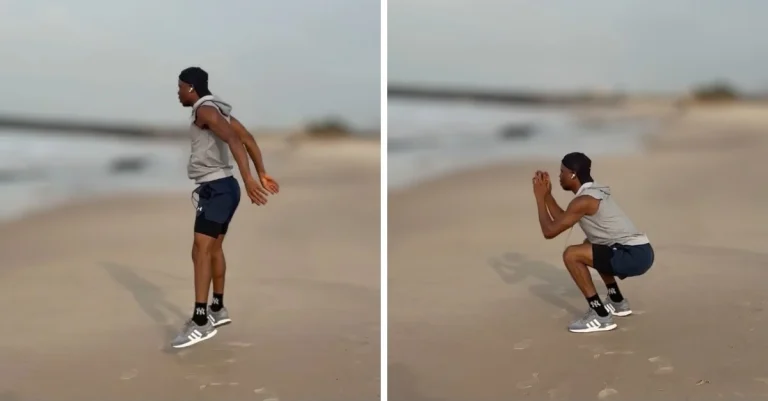
Incorporating protocols like dynamic leg swings helps open up hip joint mobility and loosen tight joint capsules, which should be followed by ankle circles and bodyweight tempo squats before adding loaded weight.
Step 3: Elevate Your Heels Temporarily
If restricted ankle flexibility is wrecking your knee position, place small 2.5 lb plates under your heels or switch to lifting shoes with an elevated heel.
Raising the heel artificially reduces the required ankle range of motion, allowing you to maintain an upright torso and reach clean depth without stressing your knees.
Step 4: Regress to Joint-Friendly Squat Variations
If heavy back squats are currently aggravating your joint, step back and train movement patterns that emphasize a vertical shin and hip loading:
- The Goblet Squat: Holding a dumbbell or kettlebell against your chest acts as a natural counterweight, making it effortless to sit back into your hips and maintain clean alignment.
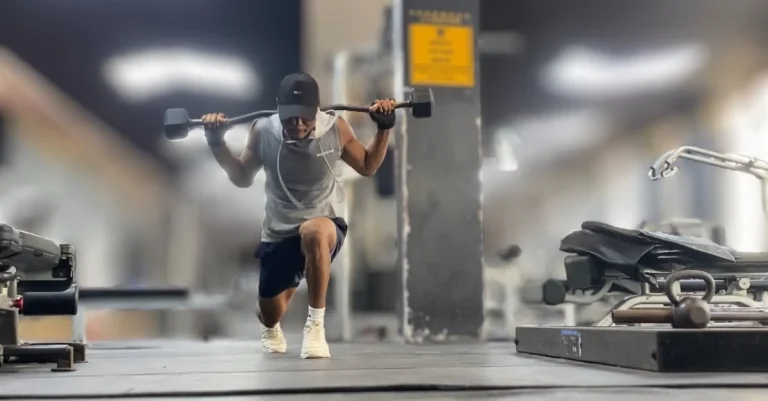
- The Side Lunge: Learning how to do side lunges with proper form is an exceptional way to strengthen the gluteus medius, improve lateral hip mobility, and fix single-leg muscle imbalances without placing heavy vertical compression on the knees.
Squat Knee Pain Troubleshooting Guide
| Symptom / Pain Location | Likely Cause | Immediate Form Fix |
|---|---|---|
| Knees caving inward | Weak glute medius & narrow stance | Widen stance slightly & push knees out over toes |
| Front kneecap aching | Quad dominance & poor ankle dorsiflexion | Hinge at hips first & elevate heels on small plates |
| Heels rising off floor | Stiff Achilles & tight calf muscles | Perform calf mobility work & use elevated squat shoes |
| Pain only under heavy loads | Tendon overload & fast progression | Reduce weight by 20% and use a controlled 3-sec eccentric tempo |
Frequently Asked Questions
Should I keep squatting if my knees hurt?
If you feel sharp, pinching, or swelling joint pain, stop the exercise and consult a sports physical therapist.
However, if it’s a mild movement-related ache, you don’t need to eliminate squats—simply lighten the load, adjust your stance, or temporarily switch to goblet squats while fixing your technique.
Why do my knees crack or pop when I squat?
Painless clicking or popping is typically crepitus, which is simply tiny gas bubbles popping inside the joint fluid or soft tissue sliding smoothly across bone.
According to joint crepitus research, as long as the popping isn’t accompanied by pain or joint inflammation, it is completely harmless.
Why do my knees hurt when I squat down without weights?
Unloaded knee discomfort usually stems from joint stiffness, poor ankle dorsiflexion, or glute under-activation rather than weight overload.
Focusing on active cardio and movement, like asking can you lose weight by walking as part of your overall daily routine, helps keep joint tissue active and healthy before assessing heavy squat mechanics.
Final Thoughts
Knee pain during squats is a signal to refine your technique, not a sign that squats are bad for your knees.
By improving your ankle mobility, cueing your knees outward to prevent valgus collapse, and priming your joints with dynamic warm-ups before heavy sets, you can build solid lower-body strength safely while protecting your joints long-term.
Join the Conversation
What squat cue or variation helped fix your knee pain? Drop a comment below with your experience or any questions about dialing in your stance!