How to Do a Goblet Squat with a Dumbbell (Proper Form & Benefits)
Table of Contents
ToggleHave you ever wondered why so many trainers recommend the goblet squat, especially for beginners and adults over 30?
When I first added goblet squats to my workout routine, I assumed they were an easier version of the traditional squat. But after practicing them consistently, I realized they were much more than that. Holding a dumbbell in front of your chest naturally encourages better posture, improves balance, and makes it easier to learn proper squat mechanics without placing excessive stress on your back.
If you’re over 30, maintaining lower-body strength becomes increasingly important. Everyday activities such as climbing stairs, lifting groceries, getting out of a chair, or playing with your children all rely on strong legs, stable hips, and a solid core. The goblet squat helps develop these movement patterns while remaining accessible to beginners and effective enough for experienced exercisers.
In this guide, you’ll learn how to do a goblet squat with a dumbbell using proper form, discover the muscles it works, explore its key benefits, avoid common mistakes, and find practical tips to help you perform the exercise safely and effectively.
Whether you’re training at home with a single dumbbell or following a structured strength-training program at the gym, the goblet squat deserves a place in your routine.
What Is a Goblet Squat?
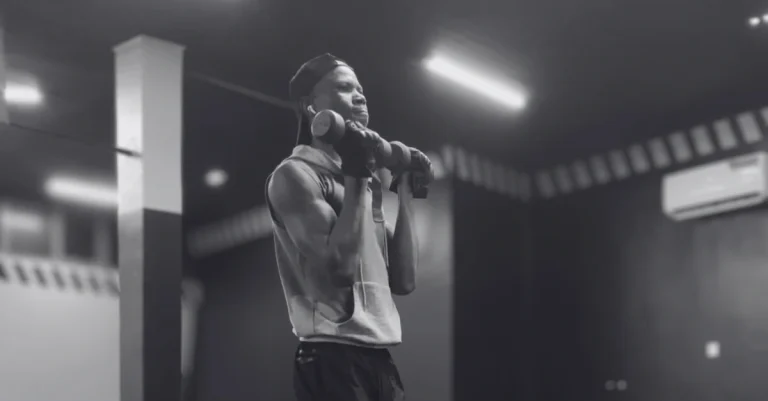
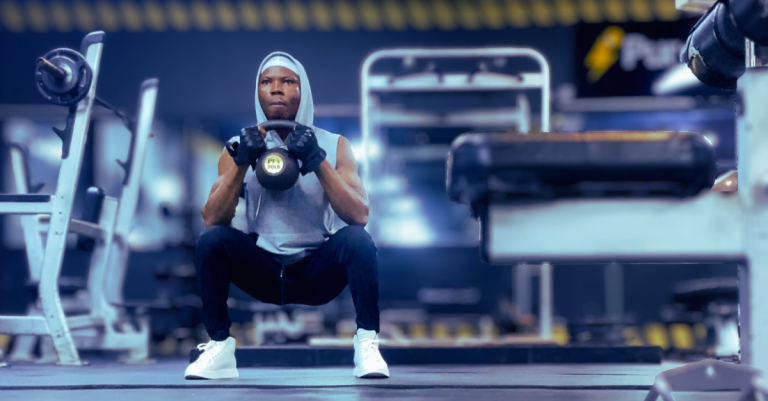
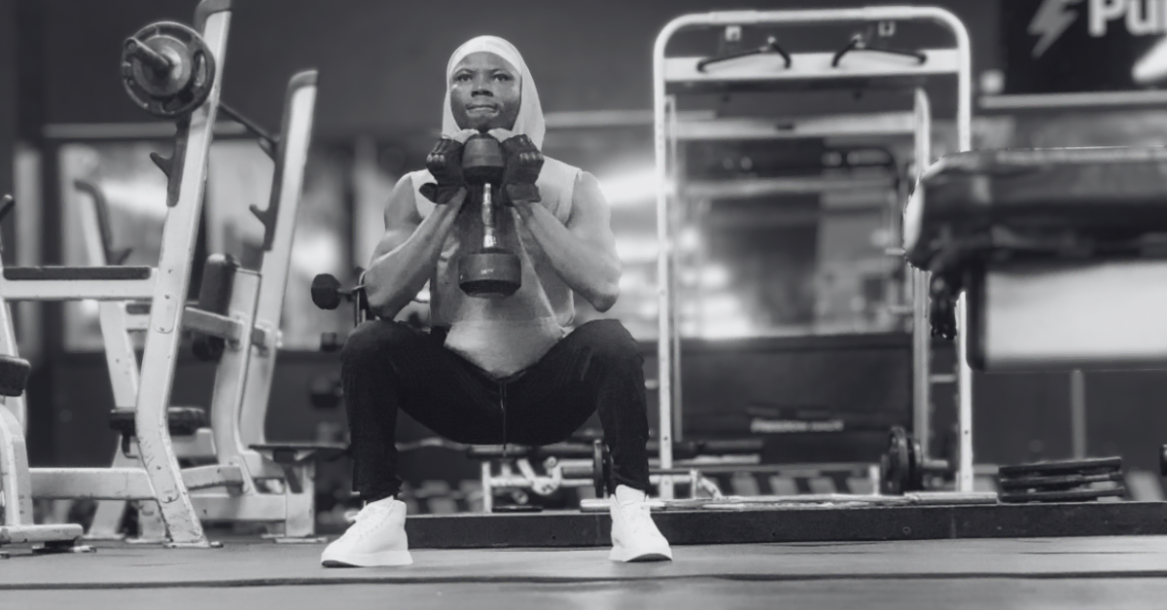
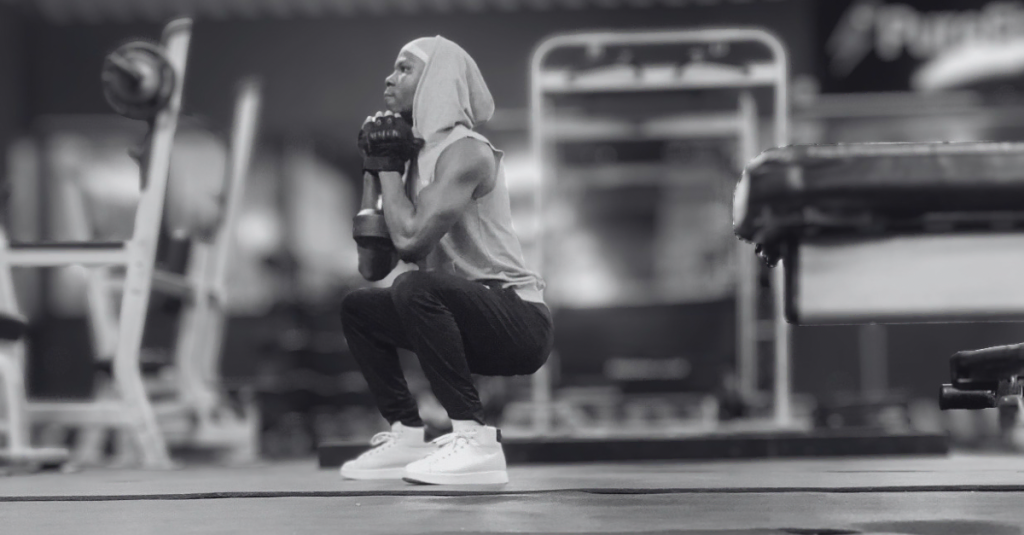
A goblet squat is a lower-body strength exercise performed by holding a dumbbell or kettlebell vertically against your chest while squatting. The weight is held close to your body, allowing you to maintain a more upright torso than many other squat variations.
This front-loaded position naturally encourages good posture, making the goblet squat one of the best exercises for learning proper squat technique. Because the weight acts as a counterbalance, many people find it easier to squat deeper while keeping their chest lifted and their heels firmly on the ground.
Although the exercise primarily targets your quadriceps, glutes, and hamstrings, it also challenges your core, upper back, and shoulders as they work together to stabilize the weight throughout the movement.
For adults over 30, the goblet squat offers an excellent combination of strength training and functional movement. It helps build lower-body strength while improving balance, coordination, and mobility—qualities that become increasingly important with age.
If your goal is to lose fat, build muscle, or move better in everyday life, learning proper goblet squat technique is a great place to start.
How to Do a Goblet Squat with a Dumbbell
Learning proper goblet squat technique is more important than lifting a heavy dumbbell. Performing the exercise with good form helps you target the right muscles while reducing unnecessary stress on your knees and lower back.
If you’re new to strength training, start with a light dumbbell so you can complete each repetition with control. As your strength and confidence improve, you can gradually increase the weight while maintaining proper technique.
Step 1: Choose the Right Dumbbell
Select a dumbbell that feels challenging but manageable. Beginners often benefit from starting with a lighter weight to focus on mastering the movement before progressing to heavier resistance.
Hold the dumbbell vertically by one end, cupping the top plate with both hands so it rests comfortably against the center of your chest.
Step 2: Stand in the Correct Position
Stand with your feet approximately shoulder-width apart, and your toes pointed slightly outward.
Before you begin the movement:
- Stand tall.
- Keep your chest lifted.
- Brace your core.
- Relax your shoulders.
- Look straight ahead.
This stable starting position helps you maintain good posture throughout the exercise.
Step 3: Lower Into the Squat
Begin the movement by pushing your hips back before bending your knees.
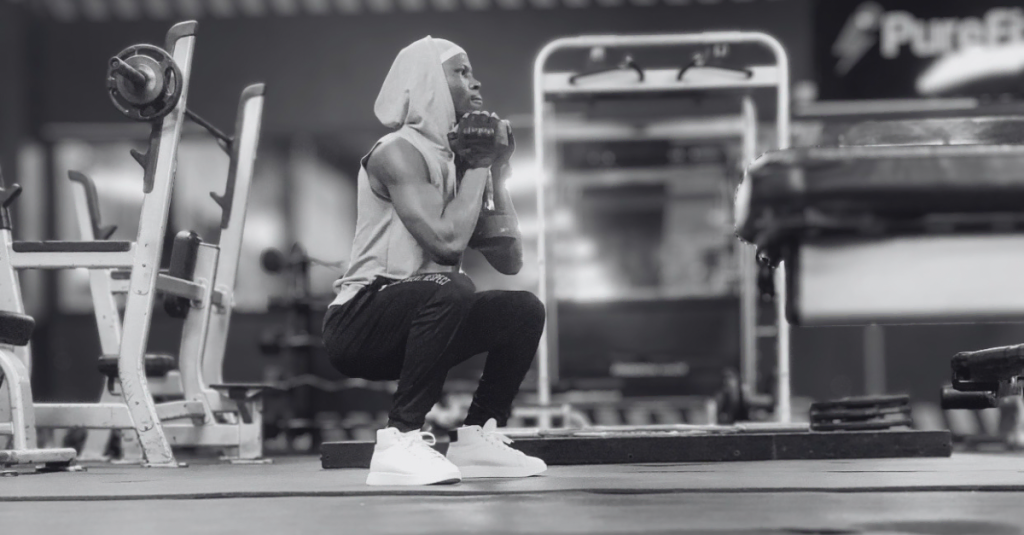
Lower your body under control until your thighs are approximately parallel to the floor, or as low as your mobility allows without losing proper form.
Throughout the movement:
- Keep the dumbbell close to your chest.
- Keep your heels firmly on the floor.
- Allow your knees to track naturally in line with your toes.
- Maintain a neutral spine rather than rounding your back.
Avoid rushing the descent. Lowering yourself slowly helps improve control and allows you to focus on good technique.
Step 4: Return to the Starting Position
Drive through your heels as you stand back up.
Straighten your hips and knees while keeping your chest upright and your core engaged.
Exhale as you return to the starting position, then pause briefly before beginning your next repetition.
Goblet Squat Form Checklist
Use this quick checklist every time you perform the exercise:
- Hold the dumbbell close to your chest.
- Keep your chest tall.
- Brace your core.
- Keep your back neutral.
- Push your knees in line with your toes.
- Keep your heels flat on the floor.
- Control both the lowering and lifting phases.
If you’re still developing lower-body strength, don’t worry about lifting heavier weights too soon. Mastering proper technique first will help you build a stronger foundation and reduce your risk of injury as you progress.
Benefits of Goblet Squats After 30
If you’re over 30, building and maintaining strength becomes increasingly important. While many people focus primarily on cardio for weight loss, resistance training plays an equally valuable role in supporting muscle health, metabolism, and long-term mobility.
The goblet squat is one of the best lower-body exercises because it strengthens multiple muscle groups at once while reinforcing proper movement patterns you use in everyday life.
According to the National Institute on Aging (NIA), regular strength training can help older adults maintain muscle strength, improve mobility, and support independence as they age. This is one reason exercises like the goblet squat deserve a place in a well-rounded fitness routine.
1. Builds Lower-Body Strength
The goblet squat primarily targets your quadriceps, glutes, and hamstrings while also engaging your calves and core. Strengthening these muscles can make everyday movements, such as climbing stairs, lifting heavy objects, or standing up from a chair, feel easier and more comfortable.
As your lower-body strength improves, you’ll likely notice better stability and greater confidence during both workouts and daily activities.
2. Improves Squat Technique
One of the biggest advantages of the goblet squat is that it naturally teaches proper squat mechanics.
Because the dumbbell is held in front of your chest, it encourages you to keep your torso upright, brace your core, and maintain better balance throughout the movement. This makes the goblet squat an excellent stepping stone before progressing to more advanced squat variations.
3. Strengthens Your Core
Although it’s often considered a leg exercise, the goblet squat also requires significant core engagement.
Your abdominal muscles, obliques, and lower back work together to stabilize your spine while supporting the weight. A stronger core contributes to better posture, improved balance, and greater control during other strength-training exercises.
4. Supports Better Mobility
Performing goblet squats through a comfortable range of motion can help improve mobility in your hips, knees, and ankles.
Better mobility doesn’t just benefit your workouts; it can also make everyday movements feel smoother and reduce stiffness that often develops with age.
If you’re looking to add more variety to your lower-body routine, consider alternating goblet squats with my guides on Sumo Squats and Side Lunges. Both exercises challenge your legs differently while helping improve hip mobility and overall lower-body strength.
5. Helps Support Healthy Weight Management
Strength training alone isn’t a magic solution for weight loss, but it plays a crucial role in a balanced fitness program.
Building and maintaining muscle increases your body’s energy needs. Combining resistance training with regular physical activity and a nutritious diet can support healthy weight management over time.
For best results, combine goblet squats with regular walking, balanced nutrition, and other compound exercises that work multiple muscle groups.
6. Beginner-Friendly Yet Effective
One reason fitness professionals often recommend goblet squats is that they’re easy to learn while still providing an effective workout.
Whether you’re new to strength training or returning after a break, you can start with a light dumbbell and gradually increase the weight as your confidence and technique improve.
As you become stronger, you can also include exercises like Walking Lunges to develop balance, coordination, and single-leg strength while continuing to challenge your lower body.
What Muscles Does the Goblet Squat Work?
One reason the goblet squat is so effective is that it strengthens several major muscle groups. Instead of isolating one muscle, it trains your lower body and core to work together, making it an excellent functional exercise for everyday strength.
Primary Muscles Worked
1. Quadriceps
The quadriceps, located at the front of your thighs, are the primary muscles responsible for extending your knees as you stand up from the squat.
Strong quadriceps can improve activities such as climbing stairs, standing from a seated position, and walking uphill. They also play a crucial role in supporting knee stability during everyday movement.
2. Gluteus Maximus
Your glutes are heavily involved throughout the movement, particularly as you drive your hips forward to return to the starting position.
Developing stronger glutes improves lower-body power, posture, and hip stability, which supports movements such as lifting, running, and jumping.
3. Hamstrings
Although the hamstrings aren’t the primary movers during the goblet squat, they work together with your glutes to stabilize your hips and control the lowering phase of the exercise.
Balanced strength between your quadriceps and hamstrings helps improve movement efficiency and may reduce your risk of injury during physical activity.
Secondary Muscles Worked
In addition to your major lower-body muscles, the goblet squat also recruits several supporting muscle groups.
These include:
- Your abdominal muscles and obliques stabilize your core.
- The muscles in your lower back help maintain a neutral spine.
- Your upper back supports the dumbbell throughout the movement.
- Your forearms and grip muscles help you hold the weight securely.
Because so many muscles work together, the goblet squat is considered a compound exercise, making it an efficient choice for building total-body strength.
If you’d like a more detailed breakdown of every muscle involved during the movement, including each muscle’s specific role, read my complete guide on Goblet Squat Muscles Worked.
Goblet Squat Variations
Once you’ve mastered the standard goblet squat with a dumbbell, you can introduce different variations to continue building strength, improve mobility, and prevent your workouts from becoming repetitive.
Each variation emphasizes your muscles slightly differently while helping you develop a well-rounded lower-body training routine.
1. Kettlebell Goblet Squat
Instead of holding a dumbbell, perform the exercise with a kettlebell by gripping the handles close to your chest.
Because the weight sits slightly differently, some people find kettlebells more comfortable during longer workouts.
The movement pattern remains the same, making this an excellent alternative if kettlebells are more readily available.
2. Tempo Goblet Squat
Instead of rushing through each repetition, slow the movement down.
For example:
- Lower for three seconds.
- Pause for one second at the bottom.
- Stand up under control.
Slowing the exercise increases the amount of time your muscles remain under tension, helping improve body control and reinforcing proper squat mechanics.
3. Pulse Goblet Squat
Once you reach the bottom of the squat, perform two or three small controlled pulses before returning to the starting position.
This variation increases muscle fatigue and can make even a lighter dumbbell feel more challenging.
4. Heel-Elevated Goblet Squat
Placing your heels on small weight plates or a slant board allows your knees to travel slightly farther forward while keeping your torso more upright.
This variation places greater emphasis on the quadriceps and can be useful for individuals with limited ankle mobility.
However, it shouldn’t replace working to improve your natural ankle mobility over time.
5. Goblet Squat to Box
If you’re new to squatting or returning after an injury, using a sturdy box or bench can help you learn proper depth.
Lower yourself until your hips lightly touch the box before going back up.
This variation builds confidence while encouraging consistent technique.
Other Lower-Body Exercises to Include in Your Routine
Although the goblet squat is one of the most effective compound exercises for building lower-body strength, it shouldn’t be the only exercise in your program.
Combining different movement patterns helps develop balanced strength while reducing the likelihood of overuse injuries.
For example:
- Walking Lunges challenge each leg independently, helping improve balance, coordination, and hip stability.
- Side Lunges strengthen your inner thighs and glutes while improving lateral movement and hip mobility.
- Sumo Squats use a wider stance to place greater emphasis on your inner thighs and glutes, making them an excellent complement to traditional goblet squats.
Rotating these exercises throughout the week helps ensure you’re strengthening your lower body from multiple angles rather than repeating the same movement pattern every workout.
Frequently Asked Questions About Goblet Squats
Are goblet squats good for beginners?
Yes. Goblet squats are one of the best exercises for beginners because holding the weight in front of your body improves posture and balance. Start with a light dumbbell and focus on mastering proper technique before increasing the weight.
How heavy should my dumbbell be?
Choose a weight that allows you to complete every repetition with proper form.
If your back begins to round, your heels lift off the floor, or you struggle to control the movement, the weight is likely too heavy.
For many beginners, a lighter dumbbell is the best while learning proper technique.
Are goblet squats enough for leg days?
Goblet squats are an excellent foundation exercise, but pairing them with movements like walking lunges, Romanian deadlifts, calf raises, or side lunges creates a more balanced lower-body workout.
Can goblet squats help build muscle?
Yes. When combined with progressive overload, adequate protein intake, and consistent training, goblet squats can help build muscle in your quadriceps, glutes, hamstrings, and core.
As you become stronger, gradually increase the weight or repetitions while maintaining proper form.
Are goblet squats better than barbell squats?
Neither exercise is inherently better; they serve different purposes.
Goblet squats are ideal for beginners, learning proper squat mechanics, and improving mobility.
Barbell squats generally allow you to lift heavier loads, making them more suitable for advanced strength development.
Many experienced lifters include both exercises in their training programs.
Final Thoughts
The goblet squat with a dumbbell is one of the most effective lower-body exercises for beginners and experienced exercisers. It strengthens your quadriceps, glutes, hamstrings, and core while reinforcing proper squat mechanics that carry over into everyday activities and other strength-training exercises.
If you’re over 30, adding goblet squats to your workout routine can help you build strength, improve balance, enhance mobility, and maintain the muscle needed to support an active lifestyle. The key isn’t lifting the heaviest dumbbell possible; it’s performing each repetition with proper form and progressing gradually over time.
Remember, no single exercise will transform your fitness on its own. Combine goblet squats with a balanced diet, regular strength training, adequate recovery, and other compound movements to build a stronger, healthier body.
Whether your goal is to lose weight, build muscle, or move with greater confidence, mastering the goblet squat is a worthwhile investment in your long-term health and fitness.
Join the Conversation
Do you already include goblet squats in your workouts, or are you planning to try them for the first time?
I’d love to hear from you!
- What weight do you usually use for goblet squats?
- Have you found them more comfortable than traditional barbell squats?
- Which lower-body exercise challenges you the most?
Share your experience in the comments below. Your questions, tips, and personal experiences may help other readers who are working toward becoming stronger and healthier after 30.
If you found this guide helpful, consider sharing it with a friend or family member who wants to improve their squat technique or build stronger legs.
Keep moving, keep getting stronger, and remember, fitness after 30 is about consistency, not perfection.