Goblet Squat Muscles Worked: Quads, Glutes & More
Table of Contents
ToggleHave you ever wondered which muscles the goblet squat works?
I’ve asked myself the same question countless times until I realized that this exercise targets more than just the lower body when performed with proper form.
The goblet squat is a simple, effective exercise that trains multiple major muscle groups in a single movement, making it a useful addition to a strength-training routine for anyone looking to build muscle.
But which muscles does the goblet squat work the most?
In this guide, I’ll break down the main muscles worked by the goblet squat, explain what each muscle does during the movement, and how your technique and goblet squat variations can change the muscles you emphasize.
What Muscles Does the Goblet Squat Work?
The goblet squat primarily works your quadriceps and glutes, while your hamstrings, adductors, calves, and core also contribute to the movement. Because you hold the weight in front of your chest, your trunk muscles must work to help you maintain control and an upright position throughout the squat.
Understanding these muscles can also help you adjust your technique based on your goals. For example, changing your stance or squat depth can affect which muscles are targeted.
In the next sections, we’ll discuss each major muscle group and explain how it contributes to the goblet squat.
1. Quadriceps
Your quadriceps, or quads, are the four muscles at the front of your thighs and are among the primary muscles worked during a goblet squat.
As you lower into the squat, your knees bend, and your quads help control the descent. When you drive your feet to stand back up, the quads contract to extend your knees and help you return to the starting position.
The amount of work your quads perform can change with your technique. A deeper squat generally increases the range of motion at your knees and hips, while maintaining an upright torso can keep the movement relatively knee-dominant.
This is one reason the goblet squat can be a useful exercise for developing lower-body strength and muscular endurance, particularly when you use a challenging weight while maintaining good form.
If your goal is to emphasize your quads during goblet squats, focus on:
- Keeping your chest lifted and torso controlled.
- Allow your knees to track naturally over your toes.
- Squatting to a comfortable depth while maintaining good form.
- Driving through the floor as you stand.
- Use a weight that challenges you without causing your technique to break down.
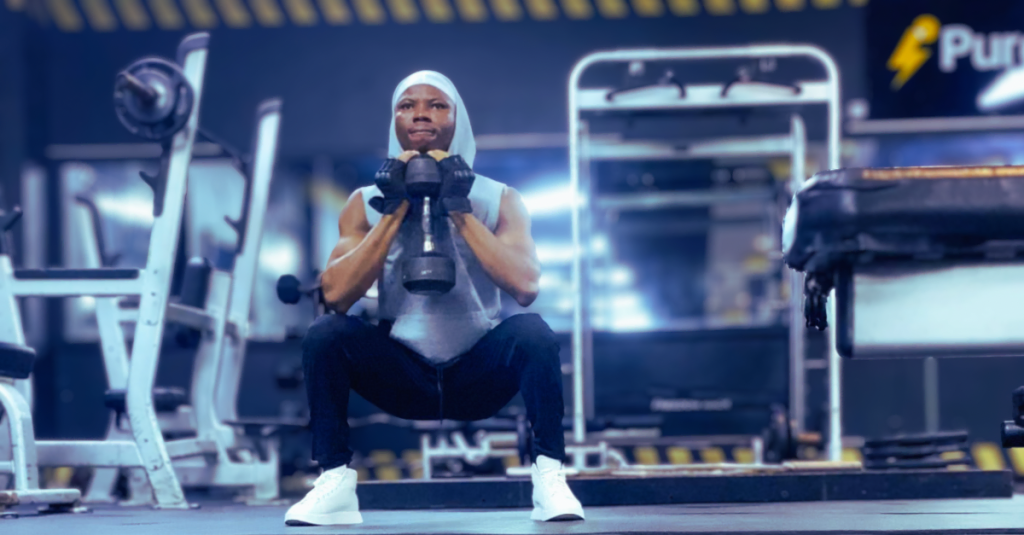
Your quads don’t work alone, though. As you push back up from the bottom of the squat, your glutes work alongside your quads to extend your hips and help you return to standing.
2. Glutes
Your glutes are another major muscle group worked during the goblet squat. The gluteus maximus, in particular, helps extend your hips as you drive out of the bottom of the squat and return to standing.
As you lower your body, your glutes lengthen under control. During the upward phase, they contract to help extend your hips and contribute to the force needed to stand.
How it targets your glutes depends on factors such as squat depth, stance, and torso position. Descending to a comfortable depth while maintaining good form can increase the range of motion in your hips and knees, giving the glutes more opportunity to contribute.
If you want to emphasize your glutes during goblet squats, focus on:
- Squatting to a comfortable depth while maintaining control.
- Keeping your feet firmly planted throughout the movement.
- Maintaining a stable torso rather than collapsing forward.
- Driving through the floor as you stand.
- Use a weight that challenges your glutes without compromising your form.
It’s also worth remembering that feeling a muscle burn doesn’t necessarily mean that muscle is doing all the work. The goblet squat is a compound exercise, so your glutes work along with your quads, adductors, hamstrings, and core to produce and control the movement.
For a closer look at proper setup and execution, see my article on how to do a goblet squat, where I explain proper form, benefits, and common technique mistakes.
After 30, muscle mass naturally begins to decline if not actively maintained through resistance training. This can lead to slower metabolism, reduced strength, and increased risk of injury.
Goblet squats help counter these effects by:
- Building and maintaining lean muscle mass
- Supporting joint health
- Improving posture and balance
- Enhancing functional movement for daily life
For a deeper understanding of training mistakes that slow progress, read Strength Training Mistakes After 30.
3. Hamstrings
Your hamstrings are located along the back of your thighs and play a supporting role during the goblet squat. They work with your glutes and other muscles around the hips to help control the movement and maintain stability.
During the descent, your hamstrings lengthen as your hips and knees bend. As you stand back up, they contribute to hip extension alongside the glutes, helping you return to an upright position.
The hamstrings may not be the primary muscle you feel during a goblet squat, especially compared with the quads and glutes. However, they remain an important part of the movement because they help control your hips and knees throughout each repetition.
Your technique can also influence how much work your hamstrings contribute. Factors such as squat depth, stance, and torso position can change the demands placed on the muscles around your hips and thighs.
If you’re performing goblet squats as part of a broader lower-body routine, combining them with hamstring exercises can help you build this muscle group more.
4. Adductors
Your adductors, often referred to as the inner-thigh muscles, also contribute to the goblet squat. This muscle group helps bring your thighs toward the midline of your body, but it also plays an important role in controlling your hips during squatting movements.
As you descend into the goblet squat, the adductors help control your hips and contribute to stability. As you rise from the bottom position, they can also assist with hip extension, working alongside the glutes to help you return to standing.
Your squat depth can influence how much the adductors can contribute. A deeper squat requires greater hip movement, which can increase the demands placed on the muscles around the hips and inner thighs.
Your stance can matter too. A wider stance may change the contribution of the adductors compared with a very narrow stance, although you can choose a stance that allows you to squat comfortably while keeping your knees and feet properly aligned.
The adductors may not be the first muscles you notice working during goblet squats, but they are an important part of the overall movement. They help your hips stay controlled and contribute to the force as you move out of the bottom of the squat.
5. Core Muscles
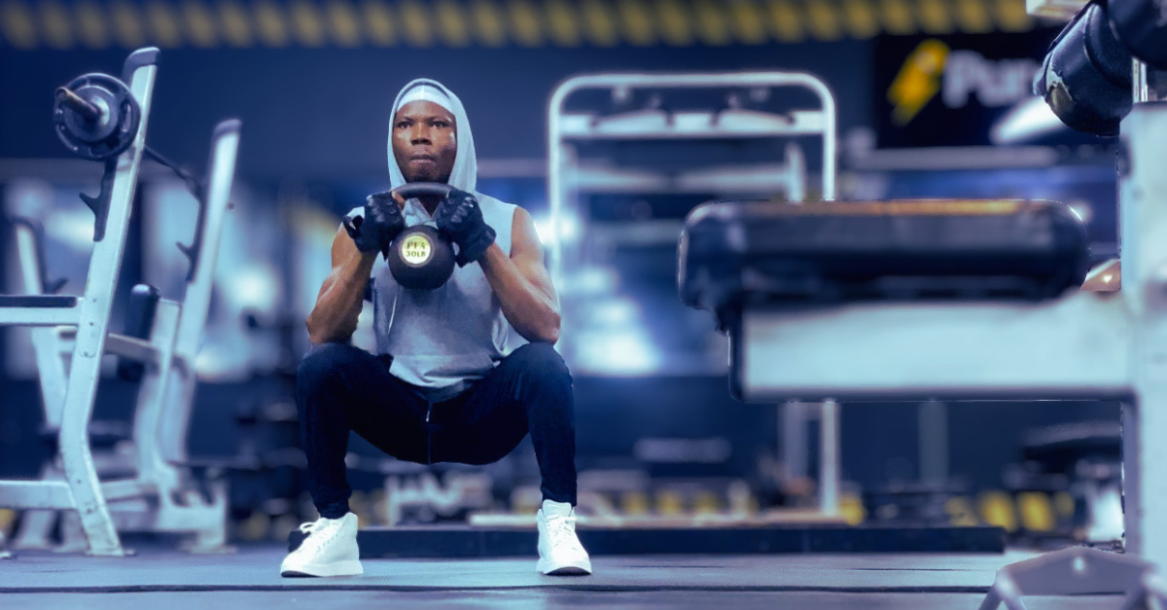
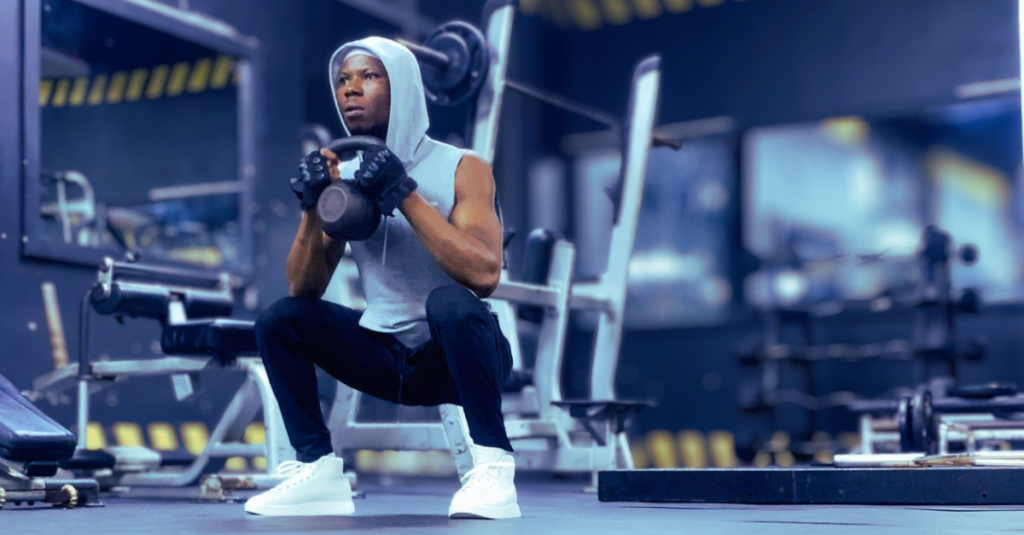
Your core muscles play an important stabilizing role during the goblet squat. While the exercise primarily trains your lower body, holding a dumbbell or kettlebell in front of your chest creates a demand for your trunk to remain stable as you move through the squat.
Your abdominal muscles and other muscles around your trunk help prevent excessive movement as you lower and rise. They work to keep your torso controlled so you can maintain a strong position throughout each repetition.
The front-loaded position of the goblet squat can also make it easier to maintain a more upright torso compared with some other squat variations. This doesn’t mean the goblet squat is primarily an abdominal exercise, but your core still has to work throughout the movement to help you stay balanced and transfer force between your upper and lower body.
To keep your core engaged during goblet squats:
- Hold the weight securely against your chest.
- Brace your midsection before beginning each repetition.
- Keep your torso controlled as you descend and stand.
- Avoid excessive leaning or rounding of your back.
- Maintain steady breathing without losing your breath.
Your core doesn’t work in isolation. It works your quadriceps, glutes, hamstrings, and adductors to keep your body stable and controlled throughout the squat.
This is also one reason the goblet squat can be useful for learning proper squat mechanics before progressing to more demanding loaded squat variations.
6. Calves and Stabilizing Muscles
Your calves aren’t the primary muscles driving the goblet squat, but they still contribute to the movement by helping stabilize your ankles and maintain balance.
As you lower into the squat, your ankles move through dorsiflexion, allowing your knees to travel forward while your heels stay connected to the floor. Your calf muscles help control this movement and help stabilize your lower legs.
The calves also help maintain a solid base as you push back up from the bottom of the squat. If your ankles or feet aren’t stable, it can become harder to maintain proper balance and consistent technique.
Other smaller muscles in your feet, such as the ankles, hips, and trunk, also contribute to stability throughout the movement. You may not feel these muscles working as strongly as your quads or glutes, but their role is crucial in keeping your body in control.
To keep these stabilizing muscles working effectively:
- Keep your feet firmly planted on the floor.
- Avoid allowing your heels to lift during the squat.
- Keep your knees in line with your feet.
- Maintain control rather than rushing through each repetition.
- Use a squat depth that you can maintain without losing your foot or ankle position.
Although the calves and stabilizing muscles play a supporting role, they help create the stable foundation you need to perform the goblet squat safely and effectively.
Do Goblet Squats Work Glutes or Quads More?
Goblet squats work both your quads and glutes, but neither muscle group always takes the same amount of the workload. Your technique, squat depth, stance, and body position can influence which muscles are emphasized.
In general, the quads play a major role in extending your knees as you stand from the squat, while the glutes contribute to hip extension and help drive you upward. Both muscles work together throughout the movement rather than one completely taking over.
If you maintain a relatively upright torso and allow your knees to travel naturally as you squat, you may place substantial demand on your quadriceps. Increasing your squat depth, when you have the mobility and control to do so, can also increase the range of motion at your hips and knees and change how your glutes contribute.
That doesn’t mean you need to shift the movement toward one muscle. Good goblet squat technique should allow your quads, glutes, and other supporting muscles to work together.
If your goal is to build your lower body, the most important factors are using an appropriate load, performing controlled repetitions, and gradually increasing the challenge as your strength improves.
So, does the goblet squat work glutes or quads more?
It can effectively train both, with the exact emphasis depending on how you perform the exercise. Rather than focusing on which single muscle works the most, think of the goblet squat as a compound movement that develops strength across several lower-body muscle groups.
Are Goblet Squats Enough to Build Muscle?
Goblet squats can help you build muscle and strength, especially when there is enough resistance to challenge your muscles over time. However, whether goblet squats are enough on their own depends on your training experience, goals, and the weight you can comfortably use.
For beginners, a goblet squat can provide a meaningful challenge for the quadriceps, glutes, hamstrings, and other supporting muscles. As you become stronger, however, you may eventually find that the amount of weight you can hold in the goblet position limits how much you can challenge your lower body.
That’s why goblet squats can work particularly well as part of a broader lower-body workout rather than being your only leg exercise.
How to Build Muscle With Goblet Squats
If your goal is to build muscle with goblet squats, focus on progressively challenging your muscles while maintaining good form. The American College of Sports Medicine (ACSM) notes that resistance-training outcomes can be improved by adjusting factors such as training load and volume to match your goals.
Here are a few ways to make your goblet squat training more effective:
- Progressive overload: Gradually increase the weight, repetitions, or difficulty as your strength improves.
- Good technique: Use controlled, consistent form to train the intended muscles.
- Adequate training volume: Perform enough challenging work over time to provide a stimulus for muscle growth.
- Recovery and nutrition: Allow your muscles to recover and support your training with a balanced diet.
You don’t necessarily need to keep adding weight to make every goblet squat session harder. Depending on your experience and goals, you can also increase the challenge by using a greater range of motion, adding a pause, slowing the lowering phase, or choosing a more demanding variation.
However, as you become stronger, you may eventually benefit from other lower-body exercises that allow you to progressively increase the resistance more easily.
So, are goblet squats enough to build muscle?
They can certainly contribute to muscle growth, particularly for beginners and those using an appropriately challenging load. But for continued progress, goblet squats are often best used as one part of a well-rounded resistance-training program rather than your only lower-body exercise.
How Heavy Should a Goblet Squat Be?
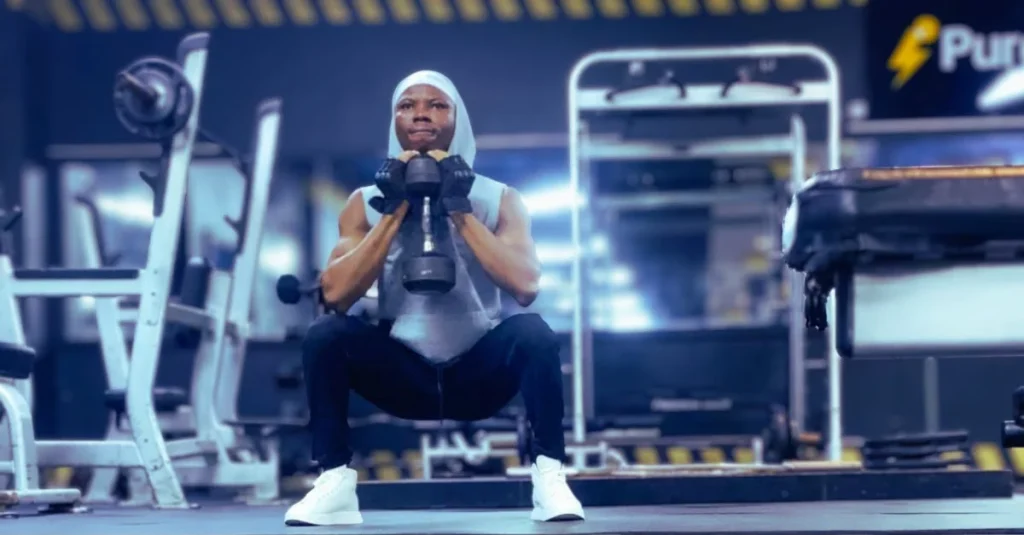
The right goblet squat weight depends on your strength, experience, training goals, and ability to maintain good form. There isn’t one weight that is appropriate for everyone.
If you’re new to goblet squats, start with a weight that allows you to learn the movement comfortably while keeping your chest upright, feet stable, and knees tracking naturally. As you become more comfortable and stronger, you can gradually increase the load.
A useful guideline is to choose a weight that makes the final few repetitions challenging yet allows you to maintain proper technique. If you have to lean excessively forward, lose your balance, shorten your range of motion, or rush through repetitions to complete the set, the weight may be too heavy.
NASM also recommends selecting a goblet squat load that allows you to maintain controlled movement, adequate squat depth, and postural control throughout the exercise.
Signs Your Goblet Squat Weight Is Appropriate
Your weight is likely appropriate if you can:
- Maintain good form throughout the set.
- Control both the lowering and standing phases.
- Keep the weight close to your chest.
- Maintain stable feet and consistent balance.
- Complete your planned repetitions without your technique breaking down.
- Feel challenged without needing to compensate with other parts of your body.
As your strength improves, gradually increasing the resistance can help you continue challenging your muscles. However, heavier isn’t always better. A lighter weight performed with controlled, consistent technique can be more productive than using a weight that causes your form to deteriorate.
If you’re unsure where to start, choose a lighter weight, practice the movement, and gradually increase the load as you become more confident in your technique.
Goblet Squat Variations and the Muscles They Emphasize
Changing your goblet squat setup can shift the demands placed on different muscles. These variations don’t completely isolate a particular muscle, but they can be useful when you want to change the emphasis or make the exercise more challenging.
Heel-Elevated Goblet Squat
Raising your heels can allow your knees to travel farther forward and can make you squat deeper. This can increase the emphasis on your quadriceps, while your glutes and other lower-body muscles continue to contribute.
Wider-Stance Goblet Squat
A wider stance changes your hip position and can increase the contribution of the adductors and glutes. Your exact stance should still feel comfortable, so it can help keep your feet stable and knees aligned with your toes.
Deep Goblet Squat
Squatting deeper, as long as you can maintain good control and positioning, increases the range of motion at your hips and knees. This can increase the overall demands on your quads, glutes, and adductors.
Dumbbell vs. Kettlebell Goblet Squat
Both can be used for a goblet squat. The primary muscles worked remain largely the same because the basic squat movement hasn’t changed. The main difference is how the weight feels in your hands and how comfortably you can maintain your position.
The best variation is ultimately the one that allows you to maintain good technique while providing an appropriate challenge for your current strength and goals.
Final Thought
The goblet squat is more than just a simple leg exercise. It primarily works your quadriceps and glutes, while your hamstrings, adductors, core, calves, and other stabilizing muscles also contribute to the movement.
How much each muscle is emphasized can depend on factors such as your stance, squat depth, technique, and the amount of weight you use. Different goblet squat variations can also slightly change the demands placed on your lower body.
Whether you’re new to strength training or have been lifting for years, the goblet squat can be a practical addition to a well-rounded workout. Focus on controlled repetitions, appropriate resistance, and consistent progression rather than trying to lift as heavy as possible.
Join the Conversation
Have you tried goblet squats before? Which muscle do you feel working the most when you perform them? Share your experience in the comments below.