
Walking Lunges: Benefits, Muscles Worked & Proper Form
Table of Contents
ToggleDid you know that walking lunges don’t just strengthen your leg muscles?
They also improve your balance, coordination, core stability, and single-leg strength, making them one of the most effective lower-body exercises you can add to your workout routine.
I remember when I first started strength training. Like many beginners, I believed squats were all I needed for stronger legs. Whenever I saw walking lunges in a workout plan, I usually skipped them because they looked too simple to make a real difference.
I couldn’t have been more wrong.
The first time I completed a proper set of walking lunges, I quickly realized how challenging they were. My legs burned, my core had to work hard to keep me balanced, and every step demanded focus and control.
That experience completely changed how I viewed the exercise. Since then, walking lunges have become one of my favorite lower-body exercises because they build strength, improve balance, and help correct muscle imbalances between each leg.
In this guide, you’ll learn what walking lunges are, the muscles they work, their benefits, how to perform them with proper form, common mistakes to avoid, and tips for getting the best results.
What Are Walking Lunges?
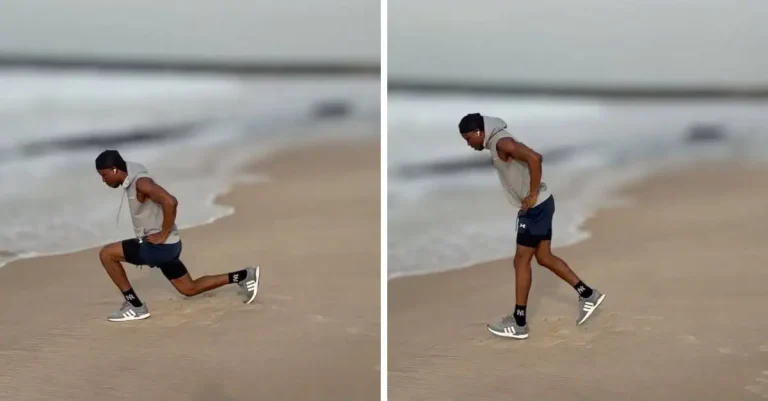
Walking lunges are a compound lower-body exercise that involves stepping forward into a lunge position, lowering your body until both knees are bent at approximately 90 degrees, and then pushing through your front heel to bring your back leg forward into the next repetition. Instead of returning to your starting position after each rep, you continue moving forward, alternating legs as you walk.
Unlike many lower-body exercises that train both legs simultaneously, walking lunges are a unilateral exercise, meaning each leg works independently. This helps improve muscular balance, coordination, and stability while reducing strength imbalances between your left and right sides.
Walking lunges are also a functional exercise because they mimic everyday movements such as walking, climbing stairs, and stepping over obstacles. Training these natural movement patterns can make daily activities feel easier while improving your overall lower-body strength.
One of the biggest advantages of walking lunges is their versatility. You can perform them almost anywhere using your body weight or increase the challenge by holding dumbbells, kettlebells, or a barbell as you become stronger.
If you’re starting your fitness journey, it’s a good idea to master bodyweight walking lunges before progressing to weighted variations. Starting with proper technique will help you build confidence and reduce your risk of injury.
Walking lunges also pair well with other lower-body strength exercises. For example, combining them with Goblet Squats or Sumo Squats can help you develop balanced leg strength while improving both stability and overall movement quality.
Benefits of Walking Lunges
Walking lunges offer more than just stronger legs. Because they combine strength, balance, and coordination in a single movement, they’re an excellent exercise for improving both your fitness and everyday mobility.
Whether you’re new to strength training or looking to challenge yourself with a more functional exercise, walking lunges can provide a wide range of benefits.
1. Strengthen Your Lower Body
Walking lunges primarily target the muscles in your legs and hips, helping you build lower-body strength with every step. Since each leg works independently, both sides must generate force on their own, reducing the tendency to rely on your stronger leg.
Over time, this can help improve muscular balance while increasing strength in your quadriceps, glutes, and hamstrings. If you’re following a Strength Training routine, walking lunges are an excellent compound exercise to include for developing functional lower-body strength.
2. Improve Balance and Stability
Unlike exercises performed on a machine, walking lunges require your body to stabilize itself throughout the movement.
Your core, hips, knees, and ankles work together to keep you balanced as you step forward and lower your body. This improves coordination and body awareness, both of which are important for everyday activities and athletic performance.
Better balance can also help you feel more confident during daily movements such as climbing stairs, walking on uneven surfaces, or carrying heavy objects.
3. Help Correct Muscle Imbalances
Most people naturally have one leg that’s stronger than the other.
Because walking lunges train one leg at a time, they make it easier to identify and improve these strength differences. Developing more balanced strength can enhance your exercise performance while promoting better movement patterns.
This is one reason walking lunges pair so well with bilateral exercises like Goblet Squats, which train both legs.
4. Increase Core Strength
Although walking lunges are often considered a leg exercise, your core plays an important role throughout every repetition.
Your abdominal muscles, obliques, and lower back help stabilize your torso, keeping you upright and preventing unnecessary twisting as you move forward.
The more controlled your movement, the harder your core has to work.
5. Improve Functional Fitness
Walking lunges closely mimic movements you perform every day, including walking, climbing stairs, bending down, and stepping over obstacles.
This makes them a functional exercise that helps improve the strength and stability you need for everyday life, not just your workouts.
According to the American College of Sports Medicine (ACSM), incorporating functional strength exercises into your routine can improve movement efficiency and support long-term physical function.
6. Suitable for Home and Gym Workouts
One of the best things about walking lunges is that they require very little equipment.
You can perform them using only your body weight at home or increase the challenge by holding dumbbells, kettlebells, or a barbell in the gym.
If you prefer exercising at home, walking lunges fit perfectly into many Home Workouts because they require minimal space and no expensive equipment.

What Muscles Do Walking Lunges Work?
Walking lunges are a compound exercise that targets multiple muscle groups at once. While they primarily strengthen your lower body, they also engage your core and other stabilizing muscles to help you maintain balance throughout the movement.
Here are the main muscles worked during walking lunges:
- Quadriceps: Your quadriceps, located at the front of your thighs, are the primary muscles responsible for extending your knee as you push yourself up from the lunge position. They work hard during every repetition, making walking lunges an excellent exercise for building stronger, more powerful legs.
- Gluteus Maximus: The gluteus maximus, the largest muscle in your buttocks, plays a major role in driving your body forward as you rise from each lunge. Regularly performing walking lunges can help strengthen and develop your glutes while improving hip stability.
- Hamstrings: Located at the back of your thighs, the hamstrings assist with hip extension and help stabilize your legs throughout the movement. They work together with your glutes and quadriceps to create a smooth, controlled motion.
- Core Muscles: Although walking lunges are often thought of as a leg exercise, your core works continuously to keep your torso upright and prevent you from leaning or twisting as you step forward. A strong core also helps improve your balance and overall movement quality.
- Calves and Hip Stabilizers: Your calves, hip flexors, and smaller stabilizing muscles around the hips and ankles work behind the scenes to keep you balanced with every step. These muscles may not be the primary movers, but they play an important role in maintaining proper form and stability.
Because walking lunges engage several major muscle groups at once, they’re an effective addition to almost any lower-body workout. When combined with compound exercises like Goblet Squats and a structured Strength Training routine, they can help you build balanced strength, improve stability, and support better overall movement.
How to Do Walking Lunges with Proper Form
Performing walking lunges with proper form is essential to get the most out of the exercise while reducing your risk of injury.
Focus on slow, controlled movements rather than rushing through each repetition. Maintaining good posture and proper alignment will help you target the right muscles and improve your overall stability.
Follow these steps to perform walking lunges correctly:
- Stand Tall: Stand with your feet hip-width apart, your chest lifted, shoulders relaxed, and your core engaged. Let your arms hang naturally by your sides or place your hands on your hips for balance.
- Step Forward: Take a comfortable step forward with one leg. Avoid taking a step that’s too short or too long, as this can place unnecessary stress on your knees and reduce the effectiveness of the exercise.
- Lower Your Body: Bend both knees and lower your body until your front thigh is nearly parallel to the floor. Your back knee should move toward the ground without touching it, while both knees remain bent at approximately 90 degrees. Keep your front knee aligned over your ankle and avoid letting it collapse inward.
- Push Through Your Front Heel: Press firmly through the heel of your front foot to lift your body. As you rise, bring your back leg forward into the next lunge in a smooth, continuous walking motion.
- Repeat on the Opposite Leg: Continue alternating legs while maintaining good posture and controlled movement throughout each repetition. Focus on quality rather than speed to maximize muscle activation.
Tips for Proper Form
Keep these tips in mind every time you perform walking lunges:
- Keep your chest up and your back straight.
- Engage your core throughout the movement.
- Look straight ahead instead of down at your feet.
- Push through your front heel to return to the starting position.
- Move with control rather than rushing each repetition.
- Breathe out as you push up and inhale as you lower your body.
If you’re new to walking lunges, begin with your body weight until you’re comfortable with the movement. Once your balance and technique improve, you can gradually increase the difficulty by adding dumbbells or other resistance.
Common Walking Lunge Mistakes
Even if walking lunges look simple, small mistakes can reduce their effectiveness and increase your risk of discomfort or injury. Paying attention to your technique will help you get through every repetition.
1. Letting Your Front Knee Collapse Inward
One of the most common mistakes is allowing your front knee to cave inward as you lower into the lunge. This places unnecessary stress on the knee joint and reduces stability.
Fix: Keep your knee aligned with your toes throughout the movement and engage your glutes to maintain proper leg alignment.
2. Taking Steps That Are Too Short or Too Long
Stepping too short can cause your knee to travel excessively forward, while stepping too far may make it difficult to maintain balance and proper form.
Fix: Take a comfortable step that allows both knees to bend to about 90 degrees while keeping your front heel firmly on the floor.
3. Leaning Your Upper Body Forward
Leaning too far forward shifts the workload away from your legs and places unnecessary strain on your lower back.
Fix: Keep your chest up, shoulders relaxed, and core engaged throughout the exercise.
4. Rushing Through Each Repetition
Moving too quickly often leads to poor balance and sloppy technique.
Fix: Perform each repetition slowly and with control, focusing on quality rather than speed.
5. Using Weights Too Soon
Many people add dumbbells before mastering the movement pattern.
Fix: Start with bodyweight walking lunges and increase the resistance once you can perform every repetition with good form.

Walking Lunge Variations
Once you’ve mastered the basic walking lunge, you can try different variations to keep your workouts challenging and target your muscles in new ways.
- Bodyweight Walking Lunges: This beginner-friendly variation is perfect for learning proper technique while building balance and coordination.
- Dumbbell Walking Lunges: Holding a pair of dumbbells increases the resistance, helping you build greater lower-body strength and muscle.
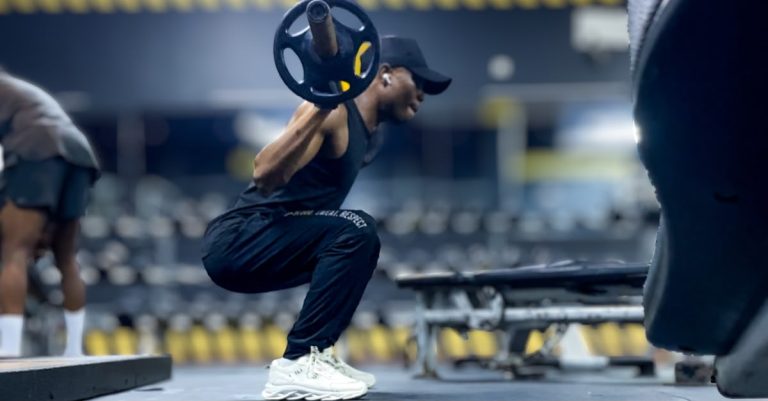
- Barbell Walking Lunges: This advanced variation places more demand on your legs, core, and upper body. It’s best suited for experienced lifters who have already mastered proper walking lunge form.
- Reverse Lunges: Instead of stepping forward, you step backward into the lunge. Many people find reverse lunges easier on their knees while still strengthening the same major muscle groups.
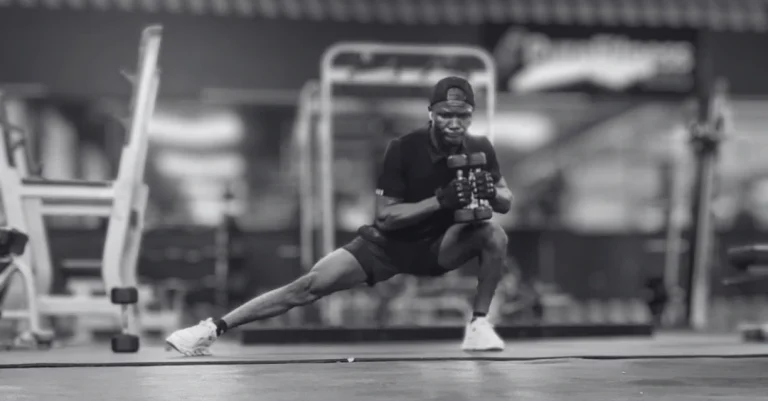
Side Lunges: Unlike walking lunges, side lunges involve stepping out to the side rather than forward. This variation targets the inner thighs, glutes, and hip muscles while improving lateral movement and mobility. Adding Side Lunges to your routine can help create a more balanced lower-body workout by strengthening muscles that aren’t emphasized as much during forward lunges.
No matter which variation you choose, prioritize proper form before increasing the difficulty.
Are Walking Lunges Good After 30?
Absolutely. Walking lunges are an excellent exercise for adults over 30 because they strengthen the muscles needed for everyday movement while improving balance, coordination, and stability.
As we age, maintaining muscle mass and mobility becomes increasingly important. Walking lunges help strengthen your quadriceps, glutes, hamstrings, and core while encouraging each leg to work independently. This can help improve muscle imbalances and support healthier movement patterns.
If you’re getting back into exercise, begin with bodyweight walking lunges and focus on mastering proper form. Once the movement feels comfortable, you can gradually increase the challenge by adding dumbbells or other forms of resistance.
Walking lunges also complement other compound exercises. Pairing them with our Strength Training After 30 guide and Goblet Squat workout can help you build stronger legs and improve overall functional fitness.
Remember that progress takes time. Performing walking lunges consistently with proper technique will produce better long-term results than rushing into heavier weights.
Frequently Asked Questions
Are walking lunges better than regular lunges?
Both exercises are effective. Walking lunges place greater emphasis on balance, coordination, and continuous movement, while stationary lunges may be easier for beginners learning proper technique.
How many walking lunges should I do?
A good starting point is 2 to 3 sets of 8 to 12 repetitions per leg. As your strength improves, you can increase the number of repetitions or add resistance.
Can walking lunges build muscle?
Yes. When combined with progressive overload, proper nutrition, and adequate recovery, walking lunges can help build muscle in your quadriceps, glutes, and hamstrings.
Are walking lunges safe for beginners?
Yes. Beginners should start with bodyweight walking lunges, focus on proper form, and progress gradually as their strength and balance improve.
Final Thought
Walking lunges are one of the most effective lower-body exercises for building strength, improving balance, and enhancing functional fitness.
Whether you’re training at home or in the gym, they challenge multiple muscle groups while helping you move more confidently in everyday life.
If you’re over 30, walking lunges can be a valuable addition to your workout routine. Start with proper technique, progress at a pace that suits your fitness level, and stay consistent. Over time, you’ll build stronger legs, better stability, and improved overall movement.
Join the Conversation
Do you include walking lunges in your workout routine?
I’d love to hear about your experience. Have walking lunges helped you build stronger legs, improve your balance, or overcome a fitness challenge? If you’re just getting started, what’s your biggest question about performing them correctly?
Share your thoughts, tips, or questions in the comments below. Your experience could encourage and help someone else on their fitness journey.
If you found this guide helpful, consider sharing it with a friend or family member who wants to build stronger legs, improve their balance, or stay active after age 30.