How to Do Squats Correctly: Proper Form, Benefits & Common Mistakes
Table of Contents
ToggleHave you ever finished a set of squats and wondered if you were actually doing them correctly?
I remember when I first started doing squats. I thought my form was good because the movement looked simple. But after watching videos of myself and learning the proper technique, I realized I had been making several common mistakes without even noticing. My knees drifted inward, my heels lifted off the floor, and I wasn’t getting the full benefits of the exercise.
Everything changed when I corrected my form. Squats quickly became one of the most rewarding exercises in my workout routine. I felt stronger, more stable, and even everyday activities like climbing stairs, lifting groceries, and getting up from a chair became easier.
The truth is, you don’t need to be an athlete or lift heavy weights to benefit from squats. With proper form and just your body weight, you can build lower-body strength, improve balance, and develop the functional fitness needed for everyday life.
In this guide, I’ll show you how to do squats correctly with step-by-step instructions, explain the muscles they work, explore their benefits, highlight common mistakes to avoid, and share beginner-friendly tips to help you squat safely and confidently.
What Is a Squat?
A squat is a compound lower-body exercise that involves bending your hips and knees to lower your body before returning to a standing position. Although it looks simple, it targets several major muscle groups in a single movement, making it one of the most effective exercises for building strength and improving functional fitness.
When it is performed with proper form, squats target the quadriceps, glutes, and hamstrings while also engaging the calves, core, and lower back to help stabilize your body throughout the movement. Because multiple joints and muscles work together, squats can improve balance, coordination, and overall movement efficiency.
One of the biggest advantages of squats is that they closely mimic everyday movements. Whether you’re sitting down, standing up, lifting a heavy box, or climbing stairs, you’re performing a movement pattern that’s similar to a squat. Strengthening this pattern can make daily activities feel easier and more comfortable.
The best part is that you don’t need expensive gym equipment to get started. Bodyweight squats are suitable for most beginners, while more experienced exercisers can increase the challenge by adding dumbbells, kettlebells, barbells, or resistance bands as they become stronger.
Benefits of Squats
Squats are more than just a lower-body exercise. Because they involve multiple joints and muscle groups working together, they can help improve strength, balance, mobility, and functional fitness.
Whether your goal is to build muscle, lose weight, or stay active after 30, squats are a valuable exercise to incorporate in your routine.
If you’re looking to build a well-rounded workout routine, don’t miss our article on Strength Training After 30, where you’ll learn how to create an effective program, choose the right exercises, and progress safely over time.
1. Strengthen Your Lower Body
Squats primarily target the quadriceps, glutes, hamstrings, and calves. As these muscles become stronger, everyday activities such as walking, climbing stairs, lifting objects, and standing up from a chair can become easier. Building lower-body strength also creates a solid foundation for other exercises and sports.
2. Improve Functional Fitness
One of the biggest advantages of squats is that they train movements you perform every day. Sitting down, standing up, picking something up from the floor, and getting in and out of a car all involve a similar movement pattern.
According to the American Council on Exercise (ACE), compound exercises that involve multiple joints and muscle groups can improve overall fitness while making workouts more time-efficient.
3. Engage Multiple Muscle Groups at Once
Unlike isolation exercises that target a single muscle, squats work several muscles simultaneously. In addition to your legs and glutes, your core and lower back help stabilize your body throughout the movement. This makes squats an efficient exercise for full-body strength and coordination.
4. Improve Balance and Stability
Maintaining proper squat form requires your body to work together as a unit. Over time, this can improve your balance, coordination, and stability, which become increasingly important as you age and help reduce the risk of falls during daily activities.
5. Support Different Fitness Goals
Squats can be adapted to suit almost any fitness level or goal. Beginners can start with bodyweight squats, while more experienced exercisers can increase the challenge by adding resistance or trying variations such as goblet squats, jump squats, or sumo squats.
Whether you’re training for strength, muscle growth, endurance, or overall fitness, squats can fit into your workout program.
The CDC recommends adults perform muscle-strengthening activities targeting all major muscle groups at least two days per week as part of an overall physically active lifestyle.
Muscles Worked During Squats
Squats are a compound exercise, meaning they work multiple muscle groups simultaneously. While they’re best known for strengthening the lower body, they also engage your core and other stabilizing muscles to help you maintain proper posture and balance throughout the movement.
1. Quadriceps
The quadriceps, located at the front of your thighs, are the primary muscles used during squats. They work to extend your knees as you rise from the bottom of the squat, making them essential for movements like walking, climbing stairs, and standing up from a chair.
2. Glutes
Your gluteus maximus, medius, and minimus help extend your hips as you return to a standing position. Strong glutes improve lower-body power, support good posture, and contribute to better balance and athletic performance.
3. Hamstrings
Although the hamstrings aren’t the primary movers during a bodyweight squat, they work along with your glutes to stabilize your hips and control the lowering phase of the exercise.
4. Calves
Your calf muscles help stabilize your ankles and maintain balance throughout the squat. Keeping your heels firmly planted on the floor allows your calves to support proper movement mechanics.
5. Core
Your abdominal muscles, obliques, and lower back work together to stabilize your spine and help keep your torso upright during the exercise. Engaging your core throughout the movement helps improve balance and maintain proper squat form.
6. Adductors
The muscles along your inner thighs, known as the adductors, assist the hip with stability and help control movement as you lower and rise during the squat.
Primary vs. Secondary Muscles Worked
Primary muscles:
- Quadriceps
- Glutes
Secondary muscles:
- Hamstrings
- Calves
- Core
- Adductors
Understanding which muscles work during squats can help you improve your technique and choose squat variations that emphasize specific muscle groups. For example, sumo squats place greater emphasis on the inner thighs and glutes, while jump squats focus more on explosive power.
How to Do Squats Correctly
Learning the correct squat technique can help you build strength, improve mobility, and reduce your risk of injury.
According to the American Academy of Orthopaedic Surgeons (AAOS), using proper technique, progressing gradually, and allowing adequate recovery can help reduce the risk of exercise-related injuries.
Whether you’re a beginner or returning to exercise after a break, follow these steps to perform a bodyweight squat with proper form.
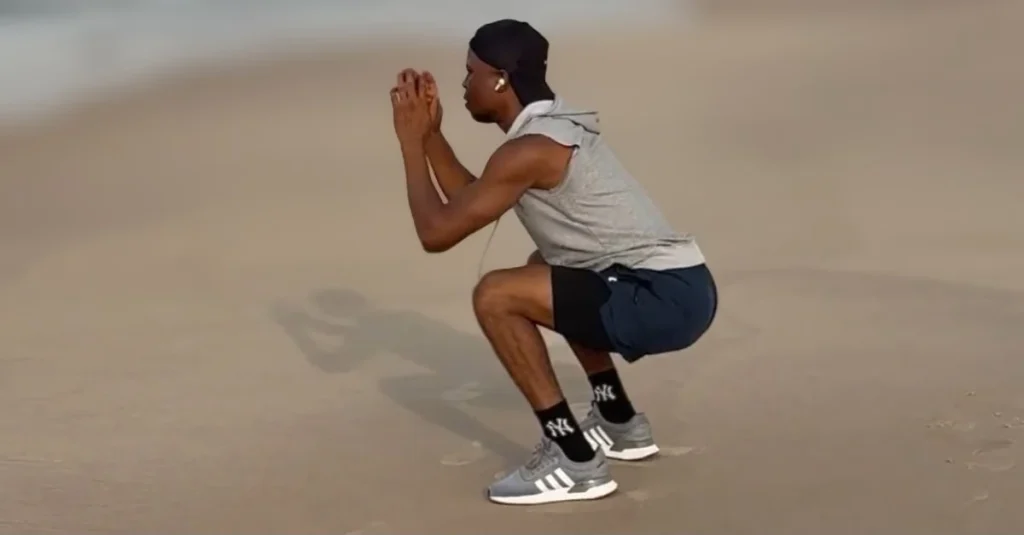
Step 1: Stand With Your Feet Shoulder-Width Apart
Stand upright with your feet about shoulder-width apart and your toes pointing slightly outward (around 5–15 degrees). Let your arms rest by your sides or extend them in front of you for balance. Keep your chest lifted, shoulders relaxed, and your weight evenly distributed across both feet.
Step 2: Engage Your Core
Before you begin the movement, tighten your abdominal muscles and maintain a neutral spine. Keeping your core engaged helps stabilize your body and supports proper posture throughout the exercise.
Step 3: Push Your Hips Back
Initiate the movement by pushing your hips back as though you’re about to sit in a chair. This helps distribute the load through your hips and lower body rather than placing unnecessary stress on your knees.
Step 4: Bend Your Knees and Lower Your Body
As your hips move back, bend your knees and lower your body in a slow, controlled manner. Keep your chest up, your back straight, and your knees in the same direction as your toes.
Lower until your thighs are parallel to the floor or as low as your mobility allows while maintaining proper form.
Step 5: Push Through Your Heels to Stand
Press through your heels to straighten your hips and knees simultaneously, returning to the starting position. Exhale as you stand and squeeze your glutes at the top without leaning backward.
Repeat while maintaining good technique.
Quick Squat Form Checklist
Before each repetition, remember these key points:
- Keep your feet about shoulder-width apart.
- Point your toes slightly outward.
- Engage your core throughout the movement.
- Keep your chest up and back in a neutral position.
- Push your hips back before bending your knees.
- Keep your knees aligned with your toes.
- Maintain contact between your heels and the floor.
- Push through your heels as you return to standing position.
Pro Tip: Don’t worry about squatting as low as possible right away. Focus on maintaining proper form and moving through a pain-free range of motion. As your strength and mobility improve, your squat depth will often improve naturally.
Common Squat Mistakes and How to Fix Them
Even though squats are one of the most effective lower-body exercises, performing them with poor technique can reduce their effectiveness and increase your risk of discomfort or injury.
Here are some of the most common squat mistakes and how to correct them.
1. Letting Your Knees Cave Inward
One of the most common mistakes is allowing your knees to collapse as you squat. This can place unnecessary stress on your knees and reduce effectiveness.
How to fix it:
- Keep your knees aligned with your toes throughout the movement.
- Push your knees slightly outward as you lower and stand.
- Strengthen your glutes with exercises such as glute bridges and lateral band walks.
2. Lifting Your Heels Off the Floor
If your heels lift during a squat, you may lose balance and place more pressure on your knees and the balls of your feet. This often happens due to limited ankle mobility or poor weight distribution.
How to fix it:
- Keep your weight evenly distributed across your entire foot.
- Focus on pushing through your heels as you stand.
- Improve your ankle mobility with regular stretching and mobility exercises.
3. Rounding Your Back
Rounding your back during a squat places unnecessary stress on your spine and reduces stability.
How to fix it:
- Keep your chest lifted throughout the movement.
- Engage your core before each repetition.
- Maintain a neutral spine throughout.
4. Leaning Too Far Forward
Excessive forward lean shifts the workload away from your lower body and can strain your lower back.
How to fix it:
- Push your hips first before bending your knees.
- Keep your eyes looking forward rather than down.
- Improve your hip and ankle mobility if flexibility is limiting the movement.
5. Squatting Too Shallow
Stopping the movement too early can reduce the range of motion and may limit the benefits of the exercise.
How to fix it:
- Lower yourself as far as you comfortably can while maintaining proper form.
- Prioritize good technique over squat depth.
- As your mobility improves, gradually increase your range of motion.
6. Holding Your Breath
Many beginners unknowingly hold their breath throughout the entire movement, which can make the exercise feel more difficult.
How to fix it:
- Inhale as you lower into the squat.
- Exhale as you push back up to the starting position.
- Maintain steady, controlled breathing throughout each repetition.
Remember
Don’t worry if your squat isn’t perfect right away. Proper technique takes practice. Focus on mastering the basics before adding extra weight or trying advanced squat variations. Consistency and good form will help you build strength more safely and effectively.
Squat Variations to Try
Once you’ve mastered the bodyweight squat, you can explore these squat variations to target specific muscles, improve strength, or increase the exercise intensity.
Here are some of the most popular squat variations.
1. Bodyweight Squat
The bodyweight squat is the foundation of all squat variations. Since it requires no equipment, it’s an excellent choice for beginners learning proper form, improving mobility, and building lower-body strength.
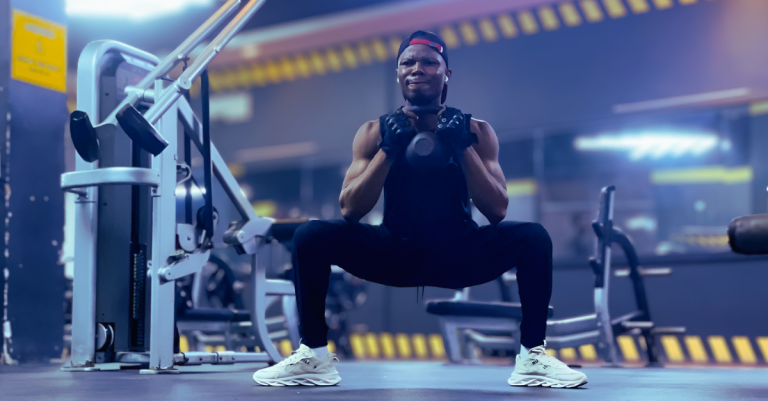
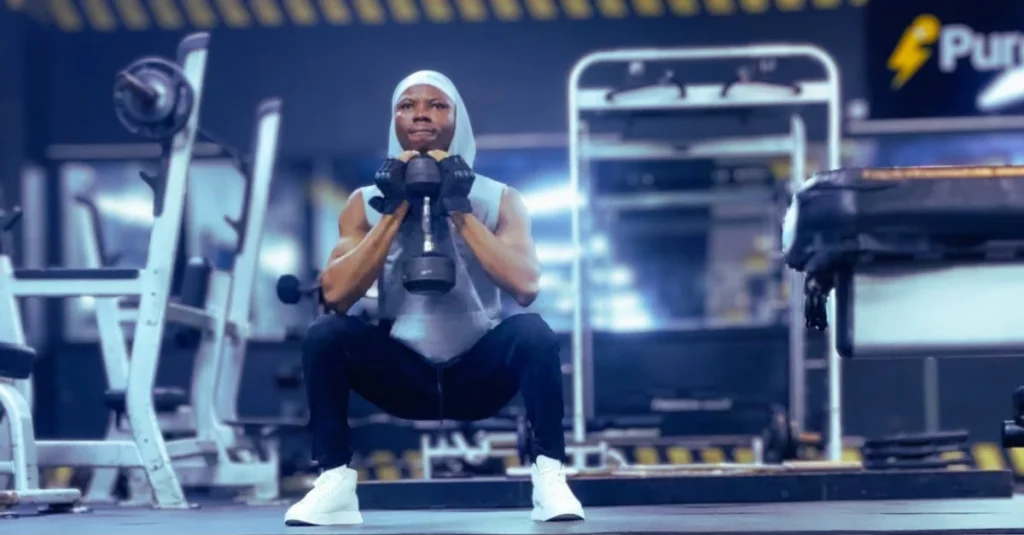
2. Goblet Squat
The goblet squat involves holding a dumbbell or kettlebell close to your chest during the movement. The front-loaded position encourages an upright torso and helps many beginners maintain better squat form.
Read our complete guide on Goblet Squats.
3. Sumo Squat
The sumo squat uses a wider stance with your toes turned outward. This variation places greater emphasis on your glutes and inner thighs while still strengthening your quadriceps and hamstrings.
Learn more in our Sumo Squat Exercise After 30 guide.
4. Jump Squat
Jump squats are an advanced plyometric variation that involves an explosive jump as you rise from the squat. They help develop lower-body power, coordination, and cardiovascular fitness.
Because of the higher impact, beginners should first master the bodyweight squat before progressing to jump squats.
Explore our Jump Squat Exercise After 30 guide.
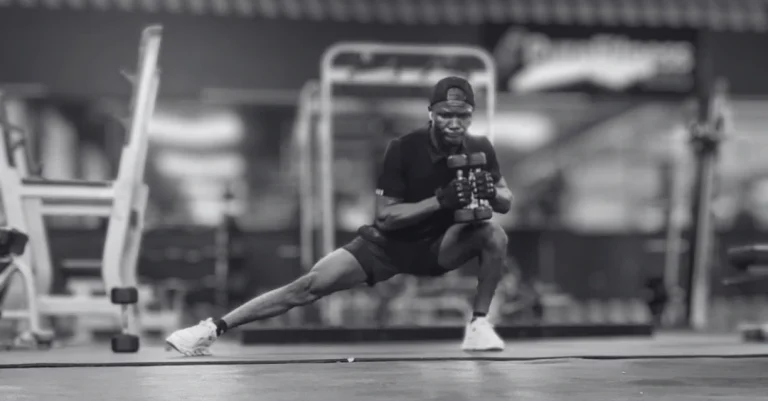
5. Split Squat
Unlike a traditional squat, the split squat trains one leg more than the other. It can help improve balance, address muscle imbalances, and build single-leg strength.
6. Front Squat
The front squat is performed by holding a barbell across the front of your shoulders. This variation places more emphasis on the quadriceps while encouraging a more upright posture than the back squat.
7. Hack Squat
The hack squat is commonly performed using a hack squat machine. It provides additional support while allowing you to focus on strengthening your quadriceps, glutes, and hamstrings.
Which Squat Variation Is Best?
There isn’t one squat variation that’s best for everyone. The right choice depends on your fitness level, goals, and the available equipment.
- Beginners: Bodyweight squat, goblet squat
- Building muscle: Goblet squat, front squat, hack squat
- Glute focus: Sumo squat
- Power and athletic performance: Jump squat
- Balance and unilateral strength: Split squat
Master the bodyweight squat before progressing to more advanced variations. Building a strong foundation will help you perform each variation safely and effectively
Frequently Asked Questions
1. Is 20 squats a day enough?
Doing 20 squats a day can be a good starting point if you’re new to exercise or getting back into a fitness routine. While it may help improve muscular endurance and reinforce proper movement patterns, building significant strength or muscle usually requires progressive overload. As your fitness improves, gradually increase the number of repetitions, add resistance, or try more challenging squat variations.
2. Should Your Knees Go Over Your Toes When Squatting?
Yes, it’s normal for your knees to move slightly over your toes during a squat, especially if you have good ankle mobility and maintain proper technique. Instead of trying to keep your knees behind your toes at all costs, focus on keeping them aligned with your toes while maintaining a neutral spine and keeping your heels on the floor.
3. Why Do My Knees Hurt When I Squat?
Knee pain during squats can occur for several reasons, including poor technique, limited ankle or hip mobility, muscle imbalances, or excessive weight. If you experience persistent pain, stop the exercise and identify the underlying cause before continuing. Correcting your squat form and improving mobility can help, but if the pain persists, it’s good to see a qualified healthcare professional.
Read our complete article on Why Do My Knees Hurt When I Squat?
4. Why Do My Knees Crack When I Squat?
Hearing your knees crack or pop during squats isn’t always a cause for concern. In many cases, painless cracking is harmless and may result from gas bubbles in the joint or tendons moving over bone. However, if the cracking is accompanied by pain, swelling, or a feeling that your knee is giving way, it’s important to stop exercising and seek medical advice.
5. How Much Should I Be Able to Squat?
There’s no single weight that everyone should be able to squat. Your ideal squat weight depends on your age range, body weight, training experience, mobility, and fitness goals. Beginners should focus on mastering proper bodyweight squat technique before progressing to external resistance. As your strength improves, gradually increase the weight while maintaining good form.
Final Thought
Learning how to do squats correctly is one of the best investments you can make in your fitness journey. Although the movement may seem simple, using proper technique helps you build lower-body strength, improve balance, and get the most from every repetition while reducing your risk of injury.
Remember to start with bodyweight squats, focus on quality over quantity, and progress at a pace that matches your fitness level. As your confidence grows, you can explore other squat variations such as goblet squats, sumo squats, and jump squats to keep your workouts challenging and effective.
Join the Conversation
How often do you include squats in your workouts? Let us know in the comments below. We’d love to hear about your experience, your favorite squat variation, or any challenges you’ve faced while learning proper squat form.