Sumo Squat Guide: Form, Benefits & Muscles Worked
Table of Contents
ToggleA sumo squat is a squat variation performed with a wide stance and toes pointed outward, shifting emphasis toward the inner thighs (adductors) and glutes while still recruiting the quadriceps, hamstrings, calves, and core.
In my own coaching and training, the biggest mistake I see people make isn’t picking the wrong weight—it’s forcing an ultra-wide stance on day one before their hips and inner thighs are ready for it.
Form & Safety Note: Always work within a pain-free range of motion and keep your knees tracking cleanly over your toes. If you have groin, hip, or knee discomfort—or are returning from an injury—check with a qualified physical therapist or healthcare provider before adding heavy load.
How to Do a Sumo Squat (Step-by-Step Form)
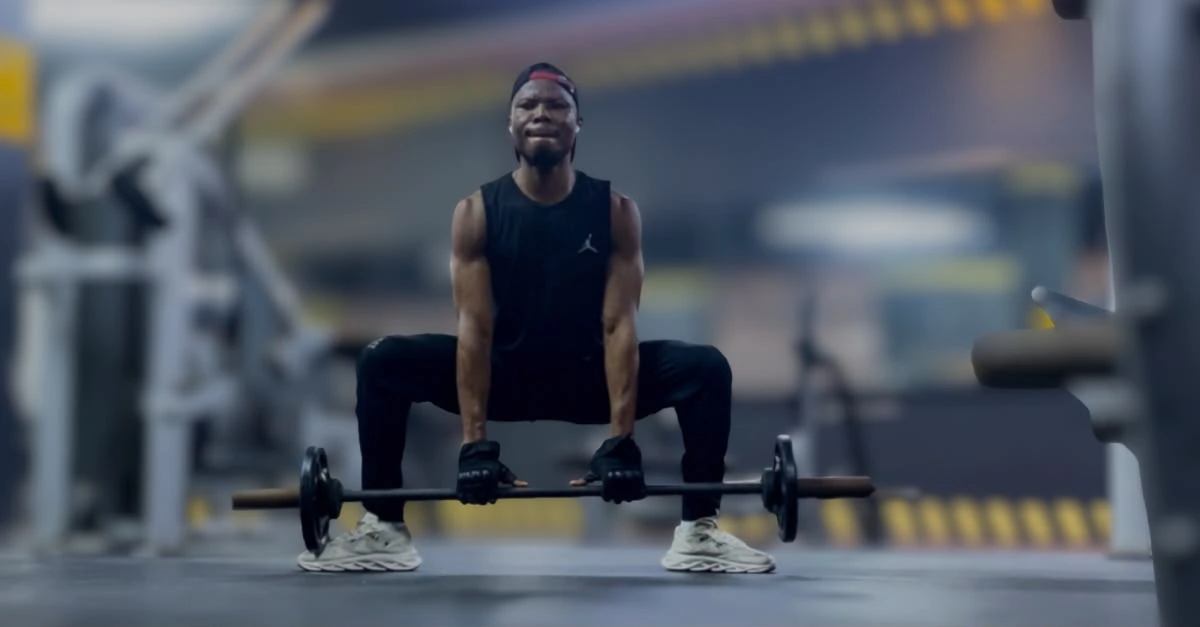
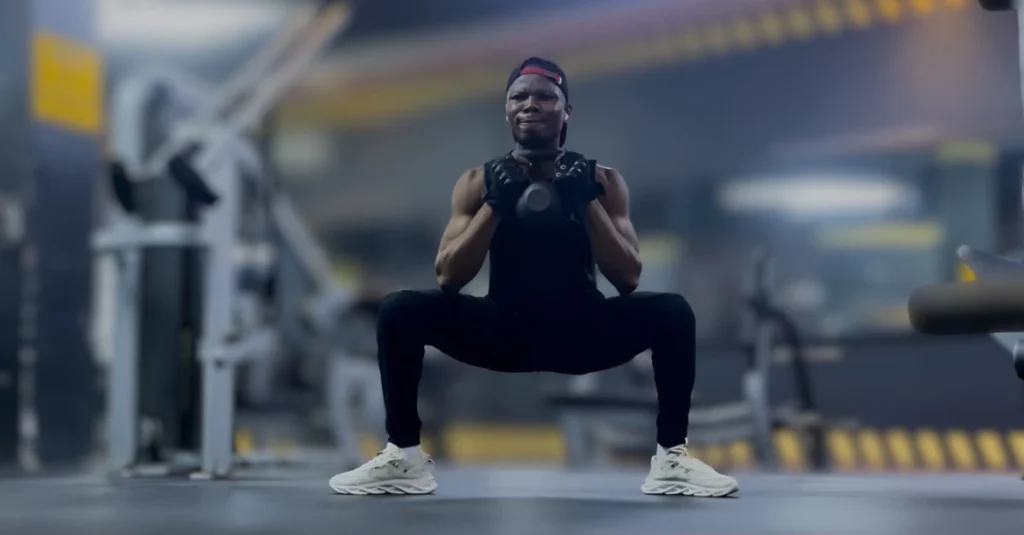
- Set your stance: Step your feet wider than shoulder-width apart and turn your toes out at roughly 30 to 45 degrees.
- Brace your torso: Stand tall with your chest lifted, shoulders relaxed, and core braced so your spine stays neutral.
- Lower with control: Push your hips slightly back and bend your knees to lower your body straight down between your legs, keeping your knees aligned over your toes.
- Hit comfortable depth: Descend until your thighs are around parallel to the floor—or slightly lower—as long as your heels stay planted and your lower back doesn’t round.
- Drive up: Press firmly through your mid-foot and heels, engaging your glutes and inner thighs to return to the starting position without locking your knees aggressively.
Sumo Squat Variations
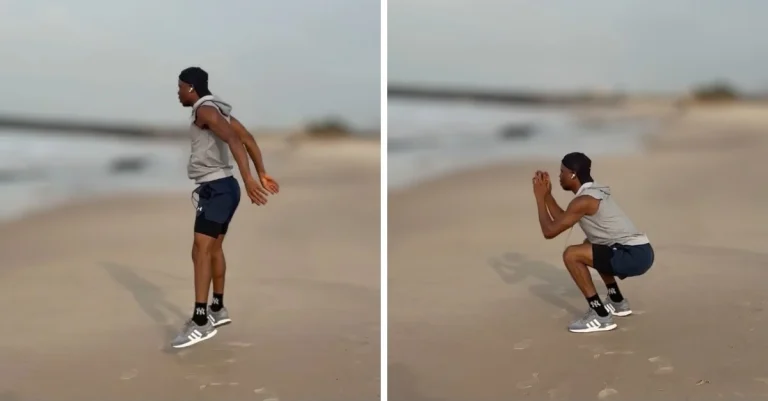
- Bodyweight: Ideal for learning depth, balance, and knee alignment before adding resistance.
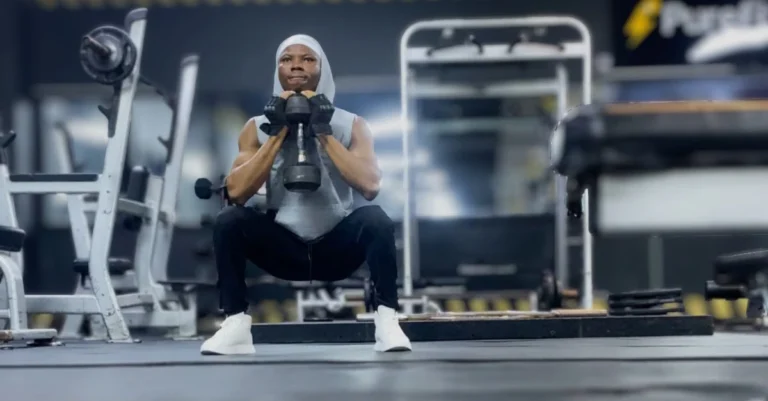
- Dumbbell or Kettlebell: Hold one dumbbell or kettlebell vertically at chest height (goblet position) or let it hang with straight arms between your legs. Keep the weight close to your body so it doesn’t pull your chest forward.
Common Mistakes to Avoid
- Knees caving inward: Usually a sign your stance is too wide, or your adductors/glutes are fatigued—narrow your stance slightly and push knees out in line with your toes.
- Excessive forward torso lean: Often happens when bracing is loose or ankle/hip mobility is limited; keep weight balanced across the whole foot.
- Over-widening too soon: Going too wide can create a sharp tug in the groin or pinch at the front of the hip.
Stance & Mobility Adjustments (Finding Your Sweet Spot)
There is no single stance width that fits every skeleton.
Hip socket depth, femur length, and ankle or adductor mobility all influence how wide you can comfortably stand.
- Too wide: You feel a pull or strain along the inner thigh/groin at the bottom, or your heels lift early. Bring your feet in a few inches.
- Too narrow: Your stance feels almost identical to a standard squat, and you barely notice inner-thigh engagement. Step out slightly wider while keeping control.
Muscles Worked During a Sumo Squat
- Primary muscles: The adductors (inner thigh muscles) work hard to stabilize the wide stance and assist with hip extension out of the bottom, while the gluteus maximus drives hip extension as you stand.
- Supporting muscles: The quadriceps, hamstrings, calves, and core/erector spinae stabilize your posture and assist throughout the descent and ascent.
Research on squat mechanics shows that a wider stance increases hip abduction, shifts the hip-to-knee joint moment ratio, and elevates adductor longus and gluteus maximus activity compared to narrower stances.
You can read more in this stance-width biomechanics study on PubMed Central and this clinical squat biomechanics review on PubMed Central.
Key Benefits of Sumo Squats
- Greater inner-thigh challenge: Targets the adductors more noticeably than conventional shoulder-width squats.
- Strong glute and lower-body development: Builds lower-body strength and endurance using minimal space and equipment.
- Accessible home or gym scaling: Easy to perform with bodyweight or a single dumbbell/kettlebell at home, making it simple to pair with a complete home workout guide or mix into conditioning alongside jump rope training.
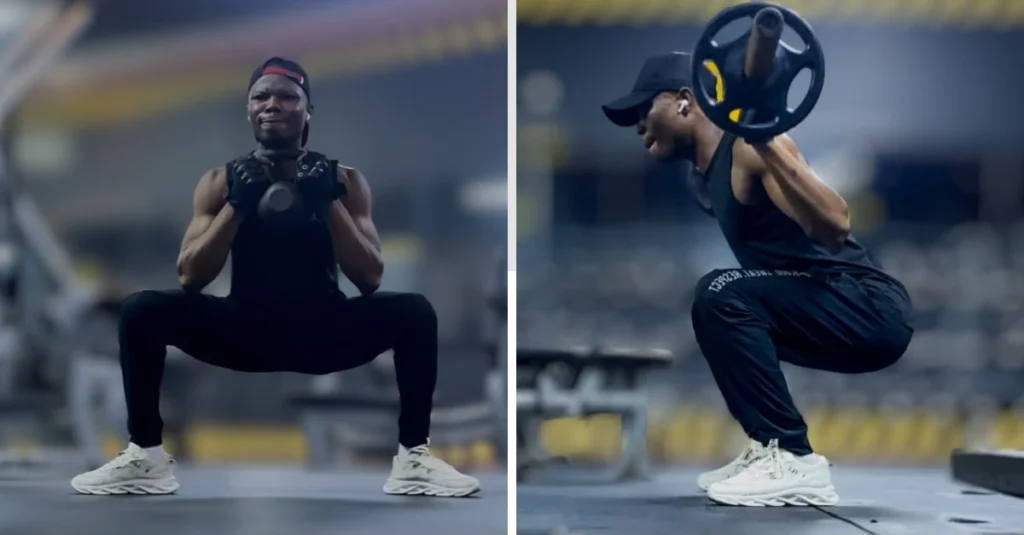
Sumo Squat vs. Regular Squat: Key Differences
While both exercises train the lower body, widening your stance and turning your toes out changes joint angles and muscle emphasis.
| Feature | Sumo Squat | Regular (Shoulder-Width) Squat |
|---|---|---|
| Stance & Foot Angle | Wide stance; toes turned out (~30–45°) | Shoulder-width stance; toes straight or slightly out |
| Primary Emphasis | Inner thighs (adductors) and glutes | Quads and glutes |
| Joint & Mobility Focus | Hip abduction/external rotation and adductor flexibility | Knee flexion and ankle dorsiflexion |
| Best For | Extra adductor work, variety, comfort with a wider hip angle | Classic squat mechanics and heavy quad/overall lower-body loading |
Neither movement replaces the other—use sumo squats when you want more adductor and hip-angle variety, and keep regular squats in the rotation for classic quad-focused loading.
How to Fit Sumo Squats Into Your Routine
For general strength and muscle building, start with 2 to 4 sets of 8 to 15 reps, resting 60 to 90 seconds between sets.
Pair sumo squats with a posterior-chain hinge (like Romanian deadlifts or hip bridges) on lower-body days, and support recovery with adequate daily intake of high-protein foods for muscle building while avoiding common nutrition mistakes.
Frequently Asked Questions
Do sumo squats grow your glutes?
Yes. Sumo squats recruit the gluteus maximus as you drive out of the bottom of the squat, especially when paired with progressive overload and sufficient overall training volume.
Do sumo squats help hip dips?
Hip dips are shaped largely by underlying pelvic bone structure and natural fat distribution.
Strengthening the glutes and surrounding hip muscles can improve muscle tone and shape, but it will not change your bone anatomy.
Are sumo squats good for beginners?
Yes—starting unweighted with a moderate stance and controlled depth makes them approachable for beginners. Focus on smooth control and pain-free alignment before adding weight.
Final Thought
Sumo squats are a straightforward, high-utility lower-body exercise that shines whether you’re training at home with a single dumbbell or building out a full leg day.
Start at a stance width that feels natural and pain-free, progress gradually, and let consistency do the heavy lifting.
Join the Conversation
How do you like to program sumo squats—bodyweight, goblet dumbbell, or kettlebell—and do you prefer them over regular squats? Drop your thoughts or questions in the comments below!