Beginner Home Workout Plan After 30: A Simple Routine to Get Started
Table of Contents
ToggleHave you ever wanted to start working out at home but felt unsure about which exercises to do, how often to train, or whether you were even doing enough to make progress?
I remember asking myself these same questions a few years ago when I first started my fitness journey. At first, I felt unsure about where to start, which exercises to do, and how often I should train to make progress.
After a few weeks, I realized that you don’t need to make fitness complicated to make progress. You can start at home with simple exercises, a small amount of space, and a plan you can realistically follow.
Whether you’re getting back into exercise after a long break or starting for the first time, the goal isn’t to finish the hardest workout possible. It’s to build a routine you can continue.
In this guide, I’ll walk you through a simple beginner home workout plan designed to help you build consistency and improve strength without doing too much too soon. You’ll also learn how often to train, which beginner-friendly exercises to start with, and how to make your workouts more challenging as you get stronger.
What Is a Beginner Home Workout Plan?
A beginner home workout plan is a simple exercise routine for someone new to working out or returning after a long break. Instead of jumping into advanced exercises or training every day, focus on learning basic movements, building strength gradually, and developing consistency.
You don’t need a home gym or hours of free time to get started. You can start with bodyweight exercises and gradually add equipment like resistance bands or dumbbells as you become stronger. If you want to explore more ways to exercise at home, check out my guide to home workouts.
For adults over 30, having a routine that fits around work, family, and other responsibilities can make it easier to stay consistent. The goal isn’t to exhaust yourself with every workout, but to establish a foundation of strength and fitness that you can build on over time.
A beginner-friendly plan should generally include:
- Simple exercises that are easy to learn and perform with good form.
- Full-body movements that train several major muscle groups.
- Rest and recovery to give your body time to adapt.
- Gradual progression as your strength and fitness improve.
- Flexibility to fit your current fitness level and schedule.
With these basics in place, you can move on to how to start exercising at home without doing too much too soon.
How to Start Working Out at Home as a Beginner
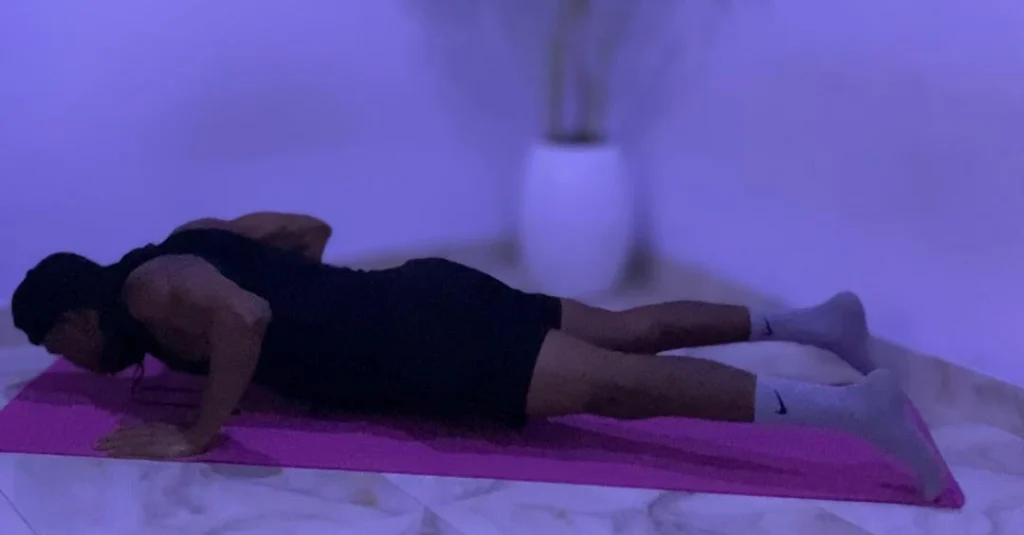
If you’re new to exercise, you may feel like you need to do a lot right away to see results. However, starting with a manageable routine can make it easier to build consistency and gradually improve your fitness.
If you struggle with consistency, check out my guide on How to Stay Consistent With Home Workouts.
Before beginning this beginner home workout plan, consider a few simple steps.
1. Start With 2–3 Workouts a Week
You don’t need to exercise every day when you’re just getting started. Aim for two or three structured workouts each week, with rest or lighter activity between your strength-training sessions.
The CDC recommends that adults get at least 150 minutes of moderate-intensity physical activity each week, along with muscle-strengthening activities on at least two days per week.
This gives you enough opportunities to practice the exercises while allowing your body time to recover and adapt.
2. Begin With Simple Exercises
Choose movements that are easy to understand and control. Bodyweight exercises like squats, glute bridges, incline push-ups, and lunges can help you learn basic movement patterns without requiring much equipment.
If you’re interested in learning more about training at home, you can also explore my guide to home workouts after 30.
3. Warm Up Before Your Workout
A short warm-up can help you prepare for exercise by gradually increasing your body temperature and getting you ready for the movements you’re about to perform.
You could spend five to ten minutes walking around, marching in place, or performing gentle movement exercises before starting your main workout.
4. Focus on Your Form
As a beginner, don’t worry about how many repetitions you can complete if you cannot perform them with good technique. Start with a variation of each exercise that allows you to control the movement and maintain proper form.
For example, if a regular push-up feels too difficult, you can begin with an incline push-up using a sturdy elevated surface and gradually progress from there.
5. Give Yourself Time to Recover
Your workouts are only one part of your progress. Rest and recovery give your body time to adapt.
You don’t need to push through every day just because you feel motivated. Rest days, adequate sleep, and lighter activity can all be part of a sustainable routine.
6. Gradually Increase the Challenge
Once the exercises start feeling easier, look for small ways to make your workouts more challenging. You can add a few reps, another set, resistance, or progress to a more difficult exercise variation.
This gradual approach, called progressive overload, helps you make progress instead of repeating the same workout indefinitely.
The goal isn’t to see how hard you can train. It’s to find a routine you can perform consistently and build from there.
If you’re not sure how to organize your workouts across the week, see my guide on How to Plan a Weekly Home Workout for a simple approach to structuring your routine.
Now that you know how to get started, let’s look at the beginner home workout plan and how to structure your week.
Beginner Home Workout Plan After 30
Now that you know how to get started, it’s time to put those principles into a simple weekly routine. This beginner home workout plan uses three full-body strength sessions, lighter activity, and rest days to balance your starting point.
You don’t need to complete every day at a high intensity. The purpose of the week is to help you build a consistent exercise habit while giving your body enough time to recover.
If you’re completely new to exercise, start with the easier end of the recommended repetitions and focus on learning the movements. As the exercises become more comfortable, you can gradually increase the challenge.
Your Weekly Beginner Home Workout Schedule
Day Workout
- Monday – Full-body strength workout
- Tuesday – Walking or active recovery
- Wednesday – Full-body strength workout
- Thursday – Rest or light activity
- Friday – Full-body strength workout
- Saturday – Walking or optional light activity
- Sunday – Rest
The three strength workouts should take approximately 25–35 minutes, depending on your pace and rest periods.
Day 1: Full-Body Beginner Workout
Start your week with a simple full-body session that works your legs, upper body, and core.
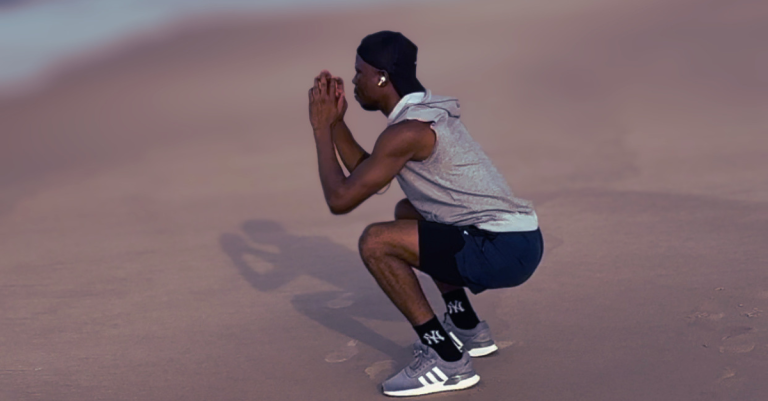
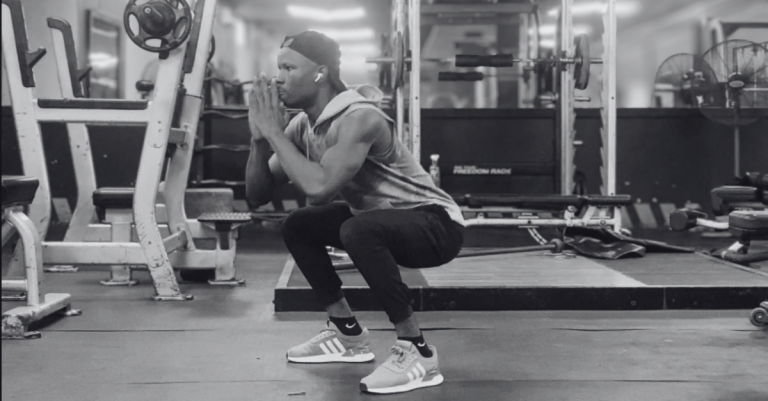
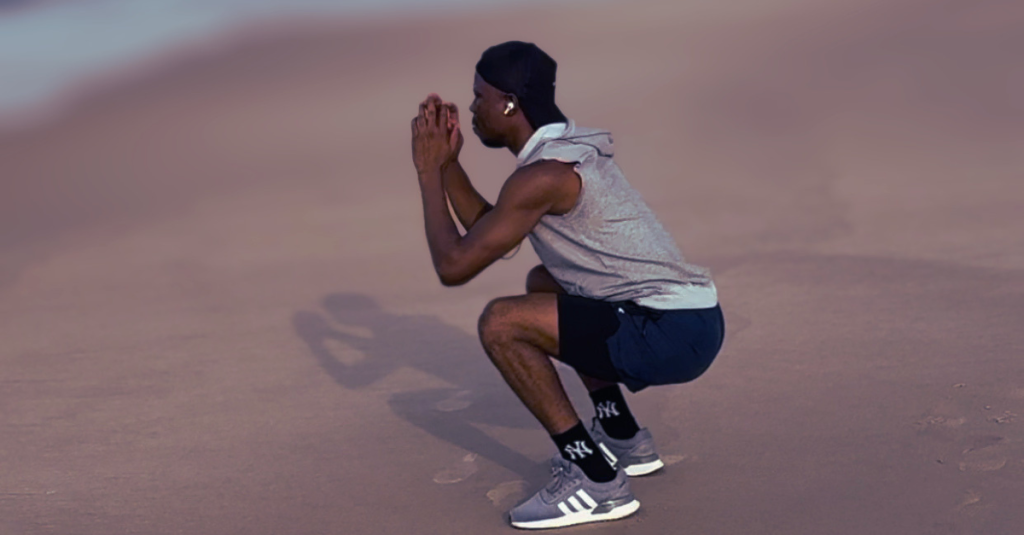
1. Bodyweight Squats — 2–3 sets of 8–12 repetitions
Stand with your feet about shoulder-width apart. Push your hips back and bend your knees as you lower your body, then press through your feet as you return to standing.
If you’re still learning the movement, you can perform the squat to a sturdy chair for support.
2. Incline Push-Ups — 2–3 sets of 6–12 repetitions
Place your hands on a sturdy elevated surface, such as a countertop or stable bench. Keep your body in a straight line as you lower your chest toward the surface, then push yourself back up.
This is a starting point if a standard push-up is too difficult.
3. Glute Bridges — 2–3 sets of 10–15 repetitions
Lie on your back with your knees bent and your feet flat on the floor. Push through your feet and lift your hips toward the ceiling. Pause briefly at the top and lower with control.
4. Bird Dogs — 2 sets of 6–10 repetitions per side
Start on your hands and knees. Extend one arm and the opposite leg while keeping your torso stable. Return to the starting position and switch sides.
5. Marching in Place — 2–3 sets of 30–60 seconds
Stand tall and alternate lifting your knees while moving your arms naturally. Keep the pace comfortable enough to maintain control
Rest for about 60–90 seconds between sets, or longer if you need it.
The aim isn’t to rush through the workout. Focus on controlled movements and good technique.
Day 2: Walking or Active Recovery
The second day is intentionally lighter.
You could take a 20–30 minute walk, perform some gentle mobility exercises, or stay active throughout the day.
You don’t need another demanding workout. This lighter day allows you to keep moving while giving your muscles time to recover from the previous session.
Day 3: Full-Body Beginner Workout
For your second strength session, repeat some movements from Day 1 and a few new exercises.
1. Reverse Lunges — 2 sets of 6–10 repetitions per side
Step one foot back and lower your body toward the floor while keeping control. Push through your front foot to return to the starting position.
If reverse lunges are difficult, hold onto a sturdy surface for balance or reduce the range of motion.
2. Incline Push-Ups — 2–3 sets of 6–12 repetitions
Keep practicing incline push-ups and focus on controlled movement.
3. Hip Hinge — 2–3 sets of 8–12 repetitions
Stand with your feet about hip-width apart. Keep your back in a comfortable neutral position, and push your hips back while allowing your torso to lean forward. Then drive your hips forward and return to standing.
Learning the hip-hinge movement can help prepare you for exercises such as deadlifts later on.
4. Glute Bridges — 2–3 sets of 10–15 repetitions
Repeat the glute bridge and then focus on controlling both the lifting and lowering phases.
5. Dead Bugs — 2 sets of 6–10 repetitions per side
Lie on your back with your arms raised and your knees bent. Slowly extend one arm and the opposite leg while keeping your lower body controlled. Return to the starting position and alternate sides.
Day 4: Rest or Light Activity
Take a full rest day or choose a gentle activity like walking or light mobility work.
If your muscles are still noticeably sore from your workouts, don’t feel pressured to add more exercise. Recovery is part of the plan.
Day 5: Full-Body Beginner Workout
Your third strength session helps bring the week together.
- Bodyweight Squats — 2–3 sets of 10–15 repetitions
- Reverse Lunges — 2 sets of 6–10 repetitions per side
- Incline Push-Ups — 2–3 sets of 6–12 repetitions
- Glute Bridges — 2–3 sets of 12–15 repetitions
- Bird Dogs — 2 sets of 8–10 repetitions per side
Choose a repetition range that allows you to maintain good technique. If you finish every set feeling like you could easily perform many more repetitions, you may be ready to increase the challenge.
Day 6: Walking or Optional Light Activity
Use this day for a comfortable walk or another low-intensity activity you enjoy.
If you’re feeling tired after the week’s workouts, it’s completely fine to make this another recovery day.
Day 7: Rest
Finish the week with a full rest day.
Use this time to recover and prepare for your next week of training. You don’t have to feel guilty about taking a day off. Rest is what you need to return to your workouts ready to train again.
If this is your first week, don’t worry about completing everything perfectly. The most important thing is learning the exercises, paying attention to how your body responds, and creating a routine you can realistically repeat.
As you become more comfortable with the movements, you can begin increasing the challenge rather than simply doing more and more workouts.
Beginner Home Workout Plan Without Equipment
One of the biggest advantages of working out at home is that you can get started without buying a lot of equipment. Your bodyweight can provide enough resistance for many beginner exercises, especially when your main goal is to build consistency and learn proper movement.
If you don’t have dumbbells, resistance bands, or a home gym, you can still follow this beginner home workout plan. The exercises in the weekly routine require little more than enough floor space to move comfortably.
What You Need to Get Started
For most of the workouts, you may only need:
- A small amount of open space
- Comfortable workout clothing
- Supportive footwear, depending on the exercise and surface
- A workout mat if you prefer extra cushioning
A sturdy chair helps with exercises such as chair-assisted squats or incline push-ups. If you use a chair or another household surface for support, make sure it is stable and won’t easily move during the exercise.
How to Progress Without Equipment
Training without equipment doesn’t mean your workouts have to remain easy forever.
As your strength improves, you can make bodyweight exercises more challenging by increasing repetitions, adding another set, slowing down the movement, increasing your range of motion, or progressing to a more difficult variation.
For example, you might start with chair-assisted squats, progress to regular bodyweight squats, and eventually try a more challenging squat variation.
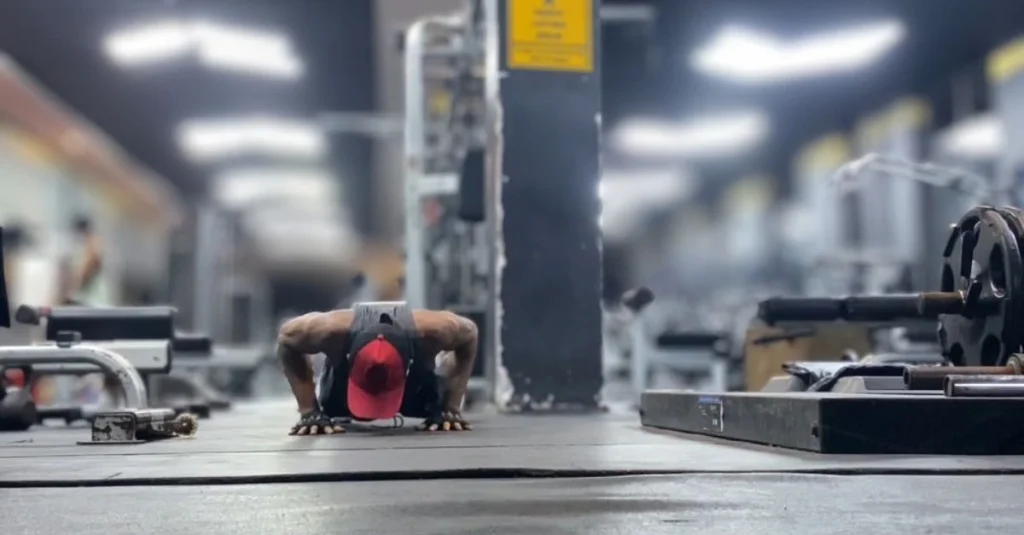
The same principle can apply to push-ups. You could begin with wall push-ups, progress to incline push-ups, and eventually work toward standard push-ups as your strength and technique improve.
When Should You Add Equipment?
You don’t need to rush out and buy equipment when you’re just starting. Give yourself time to become comfortable with your routine first.
Once your current exercises become easier and you want more resistance, simple equipment like a pair of dumbbells or resistance bands can give you more ways to progress.
What matters is to use equipment to increase the challenge, rather than assuming you need expensive equipment to get started.
For beginners, a consistent bodyweight routine is a better starting point than purchasing equipment that ends up sitting unused.
Once you’ve established a routine, the next step is learning how to make your workouts progressively more challenging as your strength improves.
Related Reading: If you’re wondering whether training at home can actually produce results, see my guide on Are Home Workouts Effective?

How to Make Your Home Workouts More Challenging
Following the same workout at the same level forever may eventually stop challenging you. As you become stronger and more comfortable with the exercises, you need to increase the demands of your workouts.
This is where progressive overload comes in. You don’t have to make every workout harder, but gradually increasing the challenge over time can help you continue improving your strength and fitness.
Here are several simple ways to progress your beginner home workout plan.
1. Increase Your Repetitions
If you can comfortably complete the upper end of your repetition range while maintaining good form, you can gradually add a few more repetitions.
For example, if you started with 8 bodyweight squats and can now comfortably perform 12, you might gradually work toward 15 repetitions.
Don’t add repetitions if doing so causes your technique to break down.
2. Add Another Set
You can also increase the workout intensity by adding a set.
For example, you might begin with two sets of squats and eventually progress to three sets once your body has adapted to the exercise.
There’s no need to add sets to every exercise at once. Make one small adjustment and see how your body responds.
3. Use Resistance
Once bodyweight exercises become too easy, adding resistance can provide another way to progress.
A dumbbell, resistance bands, or another appropriate form of resistance can make exercises such as squats, lunges, and presses more challenging.
Start with a manageable resistance that allows you to maintain good technique.
4. Try a More Difficult Variation
You can also progress an exercise by changing the movement rather than simply doing more repetitions.
For example:
Wall push-up → Incline push-up → Knee push-up → Standard push-up
Or:
Chair-assisted squat → Bodyweight squat → Split squat → More challenging squat variation
The right progression depends on your current ability. You don’t need to rush to an advanced variation because it looks more difficult.
5. Slow Down Your Repetitions
Another way to make an exercise more challenging is to perform each repetition with greater control.
Instead of rushing through a set of squats, take a little longer to lower yourself and maintain control as you stand back up.
This can increase the challenge without requiring additional equipment.
6. Increase Your Range of Motion
If you can perform an exercise comfortably and with good control, gradually increasing your range of motion can make it challenging.
For example, you might begin squatting to a comfortable depth and gradually work toward a deeper range as your mobility, strength, and control allow.
Don’t force a range of motion that causes pain or makes it difficult to maintain good technique.
7. Don’t Try to Progress Everything at Once
One of the easiest mistakes beginners make is trying to increase reps, sets, resistance, and workout frequency all at the same time.
You don’t need that.
Choose one area to progress, give your body time to adapt, and then make another small adjustment when you’re ready.
Your goal is steady improvement, not making every workout harder than the last one.
As your fitness improves, you’ll also need to balance your training with enough recovery.
Final Thoughts
Starting a beginner home workout plan after 30 is one of the best decisions you can make for your long-term health. You don’t need complicated routines or a gym membership, just consistency, patience, and a simple structure.
Focus on building the habit first, and results will follow over time.
Join the Conversation
Are you currently doing home workouts?
What challenges do you face staying consistent after 30?
Share your experience in the comments and help others on their fitness journey.