
Are Home Workouts Effective? What You Need to Know
Table of Contents
ToggleHave you ever finished a home workout and wondered whether those exercises are actually enough to help you get stronger and fitter?
I’ve had that thought myself, especially when training at home without access to the equipment you would normally find in a gym. Over time, I realized that you don’t need a gym for every workout to be effective.
But how effective are home workouts compared with the gym? Can you build muscle with limited equipment? And what makes a home workout effective in the first place?
In this guide, I’ll break down what you can realistically achieve with home workouts, how to make them more challenging, and how to get better results without complicating your routine.
Are Home Workouts Effective?
Yes, home workouts can be effective when your goal is to improve your fitness, strength, and overall physical health. You don’t necessarily need a gym or expensive equipment to get a productive workout.
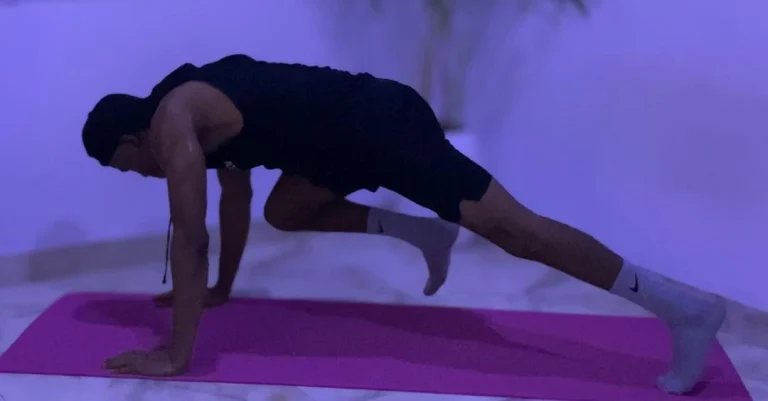
What matters most is whether your workout challenges your body enough and whether you perform it consistently. Bodyweight exercises such as push-ups, squats, lunges, and planks can provide resistance, while dumbbells, resistance bands, or other household equipment can give you more ways to increase the challenge.
The American College of Sports Medicine (ACSM) also notes in its 2026 resistance-training guidance that you don’t need a gym to make progress. Bodyweight exercises, resistance bands, and home-based training can be great options for improving strength, muscle growth, and physical function.
What Makes a Home Workout Effective?
A home workout is more likely to produce results when it includes:
- Enough resistance or difficulty to challenge your muscles
- Progressive overload, such as increasing repetitions, resistance, or exercise difficulty over time
- A variety of movements that train your major muscle groups
- Consistency, rather than exercising intensely once in a while
- Adequate recovery between challenging sessions
For example, if regular bodyweight squats have become easy, you could increase the repetitions, slow down the movement, try a more challenging variation, or eventually add resistance.
The CDC recommends that adults perform muscle-strengthening activities involving the major muscle groups on at least 2 days per week.
If you’re looking for a structured routine to get started, check out my 30-minute beginner home workout.

Are Home Workouts as Effective as the Gym?
If you’re wondering whether you need a gym to make meaningful progress, the answer is no. Home workouts can be effective if your goal is to improve strength, build muscle, and overall fitness.
However, the gym does give you access to a wider range of equipment and heavier loads, which can make it easier to keep increasing resistance as you get stronger.
At home, you may need to be more creative with how you progress.
For example, you can:
- Increase repetitions
- Add resistance with dumbbells or bands
- Use more challenging exercise variations
- Increase your range of motion
- Slow down certain movements
- Add sets when appropriate
If you’re looking for practical ideas for building an effective home workout routine, check out our home workouts guide.
The important thing is that your workouts need to be challenging you as your fitness improves.
So, home workouts aren’t automatically less effective than gym workouts. Your results depend more on the quality and consistency of your training, your ability to challenge yourself, and how well your workouts match your goals.
Are Home Workouts Effective for Weight Loss?
Yes, home workouts can support weight loss, but exercise is only one part of the equation. Your overall calorie balance, food intake, daily activity, and consistency all matter.
Home workouts can increase the energy level you expend through activities such as strength training, cardio, circuits, and bodyweight exercises.
You don’t need to spend an hour doing intense cardio every day, either. Combining strength training with other activities that increase your heart rate can be enough to make home workouts useful for your weight-loss goal.
For example, you could combine:
- Bodyweight squats and lunges
- Push-ups
- Jumping jacks or high knees
- Resistance-band exercises
- Dumbbell strength training
- Brisk walking
If weight loss is your main goal, your diet still matters. Creating a sustainable calorie deficit through a combination of appropriate food intake and physical activity can help you lose weight over time.
You can also read my guide on home workouts for weight loss after 30 for more specific exercises and workout ideas.
The important thing is to choose activities you can do consistently. A simple home workout you actually stick with is more useful than an elaborate routine you abandon after a few weeks.
Can You Build Muscle With Home Workouts?
Yes, you can build muscle with home workouts if you have enough resistance that challenges your training.
You don’t necessarily need a gym or heavy barbells to stimulate muscle growth. Bodyweight exercises and resistance bands can improve muscle size and strength.
The bigger challenge with home workouts is to provide enough resistance as you get stronger.
How to Build Muscle at Home
You can make home workouts more effective for muscle growth by:
- Using challenging bodyweight exercises
- Adding dumbbells or resistance bands when available
- Increasing repetitions as an exercise becomes easier
- Choosing more difficult exercise variations
- Adding resistance or sets progressively
- Training your major muscle groups consistently
If your goal is to build muscle at home, our guide on how to build muscle at home covers practical strategies for choosing exercises, using progressive overload, and making home training more challenging.
For example, if regular push-ups become too easy, you could increase reps, slow down each repetition, or move to a more challenging variation. If bodyweight squats become easy, you can do split squats or loaded squats.
Progressive overload is important because your muscles need a reason to adapt. You don’t have to increase the weight every workout; gradually increasing the difficulty, volume, or resistance can help you continue progressing.
If you’re new to resistance training, check our strength training guide for a more structured approach.
So, while a gym can make it easier to access heavier loads and more equipment, your home doesn’t have to limit your ability to build muscle. The key is to choose exercises that challenge you and progress with them as your strength improves.
Are Home Workouts Effective for Glutes?
Yes, you can train your glutes at home, especially when you choose exercises that challenge the muscles and progressively increase the difficulty.
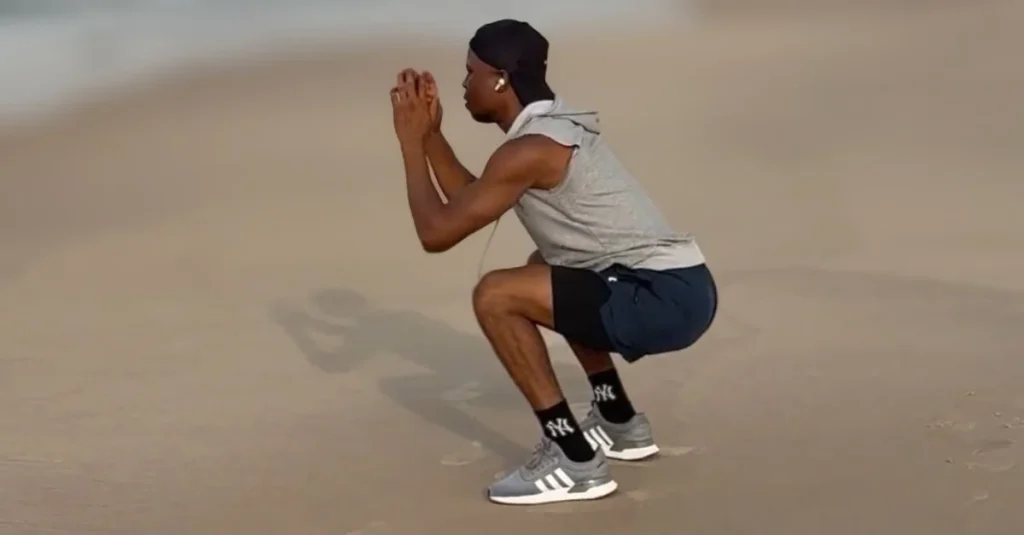
You don’t need a squat rack or heavy gym machines to train your glutes. Exercises such as squats, lunges, glute bridges, hip thrusts, and Bulgarian split squats can all be performed at home, with or without additional resistance.
The key is making the exercises challenging enough. If bodyweight glute exercises become too easy, increase the reps, slow the movement, add resistance bands or dumbbells, or progress to a more difficult variation.
For example, a basic glute bridge can eventually progress to a single-leg glute bridge or weighted hip thrust. This gives your muscles a greater challenge as your strength improves.
You also don’t need to train your glutes every day. Your overall routine should include adequate recovery and allow you to train the major muscle groups.
The bigger lesson is that home training can work for your glutes when the exercises are challenging, your technique is controlled, and you progressively make the workouts harder over time.

What Makes a Home Workout Effective?
A home workout isn’t effective because you sweat or it leaves you tired. It needs to challenge your body and fit your goals.
Here are some of the factors that can make a home workout more effective:
1. Choose Exercises That Match Your Goal
Your exercises should reflect what you’re trying to achieve. If your goal is to build strength, focus on resistance exercises.
If you’re trying to improve cardiovascular fitness, include activities that keep your heart rate elevated. For weight loss, combining resistance training with regular activity can be useful.
2. Make the Workout Challenging
Your body adapts to the demands you place on it. If an exercise becomes too easy, you may need to increase the repetitions, add resistance, slow the movement, or progress to a more difficult variation.
This is where progressive overload becomes important. You don’t have to make every workout harder, but you should gradually increase the challenge as your fitness improves.
3. Train Consistently
One challenging workout won’t transform your fitness. Consistency matters more than occasionally doing an extremely difficult session.
4. Allow Time to Recover
Your workout is only one part of the process. Your body also needs adequate recovery between demanding sessions.
Sleep, nutrition, hydration, and rest can all influence how well you recover and train. If you’re interested in this aspect of fitness, check out my Wellness & Recovery guide here.
Ultimately, an effective home workout doesn’t have to be complicated. It needs to challenge you appropriately, match your goals, and be something you can consistently maintain.
Common Mistakes That Can Make Home Workouts Less Effective
Home workouts can work well, but a few common habits can limit your progress.
1. Doing the Same Workout for Too Long
If you repeat the same exercises with the same number of repetitions indefinitely, your body may eventually adapt to the workload. As an exercise becomes easier, gradually increase the difficulty through more resistance, repetitions, sets, or challenging variations.
2. Choosing Exercises Without a Clear Goal
Doing random exercises every time you work out can make it harder to measure progress. Your routine should have a purpose, whether that’s building muscle, improving fitness, supporting weight loss, or getting stronger.
3. Ignoring Progressive Overload
You don’t need to make every workout harder, but your training should gradually become more challenging over time. Without increasing the demand placed on your body, it can become difficult to continue making progress.
4. Training Too Hard Every Day
More exercise isn’t always better. Your body needs time to recover between demanding sessions. Training to exhaustion every day can make it harder to stay consistent.
If you’re struggling with recovery, you can naturally link here to your [recovery tips] article for practical ways to support your training.
5. Focusing Only on What Makes You Sweat
A workout doesn’t have to leave you completely exhausted to be effective. Progress, consistency, and appropriate training intensity matter more than simply finishing every session drenched in sweat.
The goal is to build a routine you can gradually improve and maintain, rather than trying to make every home workout as difficult as possible.
Final Thoughts
So, are home workouts effective? Yes. You don’t need a gym to improve your fitness, build strength, lose weight, or build muscle.
What matters most is how you structure your workouts, whether you continue challenging yourself, and whether you can stay consistent. Your available equipment may influence how you progress, but it doesn’t automatically determine whether your workouts will work.
For me, the biggest lesson is that a workout doesn’t have to happen in a gym to count. A simple routine you can consistently follow and gradually improve can take you much further than an elaborate program you rarely complete.
Start with what you have, focus on good technique, make your workouts progressively challenging, and give yourself enough time to recover. That’s what turns home workouts from something you do into training that can actually produce results.
Join the Conversation
Have home workouts helped you stay active after 30?
Share your experience in the comments below. I’d love to hear what’s working for you and what challenges you’ve faced along the way.