What Muscles Do Push-Ups Work? A Complete Guide for Adults Over 30
Table of Contents
ToggleHave you ever finished a set of push-ups and wondered exactly which muscles were doing all the work?
I remember asking myself the same question when I first started taking strength training more seriously. At the time, I assumed push-ups were just a chest exercise. It wasn’t until I learned more about proper form and muscle engagement that I realized this simple bodyweight movement challenges much more than just the chest.
Push-ups remain one of the best bodyweight exercises because they strengthen multiple muscle groups at once without requiring expensive gym equipment. Whether your goal is to build upper-body strength, improve muscular endurance, or support healthy aging after 30, push-ups deserve a place in your workout routine.
In this guide, you’ll learn what muscles push-ups work, how different push-up variations change muscle activation, common mistakes that reduce results, and how adults over 30 can use push-ups safely and effectively to build strength.
What Muscles Do Push-Ups Work?
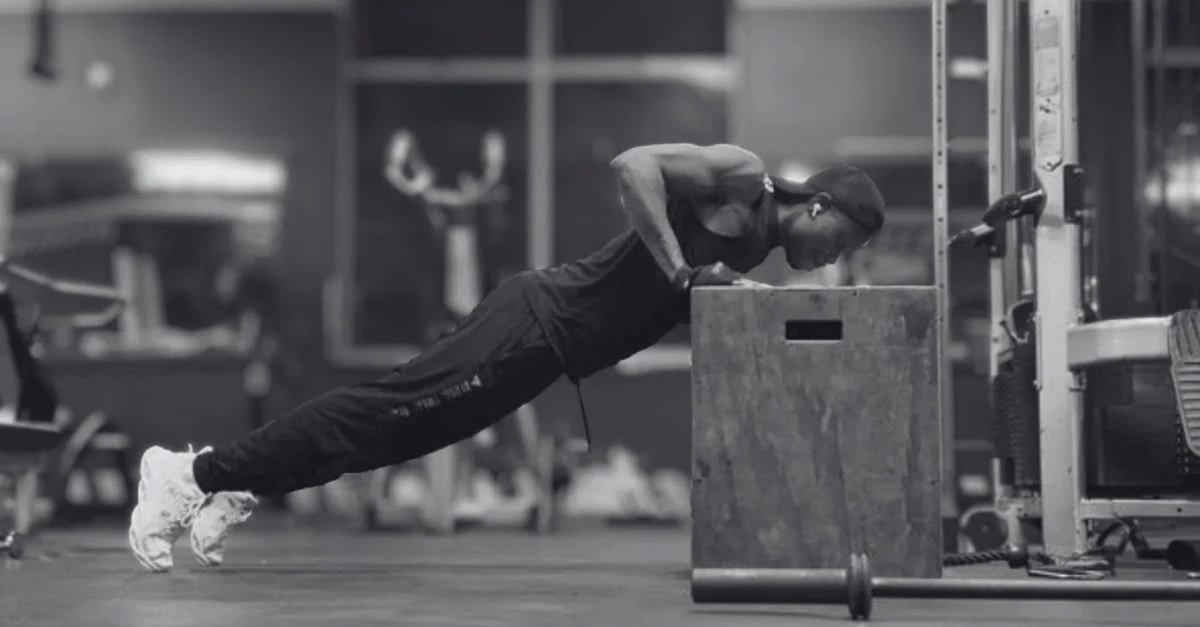
Push-ups primarily target your chest (pectoralis major), shoulders (anterior deltoids), and triceps, while also engaging your core, serratus anterior, glutes, and leg muscles to keep you stable throughout the movement.
Unlike isolation exercises that target a single muscle, push-ups are a compound exercise, meaning multiple muscle groups work together to complete each repetition. As you lower your body toward the floor, your muscles control the movement. As you push yourself back up, they generate the force needed to return to the starting position.
This full-body coordination is one reason push-ups remain one of the most effective bodyweight exercises for building strength, improving stability, and enhancing functional fitness.
The primary muscles worked during a push-up include:
- Pectoralis major (chest): Produces most of the force needed to push your body away from the floor.
- Anterior deltoids (front shoulders): Assist the chest while stabilizing the shoulder joint.
- Triceps brachii: Straighten your elbows during the upward phase of the exercise.
- Core muscles: Keep your spine neutral and prevent your hips from sagging.
- Serratus anterior: Supports healthy shoulder movement by stabilizing your shoulder blades.
- Glutes and legs: Help maintain a straight body position from your head to your heels.
Together, these muscles make push-ups an excellent exercise for developing upper-body strength, improving posture, and increasing muscular endurance.
If you’re new to resistance training, I recommend starting with my Ultimate Strength Training Guide for Adults Over 30 to learn how push-ups fit into a balanced strength-training routine.
Primary Muscles Worked During Push-Ups
Although push-ups activate several muscles throughout your body, your chest, shoulders, and triceps generate most of the force needed to perform each repetition.
Understanding how these muscles work together can help you improve your technique and get better results from every workout.
Let’s take a closer look at how each one contributes to the movement.
1. Pectoralis Major (Chest)
The pectoralis major, also known as the chest muscle, is the primary muscle targeted during a standard push-up. It works hardest during the pushing phase, helping lift your body from the floor.
As you lower yourself, the chest muscles contract to control the movement. When you push back up, they generate the force needed to return to the starting position. Maintaining a full range of motion and controlled repetitions helps maximize chest activation while improving overall upper-body strength.
If your goal is to build a stronger chest after 30, combining push-ups with a well-rounded strength training routine and adequate protein intake can support better long-term results.
2. Anterior Deltoids (Front Shoulders)
Your anterior deltoids, located at the front of your shoulders, play a supporting role throughout the push-up.
These muscles assist the chest during both the lowering and pushing phases while helping stabilize the shoulder joint. Strong shoulders are essential for everyday movements such as lifting, carrying, and reaching overhead.
To keep your shoulders healthy, avoid flaring your elbows too far out to the sides. Instead, keep them at roughly a 45-degree angle, which allows your shoulders to move more naturally and reduces unnecessary stress on the joint.
According to the American Academy of Orthopaedic Surgeons (AAOS), performing strength-training exercises with proper form can help reduce the risk of injury and improve the safety of your workouts.
3. Triceps Brachii
Located on the back of your upper arms, the triceps brachii are responsible for extending your elbows as you push your body upward.
While your chest provides most of the pushing power, your triceps help finish the movement by fully straightening your arms. If your triceps are weak, you may struggle to complete the final portion of each repetition.
One thing I’ve noticed in my own workouts is that when my triceps become stronger, push-ups feel smoother, and I can perform more quality repetitions without my form breaking down. It’s a reminder that every muscle involved plays an important role.
Strengthening your triceps through push-ups can also improve performance in other compound exercises that involve pushing movements.
Together, your chest, shoulders, and triceps form the foundation of every push-up. However, they couldn’t perform the movement efficiently without the support of several stabilizing muscles working behind the scenes.
Secondary Muscles and Stabilizers Used During Push-Ups
While your chest, shoulders, and triceps do most of the work, several other muscles help stabilize your body and keep each repetition controlled.
These supporting muscles are one of the reasons push-ups are considered a full-body exercise rather than just an upper-body movement.
Core Muscles
Your core, including the rectus abdominis, transverse abdominis, and obliques, remains engaged throughout the exercise. Instead of producing the pushing motion, these muscles stabilize your spine and keep your body straight from your shoulders to your heels.
A strong core not only improves your push-up performance but also supports better posture, balance, and overall movement in everyday life.
Serratus Anterior
The serratus anterior is a small but important muscle located along the sides of your rib cage. Its main role during push-ups is to stabilize your shoulder blades, allowing your shoulders to move smoothly and efficiently.
According to the American Council on Exercise (ACE), shoulder stability and mobility work together to promote efficient movement and help maintain joint integrity before progressing to more demanding upper-body exercises.
Glutes and Lower Body
Although they don’t create the pushing motion, your glutes, quadriceps, calves, and lower back muscles work isometrically to keep your body aligned throughout the exercise.
By squeezing your glutes and keeping your legs engaged, you create a stable base that allows your upper body to generate more force. This also helps prevent your hips from sagging.
When all of these muscles work together, push-ups become more than a chest exercise. They improve upper-body strength, core stability, posture, and overall functional fitness, making them an excellent addition to almost any workout routine.
If your goal is to build strength that supports everyday movement, you’ll also enjoy my My Fitness Mistakes After 30: What I Learned article, where I share lessons that helped me train more effectively and avoid common setbacks.
Benefits of Push-Ups After 30
As we age, maintaining strength becomes just as important as building it. Starting in your 30s, it’s normal to gradually lose muscle mass if you don’t regularly challenge your muscles through resistance training.
Fortunately, push-ups offer a simple and effective way to stay strong using nothing more than your body weight.
Here are some of the benefits of adding push-ups to your fitness routine.
1. Help Maintain Muscle Mass
Regular push-ups place your muscles under resistance, encouraging them to stay active and strong. Combined with a balanced diet and adequate protein intake, they can help preserve lean muscle mass as you age.
The National Institute on Aging (NIA) recommends strength-training exercises as part of a healthy lifestyle to help maintain muscle strength and physical function in older adults.
Learn how much protein you need in my guide on Why Protein Matters for Muscle and Fat Loss.
2. Improve Functional Strength
Push-ups strengthen the muscles you use every day, making common tasks like pushing open heavy doors, lifting boxes, carrying groceries, or getting up from the floor feel easier.
One thing I’ve noticed in my own training is that improving my push-up strength also made other upper-body exercises feel more controlled. That’s one of the advantages of compound movements: they improve strength that carries over into daily life.
3. Strengthen Your Core Without Extra Equipment
Push-ups strengthen the muscles that stabilize your shoulders, including the serratus anterior and anterior deltoids, when performed with proper form.
Keeping your elbows at about a 45-degree angle and maintaining a controlled range of motion can help reduce unnecessary stress on the shoulder joints while improving upper-body stability.
4. Convenient and Easy to Progress
One of the best things about push-ups is that you can perform them almost anywhere. Whether you’re exercising at home, traveling, or have limited equipment, they’re an effective way to build strength without needing a gym.
As you become stronger, you can gradually increase the challenge by performing more repetitions, slowing down each repetition, or trying more advanced push-up variations.
If you enjoy home workouts, check out my Beginner Home Workout Plan After 30 for a complete bodyweight routine you can follow at home.
Push-ups may seem simple, but the long-term benefits can be significant when you do them consistently. Combined with good nutrition, proper recovery, and a balanced strength-training routine, they can help you stay stronger, more mobile, and more confident well beyond your 30s.
Common Push-Up Mistakes That Reduce Muscle Activation
Push-ups are simple, but technique mistakes can reduce their effectiveness and increase your risk of discomfort or injury.
I’ve made some of these mistakes myself, especially when I was more focused on completing as many repetitions as possible instead of maintaining proper form.
But the moment I slowed down and paid closer attention to my technique, I noticed better muscle engagement and more consistent progress.
Here are some of the most common push-up mistakes to avoid.
1. Letting Your Hips Sag
Allowing your hips to drop toward the floor adds unnecessary stress on your lower back and reduces core engagement.
How to fix it: Tighten your core and glutes before each repetition, keeping your body in a straight line from your head to your heels.
2. Flaring Your Elbows Too Wide
Flaring your elbows straight out may place extra strain on your shoulders and make the movement less efficient.
How to fix it: Keep your elbows at about a 45-degree angle to your body as you lower yourself. This position improves shoulder mechanics while helping your chest and triceps work more effectively.
3. Using a Partial Range of Motion
Lowering yourself only halfway limits muscle activation and may reduce your strength gains over time.
How to fix it: Lower your body until your chest is just above the floor or your elbows reach roughly a 90-degree angle, then press back up with control.
4. Rushing Through Each Repetition
Speed isn’t always your friend.
Moving too quickly often relies on momentum instead of muscle control, reducing the amount of work your muscles actually perform.
I used to think completing more repetitions as fast as possible meant I was getting a better workout. In reality, slowing down improved both my form and muscle activation.
How to fix it: Lower yourself slowly for two to three seconds, pause briefly, then press back up in a controlled manner.
5. Looking Too Far Up or Down
Your head should stay in line with the rest of your body.
Looking straight ahead or tucking your chin excessively can place unnecessary strain on your neck and affect your posture during the exercise.
How to fix it: Keep your neck neutral by looking a few inches in front of your hands rather than directly forward.
6. Forgetting to Breathe
Many people hold their breath while performing push-ups, especially during challenging sets.
Proper breathing helps maintain stability and can make the exercise feel more controlled.
How to fix it:
- Inhale as you lower your body.
- Exhale as you push yourself back up.
Perfect push-up form isn’t about looking impressive; it’s about making every repetition count. Focusing on quality rather than quantity will help you activate the right muscles, reduce unnecessary strain on your joints, and build strength more effectively over time.
If you’re still unable to perform a full push-up with proper technique, don’t worry. Several beginner-friendly variations can help you build the strength and confidence needed to progress safely.
Best Push-Up Variations for Different Fitness Levels
One of the biggest advantages of push-ups is that they can be adapted to any fitness level. Whether you’re just starting your fitness journey or looking for a greater challenge, there’s a push-up variation that can help you continue building strength safely and effectively.
Each variation shifts the emphasis slightly, allowing you to target certain muscles more or less, depending on your goal.
1. Incline Push-Ups
If you’re new to strength training or returning after a long break, incline push-ups are an excellent starting point.
By placing your hands on a sturdy bench, table, or countertop, you reduce the amount of body weight you have to lift. This makes the exercise easier while still strengthening your chest, shoulders, triceps, and core.
Incline push-ups are particularly useful for adults over 30 who want to improve their technique before progressing to standard push-ups.
If you’re just getting started, check out my Beginner At-Home Strength Training Guide for a step-by-step routine.
2. Knee Push-Ups
Knee push-ups are another beginner-friendly option.
Although they’re easier, they still activate many of the same muscles as the standard push-up, making them an effective progression exercise.
The goal shouldn’t be to stay with knee push-ups forever, but to transition to standard push-ups as your strength improves.
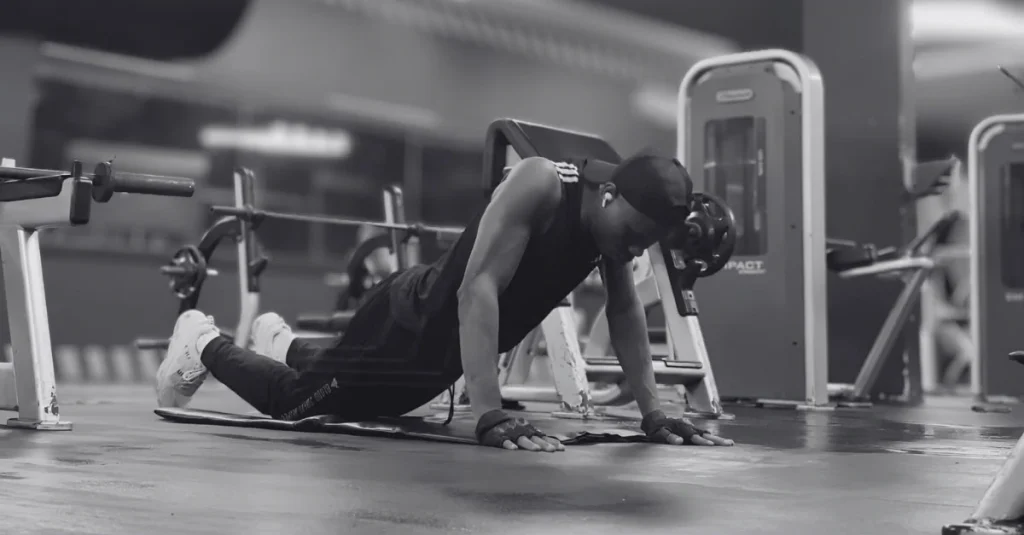
3. Standard Push-Ups
The standard push-up provides the best combination of upper-body and core training.
It primarily targets your chest, shoulders, and triceps, while it allows your core, glutes, and legs to stabilize your body throughout the repetition.
For most adults, mastering the standard push-up is an excellent benchmark of functional upper-body strength.
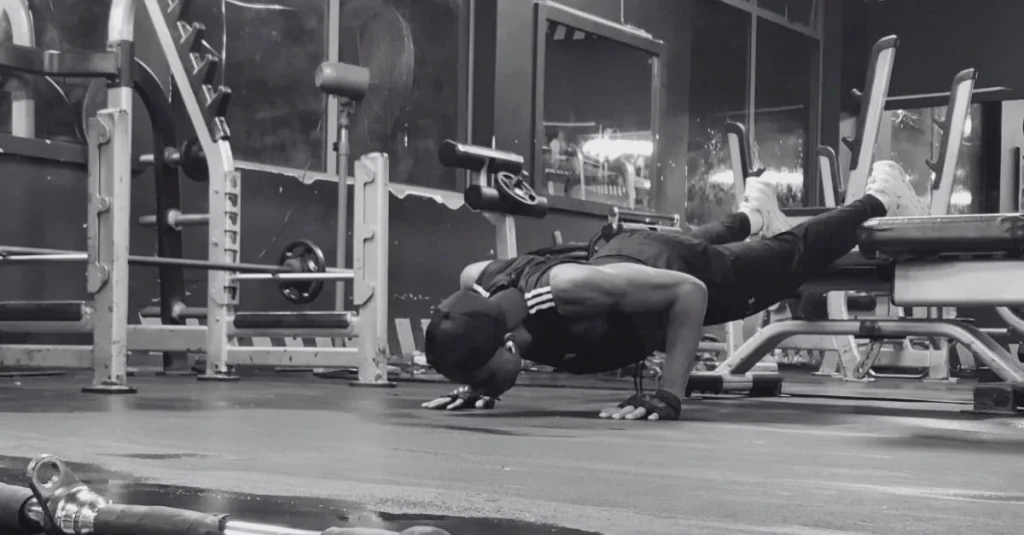
4. Decline Push-Ups
Decline push-ups shift more of your body weight toward your upper body by elevating your feet on a bench or sturdy platform.
This places greater emphasis on the upper chest and front shoulders while also increasing the overall difficulty of the exercise.
Decline push-ups are a great progression once standard push-ups become too easy.
5. Diamond Push-Ups
Diamond push-ups are performed by placing your hands close together beneath your chest, forming a diamond shape with your thumbs and index fingers.
This variation increases the workload on your triceps while still engaging your chest and shoulders.
Because they require greater arm strength, diamond push-ups are best suited for intermediate and advanced exercisers.
Which Variation Is Best After 30?
There isn’t a single variation that’s best for everyone.
The right choice depends on your current fitness level, strength, and goals.
- Beginners: Start with incline or knee push-ups.
- Intermediate: Focus on mastering standard push-ups with perfect form.
- Advanced: Progress to decline or diamond push-ups to continue challenging your muscles.
The key is to prioritize proper technique before increasing the difficulty. Consistently performing quality repetitions will produce better long-term results than rushing into advanced variations too soon.
Remember, fitness after 30 isn’t about proving how many difficult exercises you can do; it’s about training in a way that keeps you strong, healthy, and injury-free for years to come.
Are Push-Ups Enough to Build Muscle After 30?
Push-ups are an excellent exercise for building upper-body strength and muscular endurance, but they shouldn’t be the only exercise in your routine if your goal is to maximize muscle growth.
As your body adapts, standard push-ups become less challenging. To continue building muscle, you’ll need to apply progressive overload by increasing the difficulty of your workouts. You can do this by performing more repetitions, slowing down each repetition, trying advanced push-up variations, or incorporating resistance training with dumbbells or resistance bands.
I learned this lesson during my own fitness journey. For a while, I relied almost entirely on standard push-ups because they were convenient and effective. Eventually, my progress slowed. But when I started adding other strength exercises and gradually increasing the challenge, I noticed improvements in both my strength and overall muscle development.
For adults over 30, combining push-ups with a well-rounded strength-training program, adequate protein intake, and sufficient recovery often produces better long-term results than relying on a single exercise.
Frequently Asked Questions
Do push-ups build muscle?
Yes. Push-ups can help build muscle, especially if you’re a beginner or returning to exercise after a break. As your strength improves, increasing the difficulty through progressive overload will help you continue making progress.
Do push-ups work your abs?
Yes. Although push-ups primarily target your chest, shoulders, and triceps, your core muscles remain engaged throughout the movement to stabilize your body and maintain proper alignment.
Are push-ups enough for chest growth?
Push-ups are effective for strengthening and developing the chest, particularly for beginners. However, combining them with other resistance exercises and progressive overload can lead to greater muscle development over time.
How many push-ups should adults over 30 do?
There isn’t a single number that’s right for everyone. Focus on performing 2 to 4 sets with good form, stopping when you have 1–2 repetitions left before failure. As you become stronger, gradually increase the challenge by adding more repetitions or progressing to harder variations.
Can I do push-ups every day?
You can, provided your muscles have recovered, and you’re not experiencing pain or excessive fatigue. Many people benefit from performing push-ups 2–4 times per week while allowing adequate recovery between challenging sessions.
Final Thoughts
Push-ups are much more than a simple chest exercise. They strengthen your chest, shoulders, triceps, core, serratus anterior, glutes, and several stabilizing muscles, making them one of the most effective bodyweight exercises for improving upper-body strength and overall fitness.
For adults over 30, push-ups help maintain muscle mass, improve functional strength, and support healthy aging without requiring expensive equipment or a gym membership. The key is to focus on proper form, challenge yourself gradually, and combine push-ups with a balanced strength training routine and a good nutrition plan.
If you’re starting, remember that consistency matters more than perfection. Even a few well-performed sets each week can make a meaningful difference over time.
Join the Conversation
How many push-ups can you perform with good form?
Share your answer in the comments below, and if you have a favorite push-up variation, let us know which one has helped you the most.