Beginner At-Home Strength Training After 30: A Complete Guide
Table of Contents
ToggleCan you start strength training at home after 30, even if you have never lifted weights before?
Absolutely. You don’t need a gym membership, expensive equipment, or years of training experience to begin. Your own body weight can provide resistance, and as you become stronger, you can gradually make your workouts more challenging.
In this guide, you’ll learn what strength training at home involves, what you need to get started, how to train without equipment, five beginner-friendly strength exercises, and how to build a simple home routine that you can progress over time.
What Is Strength Training at Home?
Strength training at home is a type of exercise that uses resistance to challenge your muscles and help them get stronger. That resistance can come from your own body weight, resistance bands, dumbbells, or other equipment.
You don’t need a traditional gym to strength train. Exercises like squats, lunges, push-ups, glute bridges, and planks can all be done at home with little or no equipment.
The basic idea is to make your muscles work against resistance. When you perform a squat, for example, your legs and glutes have to work against the resistance created by your body weight. A push-up challenges your chest, shoulders, arms, and core as you move your body against gravity.
As you become stronger, you can gradually increase the challenge. You might perform more repetitions, add another set, slow down the movement, try a more difficult variation, or eventually add resistance with bands or weights.
For beginners over 30, the goal is not to make every workout extremely difficult. It is to learn the basic movements, use good form, give your body enough time to recover, and gradually build strength.
Home strength training can also be flexible. You can exercise in a small space and adjust your workouts around your schedule, making it easier to build a routine you can maintain.
The important thing is to start at a level that matches your current ability and progress gradually rather than trying to do too much too soon.
What Do You Need for Strength Training at Home?
One of the good things about strength training at home is that you do not need a large home gym to get started.
For most beginners, the most important things are enough space to move safely, comfortable clothing, and a simple plan you can follow consistently. You can start with bodyweight exercises and add equipment later if you need more resistance.
1. A Safe Space to Exercise
You need enough room to move through exercises without bumping into furniture or other objects.
A small area in your bedroom, living room, garage, or another clear space can work. Before you begin, check that the floor is stable and that there are no loose objects that could cause you to trip.
You should also make sure you have enough space to fully extend your arms and legs during exercises such as lunges, push-ups, and floor-based movements.
2. Comfortable Workout Clothes
You do not need expensive fitness clothing. Wear something that allows you to move comfortably and doesn’t restrict your squats, lunges, or other exercises.
Supportive footwear can also be useful, especially for exercises that involve standing, jumping, or quick changes in movement.
Optional Equipment for Home Strength Training
Although you can begin without equipment, a few simple items can give you more options as you become stronger.
- Resistance bands: These are lightweight and easy to store. Different band strengths can provide increasing levels of resistance.
- Dumbbells: A pair of dumbbells can make exercises such as squats, lunges, rows, and presses more challenging.
- Exercise mat: A mat can make floor exercises such as glute bridges and planks more comfortable, particularly on hard floors.
- Sturdy chair or bench: A stable chair can be useful for exercises such as incline push-ups or as support when learning certain movements. Make sure it is strong and doesn’t slide before using it.
You do not need to buy all of these items at once. Start with what you already have, learn the basic movements, and add equipment when you need a new challenge.
How to Start Strength Training at Home After 30
Starting strength training at home does not have to be complicated. If you are a beginner, your first few workouts should be about learning the movements, becoming comfortable with resistance training, and building a routine you can maintain.
Here are some simple steps to help you get started.
1. Start With Two or Three Workouts a Week
You do not need to strength train every day to make progress.
Start with two or three sessions per week and give your muscles time to recover between workouts. This can also make it easier to fit training around work, family, and other responsibilities.
The CDC recommends that adults include muscle-strengthening activities on at least two days a week as part of their physical activity guidelines.
For example, you could train on Monday, Wednesday, and Friday, with rest or lighter activity between sessions.
2. Learn the Basic Movement Patterns
Instead of trying to learn dozens of exercises at once, start with a few basic movements that train different parts of your body.
These can include:
- Squatting
- Lunging
- Pushing
- Pulling
- Hip hinging
- Bracing your core
Exercises such as squats, push-ups, lunges, glute bridges, and rows can help you practice these movements.
Learning good technique should come before worrying about how many repetitions you can complete.
3. Choose Exercises You Can Control
Your workout should challenge you without making you lose control of the movement.
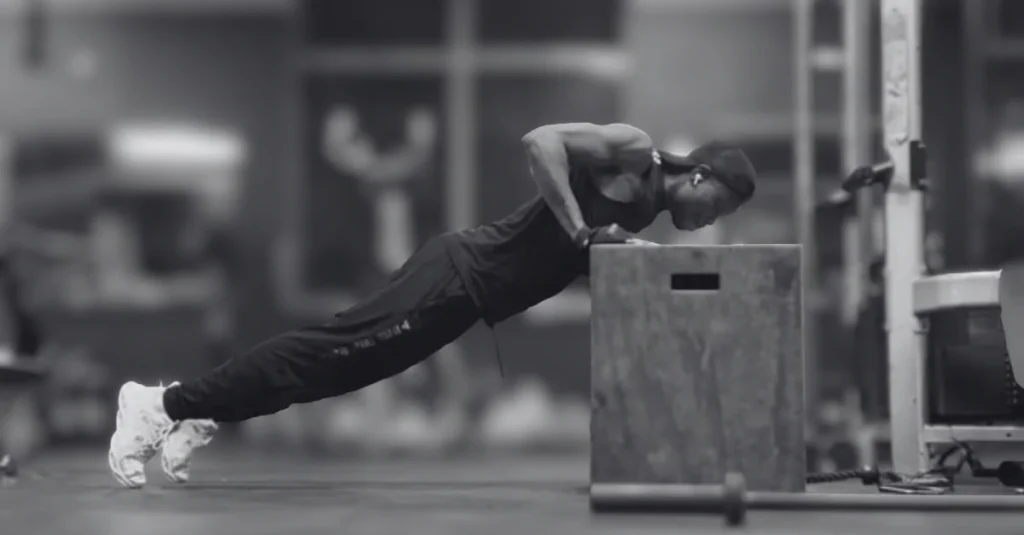
If an exercise is too difficult to perform with good form, use an easier variation. For example, you can perform push-ups against a wall or sturdy elevated surface before progressing to floor push-ups.
Likewise, you can use a chair for support during certain lower-body exercises if you need extra stability.
The goal is to find a version of each exercise that is challenging enough to train your muscles but manageable enough for you to perform safely.
4. Start With a Manageable Amount of Work
More exercise isn’t automatically better, especially when you are new to strength training.
You might begin with one or two sets of each exercise and several repetitions that you can perform with good technique. As the exercises become easier, you can gradually increase the amount of work.
There is no need to exhaust yourself during every workout.
5. Focus on Progress, Not Perfection
Your first workout may not feel perfect, and that is normal.
Over time, you can make your workouts more challenging by adding repetitions, increasing the number of sets, slowing your movements, using a harder exercise variation, or adding resistance.
This gradual increase in challenge is one way to apply progressive overload, which is an important part of getting stronger.
If you already have experience with fitness after 30, you can also read my guide on “how to start a fitness journey after 30 for more general advice on building a sustainable exercise routine.
6. Give Your Body Time to Recover
Your muscles need time to recover after strength training.
Avoid training the same muscle groups hard every day when you are just starting. Rest days can be complete off days, or you can use them for easier activities such as walking or gentle movement.
Getting enough sleep, eating a balanced diet, and staying hydrated can also support your overall recovery.
7. Make Your Routine Simple Enough to Repeat
The best beginner workout isn’t necessarily the longest or most complicated one. A routine that you can consistently complete is more useful than a demanding program that you abandon after a few weeks.
Start small, learn the exercises, and gradually build from there.
Once you are comfortable with these basics, you can begin using a simple full-body routine that combines several beginner-friendly exercises in one workout.
If you want to learn more about building strength after 30, read our strength training guide for beginners after 30.

5 Beginner Strength Training Exercises You Can Do at Home
You don’t need a long list of exercises to begin strength training. A few basic movements can train most of the major muscle groups in your body and give you a solid foundation to build on.
If you are new to strength training, focus on controlled movements and good technique rather than trying to complete as many repetitions as possible.
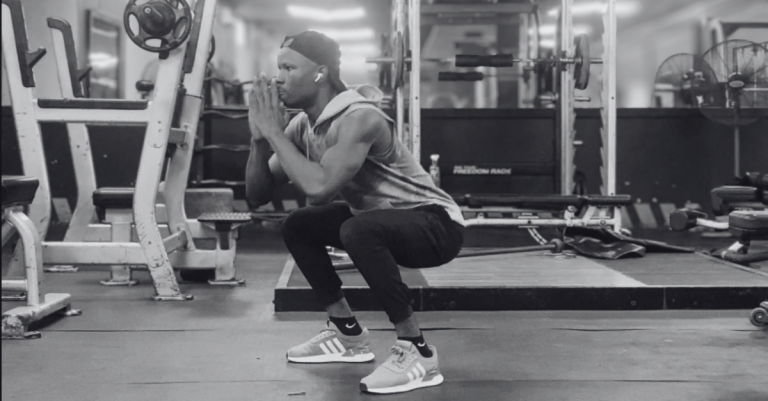
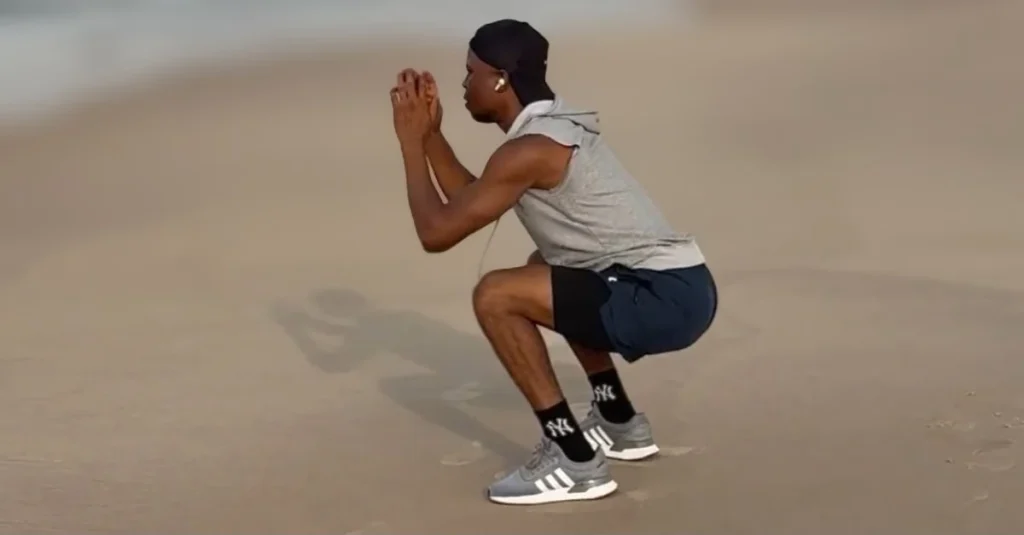
1. Bodyweight Squats
Bodyweight squats mainly work your legs and glutes while also requiring your core to help stabilize your body.
Stand with your feet about shoulder-width apart. Keep your chest up, brace your core, and bend your knees and hips to lower your body as if you are sitting toward a chair. Go as low as you can while maintaining control, then push through your feet to return to the starting position.
If regular squats feel difficult, you can squat toward a sturdy chair for support and control.
2. Push-Ups
Push-ups work your chest, shoulders, arms, and core.
Start in a plank position with your hands slightly wider than your shoulders. Keep your body in a relatively straight line as you bend your elbows and lower your chest toward the floor. Push through your hands to return to the starting position.
If a standard push-up is too difficult, begin with your hands on a sturdy elevated surface, such as a countertop or bench. As you get stronger, gradually move toward a lower surface and eventually a floor push-up.
If you want to understand the muscles involved in more detail, see our guide on what muscles push-ups work.
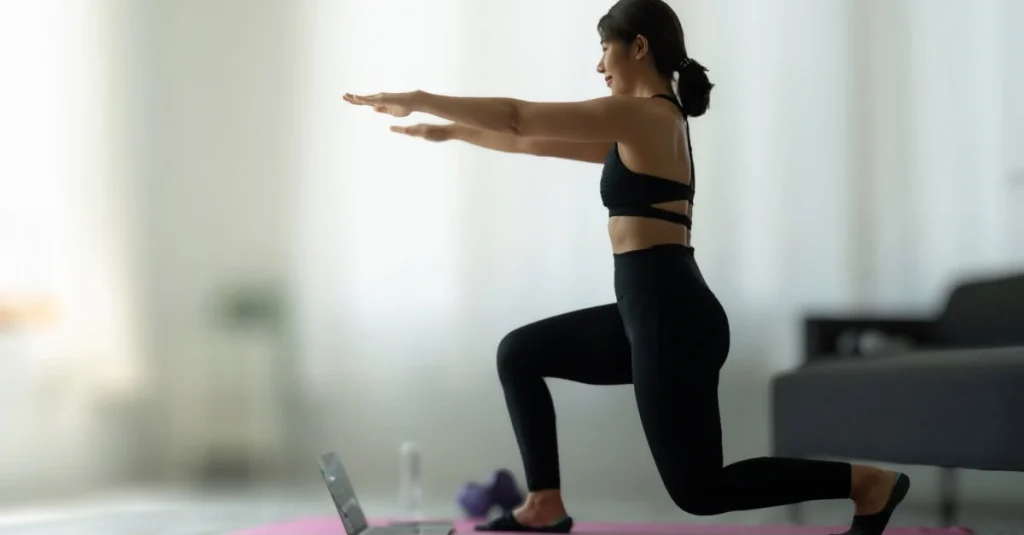
3. Reverse Lunges
Reverse lunges train your legs and glutes while also challenging your balance and stability.
Stand upright with your feet about hip-width apart. Step one foot backward and lower your body until both knees are comfortably bent. Push through your front foot to return to the starting position, then repeat on the other side.
If you are still developing your balance, perform the exercise near a wall or sturdy surface that you can use for support.
4. Glute Bridges
Glute bridges are a simple way to train your glutes and the muscles around your hips.
Lie on your back with your knees bent and your feet flat on the floor. Keep your arms beside your body and brace your core. Press through your feet and squeeze your glutes as you lift your hips from the floor. Pause briefly at the top, then lower your hips with control.
Once regular glute bridges become easy, you can increase the challenge by adding repetitions, slowing the movement, or progressing to a single-leg variation.
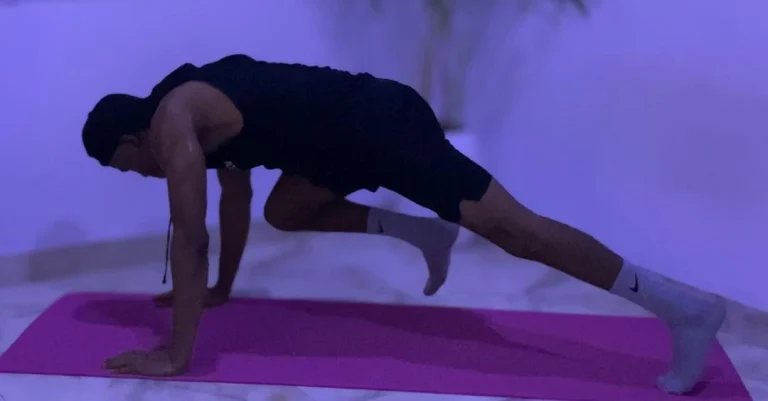
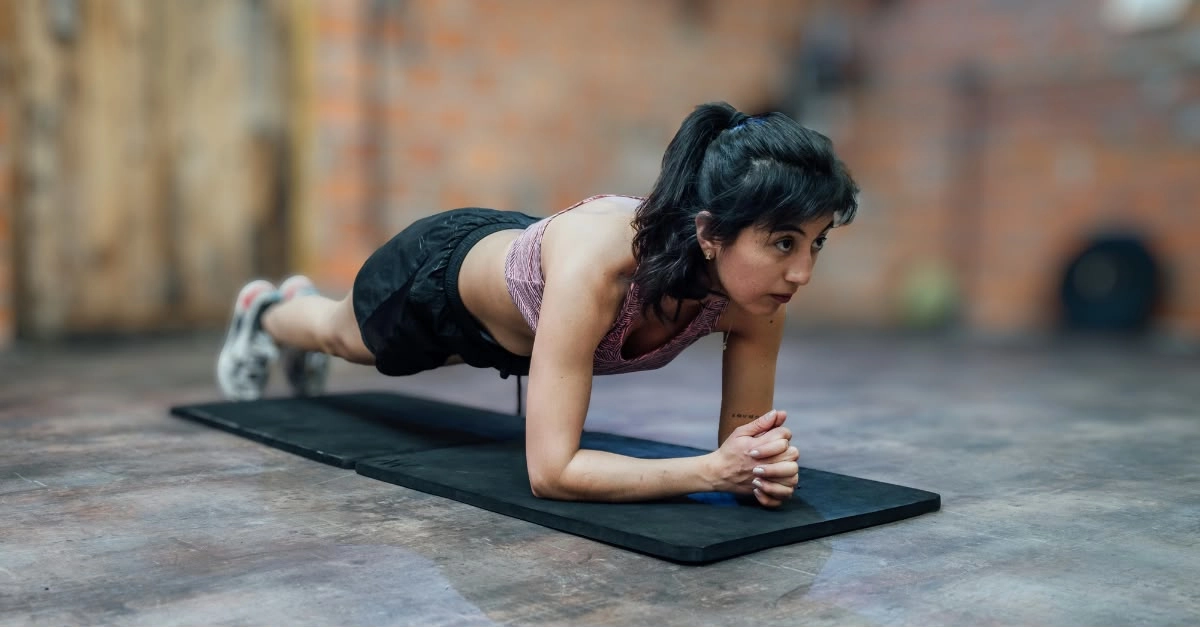
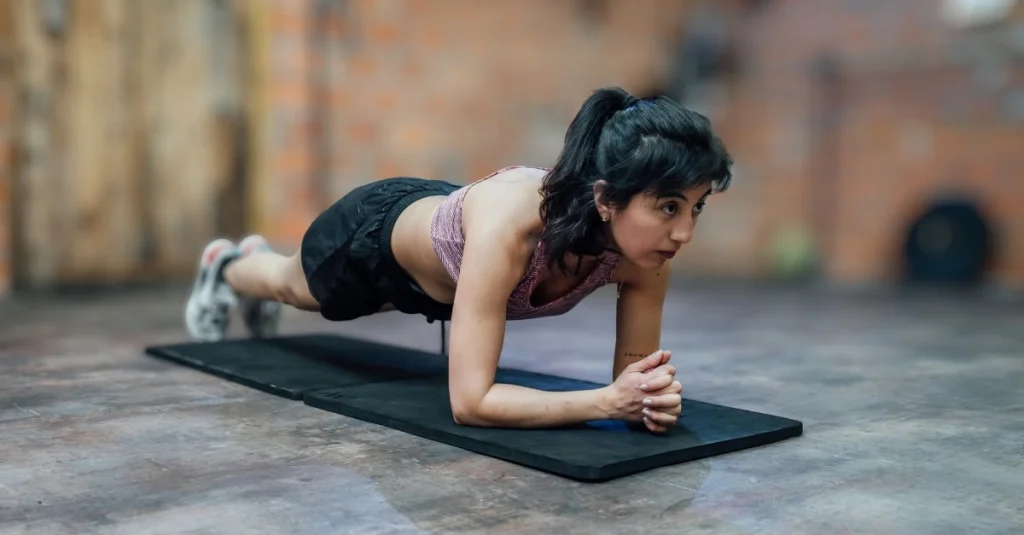
5. Planks
Planks train your core and help you practice keeping your body stable while resisting movement.
Start with your forearms and toes on the floor and keep your body in a straight line. Brace your abdominal muscles and avoid letting your hips drop or rise too high.
If a full plank is too challenging, you can start with your knees on the floor and gradually work toward the full version.
You don’t have to perform all five exercises in every workout. Choose exercises that match your current ability and combine movements that train different parts of your body.
As you become more comfortable, you can increase the challenge gradually rather than trying to make every workout harder at once. This approach can help you build strength while keeping your home workouts manageable.
How to Do Strength Training at Home Without Equipment
You can begin strength training at home without dumbbells, resistance bands, or other workout equipment. Your body weight can provide enough resistance for many beginner exercises, especially when you are learning how to control each movement.
Exercises such as squats, reverse lunges, push-ups, glute bridges, and planks can all be done with little or no equipment.
The key is to make the exercises challenging enough to encourage your muscles to adapt while maintaining good technique.
How to Progress as You Get Stronger
As your body adapts to your workouts, the same exercises may eventually feel easier. Instead of completely changing your routine, you can gradually increase the challenge.
You can do this by:
- Adding more repetitions: If 8 repetitions become easy, you can gradually work toward 10 or 12.
- Adding another set: Once you are comfortable with one or two sets, adding another set can increase the amount of work your muscles perform.
- Using harder variations: You might progress from incline push-ups to lower surfaces and eventually to standard push-ups.
- Slowing your repetitions: Performing an exercise with controlled movement can make it more challenging without adding equipment.
- Increasing your range of motion: As your mobility and control improve, a comfortable increase in movement range can make some exercises more demanding.
- Adding resistance: When bodyweight exercises are no longer challenging enough, resistance bands, dumbbells, or another suitable form of resistance can provide a new challenge.
- Improving your technique: Getting stronger is not only about doing more repetitions. Better control, stability, and form are also important signs of progress.
You do not need to increase everything at once. Make small changes when an exercise starts feeling easier, and give yourself enough time to adapt.
The goal is steady progress rather than making every workout harder than the last one.
As you become stronger, you can gradually increase the challenge or add resistance. If your goal is to build more muscle at home, you can also learn more in our guide on how to build muscle at home.
A Simple Beginner At-Home Strength Training Routine
Knowing which exercises to do is helpful, but having a simple routine can make it easier to put what you have learned into practice.
The workout below is designed as a starting point for beginners. It uses mostly bodyweight exercises, so you can perform it at home without a full set of equipment.
Beginner Full-Body Workout
- Bodyweight squats — 8–12 repetitions: Keep your chest up and lower your body under control. Push through your feet to return to the starting position.
- Incline push-ups — 6–12 repetitions: Place your hands on a sturdy elevated surface and keep your body controlled as you lower and push yourself back up. If these become easy, you can gradually progress toward floor push-ups.
- Reverse lunges — 6–10 repetitions per leg: Step one foot backward, lower yourself under control, and push through your front foot to return to standing. Use a wall or another stable surface for support if you need help with balance.
- Glute bridges — 10–15 repetitions: Lie on your back with your knees bent and feet flat. Lift your hips while squeezing your glutes, pause briefly, and lower yourself slowly.
- Plank — 15–30 seconds: Keep your body controlled and brace your core. If a full plank is too difficult, place your knees on the floor.
How to Structure the Workout
Start with one or two sets of each exercise. Rest between exercises and sets as needed so you can maintain good form.
You do not need to rush through the workout. A controlled 20-minute session can be more useful than trying to complete a longer workout while your technique is breaking down.
As you become more comfortable with the exercises, you can gradually increase the number of sets or repetitions.
For example, you might begin with two sets twice a week. After a few weeks of consistent training, you could progress to three sets or add another weekly session if your recovery is good.
The routine is also flexible. If an exercise is too difficult, use an easier variation. If it becomes too easy, increase the challenge using the progression methods discussed earlier.
How Often Should You Do This Workout?
For most beginners, two or three full-body strength-training sessions per week can provide a practical starting point.
Try to leave recovery time between challenging sessions rather than training the same muscles hard on consecutive days.
You can use the days between strength workouts for walking, mobility work, or other activities you enjoy. For example, you could strength train on Monday, Wednesday, and Friday and use the other days for lighter activity or recovery.
The most important thing is to choose a schedule you can realistically maintain.
As you gain experience, you can gradually adjust your exercises, training frequency, sets, repetitions, and resistance based on your goals and progress.
Common Beginner Mistakes With At-Home Strength Training
Starting strength training at home can be simple, but beginners can sometimes make the process harder than it needs to be. Avoiding a few common mistakes can help you build a more sustainable routine.
1. Doing Too Much Too Soon
It can be tempting to train hard every day when you are motivated to get results. However, your body needs time to adapt to a new training routine.
Start with a manageable amount of exercise and increase the challenge. You do not need to finish every workout feeling exhausted.
2. Ignoring Your Technique
Completing more reps isn’t helpful if your form is breaking down.
Learn the basic movement first and practice performing it with control. If an exercise becomes difficult enough that you cannot maintain good technique, stop or switch to an easier variation.
3. Never Increasing the Challenge
The opposite problem is doing the same workout for months without making any adjustments.
If your exercises become noticeably easier, consider increasing repetitions, adding a set, slowing the movement, using a more difficult variation, or eventually adding resistance.
4. Training Through Pain
Muscle fatigue and the normal challenge of exercise are different from pain caused by an injury.
If an exercise causes sharp, severe, or unusual pain, stop performing it rather than pushing through it. If pain continues or you are concerned about an injury, consider speaking with an appropriate healthcare professional.
5. Skipping Recovery
Your workout provides the stimulus, but recovery gives your body time to adapt.
Ensure there is enough recovery between challenging sessions, and pay attention to why recovery matters, including sleep, nutrition, hydration, and how your body feels.
6. Comparing Your Progress With Other People
Someone else may be able to perform more repetitions, lift heavier weights, or progress more quickly. That does not mean you need to follow their routine.
Your starting point depends on your previous exercise experience, strength, mobility, and other individual factors.
Focus on making your own workouts better rather than trying to match someone else’s progress.
7. Making the Routine Too Complicated
You don’t need dozens of exercises to have a useful home workout.
A few well-chosen movements that train your major muscle groups can give you a solid foundation. Once you become comfortable with the basics, you can gradually add new exercises or equipment if you need more variety.
The goal is to build a routine that is challenging enough to help you improve but simple enough that you can continue doing it consistently.
Final Thoughts
Starting strength training after 30 does not require a gym, expensive equipment, or an advanced workout plan. You can begin at home with simple bodyweight exercises and gradually increase the challenge as you become stronger.
Focus on learning good technique, training consistently, allowing enough recovery time, and progressing at a pace that works for you. You do not need to make every workout perfect. What matters more is building a routine you can continue.
If you are just getting started, choose a few exercises from this guide, begin with a manageable amount of work, and give yourself time to improve.
Join the Conversation
Have you started strength training at home after 30? Join the conversation and share what has worked for you.