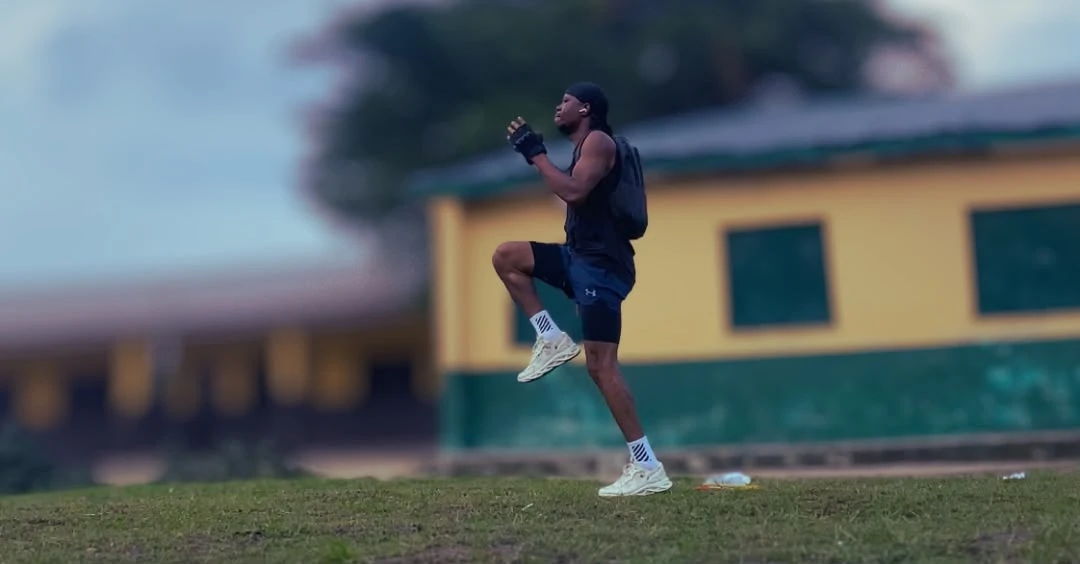
High Knees Exercise: Benefits, Muscles Worked & How to Do It
Table of Contents
ToggleHave you ever started doing high knees and wondered if you’re actually doing them right?
I used to think this exercise was simply about lifting your knees as high and as quickly as possible. But I didn’t realize there was more to this simple bodyweight exercise than it looks. Your hips, legs, core, arms, coordination, and cardiovascular system all work together as you alternate from one leg to the other.
That’s one reason high knees can be useful in a home workout, warm-up, or cardio routine. You don’t need equipment, much space, or a complicated setup. And if the faster version feels too challenging, you can start with a high-knee march and gradually build up.
But what exactly do high knees do? What muscles do they work? Can they help with belly fat? How should beginners perform them, and what happens if you do them every day?
In this guide, I’ll break down how to perform high knees correctly, the muscles they target, their potential benefits, beginner-friendly modifications, and how to incorporate them into a balanced fitness routine, especially if you’re trying to stay active and consistent after 30.
What are High Knees Exercise?
High knees are a bodyweight exercise that involves lifting one knee toward your torso while driving the opposite arm forward, then alternating sides in a continuous movement.
The exercise is more like running in place, but with a deliberate focus on knee drive and coordinated arm movement.
You can perform them slowly for a lower-intensity variation or increase your pace for a more demanding cardio movement. Because they require no equipment and very little space, high knees can fit into a warm-up, home workout, cardio, or exercise circuit.
If you’re new to the movement, you can also start with a high-knee march, which lets you practice the alternating leg-to-arm pattern at a slower, lower-impact pace.
What Muscles Do High Knees Work?
High knees work several muscle groups at once, particularly the muscles of your lower body and core. Your hip flexors, quadriceps, glutes, hamstrings, calves, and abdominal muscles all contribute to the movement, while your arms and shoulders help coordinate each repetition.
Below are the muscles involved:
Hip Flexors
Your hip flexors are heavily involved because they help lift your thigh toward your torso. Each time you drive one knee upward, these muscles help produce that movement.
Quadriceps
Your quadriceps help extend your knee and support your body as you alternate between legs. They also help control your leg as you transition from one repetition to the next.
Glutes and Hamstrings
Your glutes and hamstrings help stabilize and control your hips and legs throughout the movement. The supporting leg also helps maintain your balance while the opposite knee rises.
Calves
Your calves work as your feet repeatedly contact and push away from the floor. Because high knees involve continuous alternating steps, they help you maintain the rhythm and support each landing.
Core
Your abdominal and other core muscles help stabilize your torso while your arms and legs move. Keeping your core engaged can make it easier to maintain an upright and controlled position.
Arms and Shoulders
Your arms aren’t the primary muscles being trained, but they contribute to the movement. Pumping the opposite arm as you lift each knee helps with rhythm, balance, and coordination.
So, what muscles do they work? They involve your lower body and core, while your arms contribute to the coordinated movement. However, high knees are better viewed as a cardio and muscular-endurance exercise than as a replacement for strength exercises such as squats or lunges.
How to Do High Knees Correctly
High knees may look simple, but proper form can help you maintain control and get more from the movement. Start slowly and focus on coordination before trying to increase your speed.
- Stand tall: Start with your feet about hip-width apart, chest lifted, and shoulders relaxed.
- Engage your core: Gently brace your abdominal muscles and keep your torso controlled as you move.
- Lift one knee: Drive one knee toward your torso while keeping your standing leg stable. You don’t need to force your knee higher than you can comfortably control.
- Move the opposite arm: As your right knee rises, bring your left arm forward. Alternate the opposite arm and leg throughout the movement.
- Alternate and increase your pace: Land with control, switch legs, and gradually increase your speed once you can maintain good form.
The goal isn’t to move as fast as possible. If your posture, balance, or coordination starts to break down, slow down and regain control before increasing the intensity.
High Knees Exercise Benefits
High knees are a simple movement, but they can provide several benefits when included in a balanced exercise routine.
The benefits you experience can depend on how quickly you perform them, how long you exercise, and your overall fitness level.
Here’s how:
1. They Can Raise Your Heart Rate
The repeated movement of your arms and legs can quickly make the exercise more demanding, making high knees useful for cardio intervals and conditioning.
2. They Work Multiple Muscle Groups
This exercise targets your hip flexors, quadriceps, glutes, hamstrings, calves, and core, while your arms help coordinate the movement.
3. They Can Improve Coordination
Because you alternate your arms and legs, high knees require rhythm, balance, and coordination. Practicing the movement helps you become more comfortable with this type of alternating movement.
4. They Require No Equipment
You can perform them almost anywhere with enough room to move safely. This makes them convenient for home workouts and short exercise sessions.
5. They Can Add Intensity to a Workout
High knees require continuous movement, so they use energy and can contribute to your overall calorie expenditure. However, the amount you burn depends on factors such as your body size, pace, duration, and exercise intensity.
High knees aren’t a magic exercise, but they can be a convenient way to add more movement and cardiovascular activity to your routine. The CDC recommends regular physical activity as part of a healthy lifestyle.

Can High Knees Help You Lose Belly Fat?
If you’re doing high knees to lose belly fat, it’s important to understand what the exercise can and cannot do.
They can increase your energy expenditure and help you burn calories. However, they cannot specifically target belly fat. Your body loses fat according to your overall energy balance and individual fat storage, rather than choosing exactly where fat comes off first.
High knees can still be part of a weight-loss routine when combined with regular physical activity, strength training, and an eating pattern that supports a sustainable calorie deficit.
If your goal is to reduce belly fat after 30, you can also read my How to Lose Belly Fat After 30 guide for a broader look at sustainable fat-loss strategies. The CDC’s healthy weight guide also emphasizes physical activity and healthy eating as important parts of maintaining a healthy weight.
High Knees for Beginners
If you’re new to this exercise, you don’t need to start by moving as fast as possible. Focus on learning the movement and gradually increase the intensity as you become more comfortable.
1. Start With a High-Knee March
If regular high knees feel too intense, begin with a high-knee march. Lift one knee toward your torso while keeping the opposite foot on the floor, then alternate sides while moving your arms naturally.
The high-knee march is slower and lower impact, making it useful for beginners, warm-ups, or anyone who wants to practice the movement before progressing to faster high knees.
3. Use Short Intervals
You can start with short periods, such as 15–20 seconds, followed by enough rest to recover. Repeat the rounds and increase the duration as the movement becomes easier.
4. Adjust the Knee Height
You don’t have to force your knees extremely high. Use a comfortable range of motion that allows you to maintain good posture and control.
The goal is to build your ability gradually rather than trying to perform the most intense version immediately.
How Long Should You Do High Knees?
The right amount of time depends on your fitness level, the workout intensity, and your overall workout.
If you’re a beginner, start with 15–20 seconds of high knees, then rest to recover. You can repeat this for 2–4 rounds and then increase the work period as the movement becomes easier.
For a warm-up, shorter periods at a moderate pace may be enough. If you’re using high knees for cardio or conditioning, you can include longer intervals or alternate periods with lower-intensity movement.
Can You Do High Knees Every Day?
You don’t necessarily need to perform them every day. Lower-intensity variations such as high-knee marching may be easier to incorporate, while faster, higher-intensity high knees place greater demands on your body.
Instead of focusing on a specific number of repetitions each day, aim for a balanced routine that includes aerobic activity, strength training, and adequate recovery.

Common High Knees Mistakes to Avoid
High knees are simple to learn, but rushing through them can make it harder to maintain good technique. Watch out for these common mistakes.
1. Going Too Fast
Speed shouldn’t come before control. If you can’t maintain your posture or coordination, slow down until the movement feels more manageable.
2. Leaning Too Far Back
Keep your torso relatively upright as you lift your knees. Excessive backward leaning can make it less controlled.
3. Poor Arm and Leg Coordination
Your opposite arm should move with each raised knee. For example, your left arm moves forward as your right knee comes up.
4. Landing Too Heavily
Try to land with control rather than pounding your feet into the floor. Keep the movement light and controlled.
5. Forcing Your Knees Too High
You don’t need to lift your knees higher than you can comfortably control. A lower knee drive is perfectly acceptable while you’re learning.
If maintaining good form becomes difficult, reduce your pace or switch temporarily to the high-knee march before progressing again.
How to Add High Knees to Your Workout
High knees can be used in several ways depending on your goal and fitness level. You don’t need to build an entire workout around them.
1. As a Warm-Up
Start with a high-knee march, then progress to controlled high knees for a short interval. Keep the intensity moderate so you don’t fatigue yourself before the main workout.
2. As a Cardio Interval
Try 20 seconds of high knees followed by 40 seconds of rest or easy movement. Repeat for 3–5 rounds and then adjust the work and recovery periods to your fitness level.
In a Full-Body Circuit
You can also combine high knees with strength exercises:
- 20 seconds of high knees
- 10 squats
- 8–10 push-ups
- 10 alternating lunges
- Rest for 60 seconds
- Repeat 2–3 rounds
This allows you to combine cardiovascular movement with muscle-strengthening exercises.
For more ideas, you can link naturally here to your Best Home Workouts for Weight Loss After 30 article.
The key is to choose an intensity you can control and gradually increase the challenge as your fitness improves.
Are High Knees Safe for Everyone?
High knees can be appropriate for many people, but the faster and more intense version can be more demanding than the marching variation.
If you’re new to exercise, start with high-knee marching or slower high knees before progressing to a faster pace. Choose a stable surface with enough space to move safely, and focus on controlled movement rather than speed.
Pay attention to how your body responds. If an exercise causes pain, stop and switch to a more comfortable, lower-impact variation.
If you have an existing injury, health condition, or concerns about whether high-impact exercise is appropriate for you, speak with a qualified healthcare professional before adding high knees to your routine.
Frequently Asked Questions About High Knees
Are high knees a cardio exercise?
Yes. They are primarily cardiovascular exercises because continuous movement can raise your heart rate and breathing. They can be used during warm-ups, cardio intervals, or conditioning workouts.
How many high knees should I do?
There isn’t a single number that everyone needs to complete. Beginners can start with short intervals of 15–20 seconds and gradually increase the duration as their fitness improves.
What happens if you do 100 high knees every day?
Doing 100 can add some physical activity to your day, but it doesn’t guarantee weight loss or dramatically improve fitness on its own. Your results depend on your overall activity, nutrition, recovery, and consistency.
Can high knees improve coordination?
They can challenge coordination because you must alternate your legs while moving the opposite arm. Practicing the movement at a controlled pace can help you become more comfortable with this pattern.
Final Thoughts
High knees are a simple bodyweight exercise that can challenge your cardiovascular system while working your hips, legs, core, and coordination. You don’t need to perform them at maximum speed to benefit from the movement.
If you’re a beginner, start with a high-knee march or shorter intervals and gradually increase the intensity as your fitness improves. You can use high knees in a warm-up, cardio session, or full-body workout alongside strength-training exercises.
The key is to focus on good form, appropriate intensity, and consistency rather than chasing a specific number of repetitions. For staying active after 30, high knees can be one useful movement within a balanced fitness routine.
Join the Conversation
Have you tried adding high knees to your workout routine after 30? We’d love to hear about your experience.
Do you use them as part of your warm-up, cardio workout, or HIIT routine? Have you noticed improvements in your endurance, coordination, or overall fitness?
Share your thoughts, tips, or questions in the comments below. Your experience could encourage and inspire someone else to begin their own fitness journey.
If you found this guide helpful, consider sharing it with friends or family who are looking for simple, effective exercises to stay active after 30.