Jump Squats: Benefits, Proper Form, Muscles Worked & Mistakes to Avoid
Table of Contents
ToggleHave you ever tried jump squats and wondered why they feel so much harder than regular squats?
I remember the first time I incorporated jump squats into my workout. I thought they would be just another variation of the traditional squat. But after a few repetitions, my legs started shaking, my heart rate skyrocketed, and I realized this simple-looking exercise challenged my strength, power, balance, and endurance all at once.
That’s because jump squats are more than just a squat followed by a jump. When performed with proper form, they can help strengthen your lower body, improve explosive power, increase calorie burn, and enhance cardiovascular fitness.
However, using poor technique or progressing too quickly may increase your risk of injury, especially if you’re new to plyometric exercises or returning to training after a break.
In this guide, you’ll learn what jump squats are, the muscles they work, their benefits, how to perform them with proper form, common mistakes to avoid, the best variations to try, and whether they’re the right exercise for your fitness level.
What Are Jump Squats?
Jump squats are a plyometric lower-body exercise that combines a traditional squat with an explosive jump. Unlike regular squats, which focus on building strength, jump squats train your muscles to generate force quickly, helping improve power, speed, agility, and overall athletic performance.
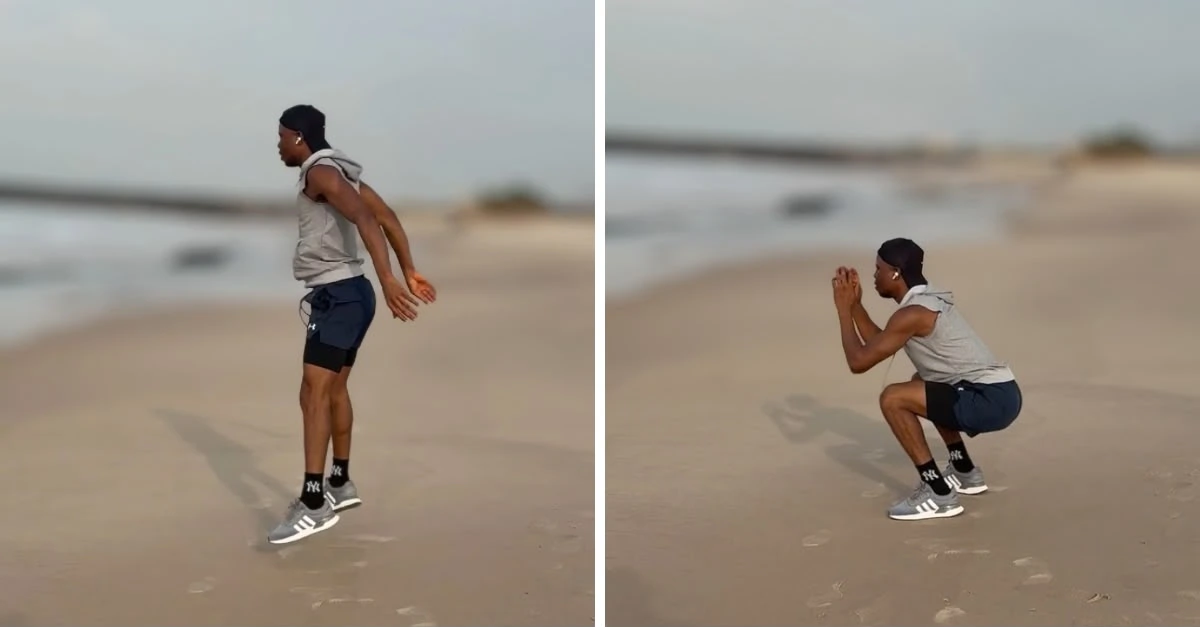
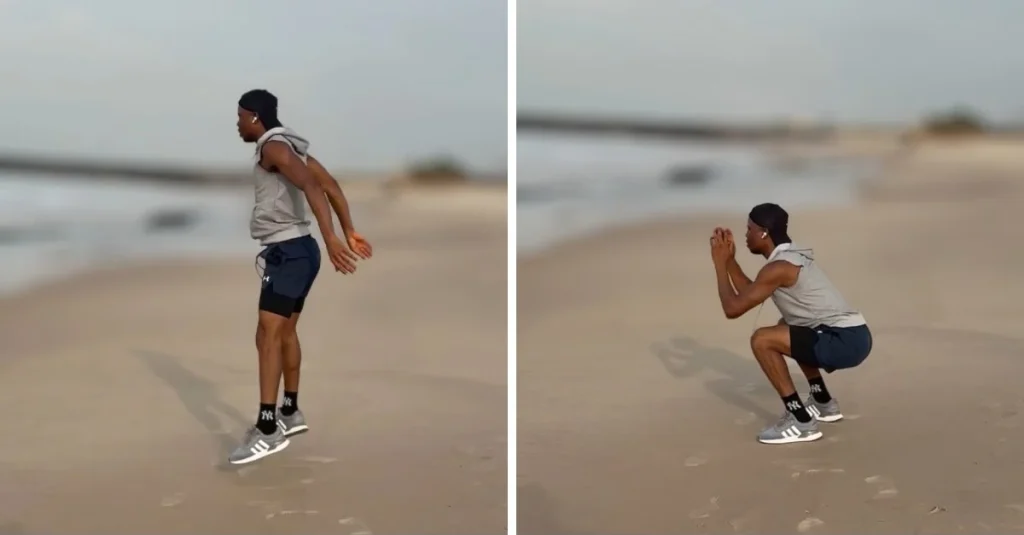
The exercise begins by lowering into a squat with your feet about shoulder-width apart. From the bottom of the movement, you drive through your heels and explosively jump upward while landing softly and immediately preparing for the next repetition.
Because jump squats require both strength and coordination, they challenge multiple fitness components at once. In addition to strengthening your lower-body muscles, they elevate your heart rate, making them an effective exercise to improve cardiovascular fitness and increase calorie expenditure.
For adults over 30, jump squats can be a valuable addition to a well-rounded workout routine. However, they are considered a high-impact exercise, so it’s important to master the standard bodyweight squat before progressing to the jumping variation. Starting with proper technique and gradually increasing intensity can help reduce stress on your knees and ankles while improving long-term performance.
According to the National Strength and Conditioning Association (NSCA), plyometric training can improve muscular power and athletic performance when incorporated into a well-designed training program using proper technique and progression.
If you’re new to squatting, read our article on How to Do Squat Correctly: Benefits, Proper Form & Common Mistakes before progressing to jump squats.
Benefits of Jump Squats
Jump squats offer more than just a challenging workout. Because they combine strength training with explosive movement, they help improve muscular power, cardiovascular fitness, and overall athletic performance.
Whether your goal is to build stronger legs, burn more calories, or improve your fitness after 30, jump squats can be a valuable addition to your routine when performed correctly.
1. Strengthens Your Lower-Body Muscles
Jump squats primarily target the quadriceps, glutes, hamstrings, and calves. Repeatedly performing the explosive movement helps develop lower-body strength while also engaging your core to stabilize your body throughout each repetition.
If your goal is to build stronger legs, jump squats work well along with traditional squats, lunges, and other compound lower-body exercises.
Related Reading: Read our article on Walking Lunges: Benefits, Muscles Worked & Proper Form guide to learn another effective lower-body exercise to build stronger legs.
2. Improves Explosive Power
Unlike regular squats, jump squats train your muscles to produce force quickly. This explosive movement can improve your vertical jump, sprinting ability, agility, and overall athletic performance.
3. Increases Calorie Burn
Because jump squats involve large muscle groups and require explosive effort, they demand more energy than standard bodyweight squats. They also elevate your heart rate, making them an effective exercise to increase calorie expenditure during a workout.
While jump squats alone won’t guarantee weight loss, they can contribute to a calorie deficit when combined with regular physical activity and a balanced eating pattern.
If your goal is fat loss, read our Weight Loss After 30: A Guide to Fat Loss to learn how exercise and nutrition work together for sustainable results.
4. Improves Cardiovascular Fitness
Jump squats challenge both your muscles and cardiovascular system. Performing multiple repetitions or incorporating them into a circuit or HIIT workout can increase your heart rate, which can improve cardiovascular endurance over time.
The Physical Activity Guidelines for Americans recommend regular moderate- and high-intensity physical activity to support heart health and overall fitness.
5. Enhances Balance and Coordination
Explosive movements require good balance, body control, and coordination. Learning to jump and land with proper technique improves stability and helps your body move more efficiently during sports and everyday activities.
This benefit becomes increasingly important as we age because maintaining balance and coordination can help support functional movement and reduce the risk of falls.
What Muscles Do Jump Squats Work?
Jump squats are a compound exercise, meaning they target multiple muscle groups at once. While the movement primarily targets your lower body, it also engages your core to help maintain balance and stability throughout each repetition.
1. Quadriceps
The quadriceps, located at the front of your thighs, are the primary muscles used during jump squats. They help control the lowering phase of the squat and generate the force needed to push your body off the ground during the jump.
2. Glutes
Your gluteus maximus is one of the largest muscles in your body and plays a major role in hip extension. During jump squats, your glutes produce explosive power to help you jump higher while also supporting proper hip alignment throughout the movement.
3. Hamstrings
The hamstrings work along with your glutes to extend your hips and stabilize your knees. They also help absorb impact when you land, making them important for both performance and injury prevention.
4. Calves
Your calf muscles, including the gastrocnemius and soleus, help propel you upward during the jump and cushion your landing. Strong calves also contribute to better balance and ankle stability.
5. Core Muscles
Although jump squats are primarily a lower-body exercise, your abdominal muscles, obliques, and lower back work continuously to stabilize your torso. Keeping your core engaged helps maintain good posture and improves control throughout the movement.
6. Hip Muscles
The hip flexors and smaller stabilizing muscles around your hips help control movement and maintain proper alignment during both the jumping and landing phases.
Why This Matters After 30
As you get older, preserving muscle mass and lower-body strength becomes increasingly important for maintaining mobility, balance, and everyday function. Because jump squats recruit several major muscle groups at once, they can be an efficient way to build strength and power when performed with proper technique and appropriate progression.
According to the American Council on Exercise (ACE), compound exercises that involve multiple joints and muscle groups are an efficient way to improve overall fitness while making workouts more time-efficient.
How to Do Jump Squats with Proper Form
Many people rush through jump squats by focusing only on how high they can jump. In reality, proper technique is far more important than height. Using correct form helps you generate more power, reduce stress on your joints, and lower your risk of injury.
Follow these steps to perform a jump squat correctly:
1. Start in the Correct Position
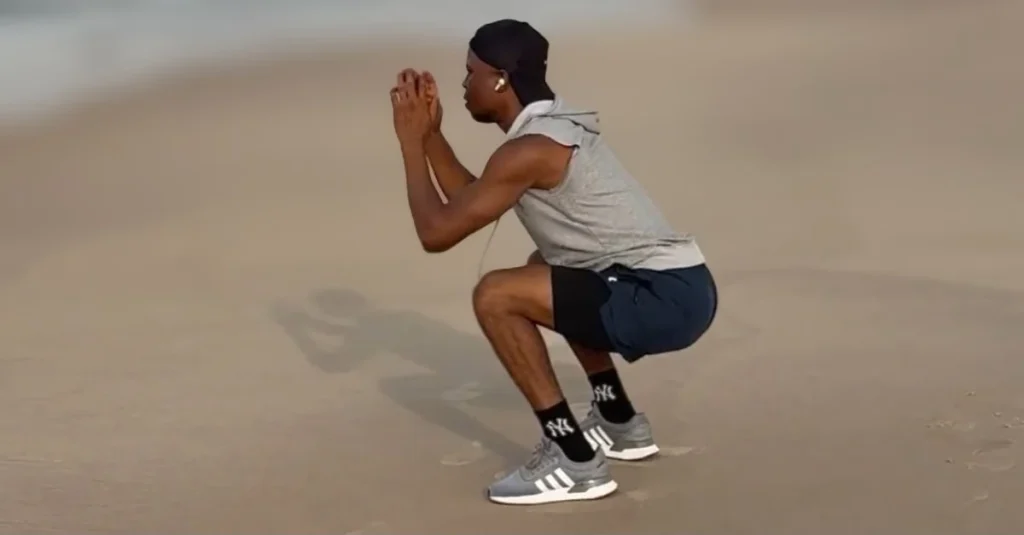
Stand with your feet about shoulder-width apart and toes pointing slightly outward. Keep your chest up, shoulders back, and engage your core to maintain a neutral spine throughout the movement.
2. Lower into a Squat
Push your hips back and bend your knees until your thighs are roughly parallel to the floor or as low as your mobility comfortably allows. Keep your weight evenly distributed through your feet, and avoid letting your knees collapse inward.
3. Explode Upward
Drive through your heels and extend your hips, knees, and ankles in one powerful movement. Swing your arms naturally if needed to help generate momentum, and jump as high as you can while maintaining control.
4. Land Softly
Land quietly on the balls of your feet before allowing your heels to touch the ground. Bend your knees and hips as you absorb the impact, keeping them aligned with your toes. Avoid locking your knees or landing with stiff legs.
5. Reset and Repeat
Pause briefly to regain your balance before performing the next repetition. Focus on maintaining good form throughout each repetition rather than rushing through the exercise.
Pro Tip: Land as softly as possible. A controlled landing is just as important as an explosive jump because it helps reduce impact on your knees and ankles.
Common Form Mistakes to Avoid
Even experienced exercisers can make mistakes that reduce the effectiveness of jump squats or increase the risk of injury.
- Letting your knees cave inward during the squatting or landing.
- Rounding your lower back instead of keeping your chest up.
- Landing with stiff legs instead of bending your knees to absorb impact.
- Jumping for maximum height at the expense of proper technique.
- Performing repetitions too quickly and sacrificing control.
- Allowing your heels to lift too early during the squat.
If you notice your form breaking down, reduce the number of repetitions or take a short rest before continuing. Quality repetitions are more beneficial than completing more reps with poor technique.
Jump Squats vs Regular Squats: What’s the Difference?
At first glance, jump squats and regular squats may look similar, but they serve different purposes. While both strengthen your lower body, the explosive jump changes how your muscles work and the benefits each exercise provides.
Jump Squats
Jump squats are a plyometric exercise that combines a traditional squat with an explosive jump. They are designed to improve power, speed, agility, and cardiovascular fitness while also strengthening your lower-body muscles.
Jump squats are ideal if you want to:
- Improve explosive power and athletic performance.
- Increase calorie burn during your workouts.
- Boost cardiovascular fitness.
- Add intensity to your lower-body training.
Because jump squats are high-impact, they require good squat technique and may not be suitable for beginners or those with knee, ankle, or hip pain.
Regular Squats
Regular squats focus on building lower-body strength, muscle mass, and movement quality without the explosive jumping. They are generally easier to learn and have less impact on your joints.
Regular squats are ideal if you want to:
- Build lower-body strength.
- Improve squat technique.
- Increase muscle mass.
- Develop a strong foundation before progressing to more advanced exercises.
Which Exercise Is Better?
Neither exercise is better than the other; they serve different purposes.
If your goal is to build strength, improve movement quality, or you’re just starting your fitness journey, regular squats are usually the better choice.
If you already have a solid strength foundation and want to improve power, athletic performance, or increase workout intensity, jump squats can be an excellent addition to your routine.
Which Is Better After 30?
For most adults over 30, starting with regular squats is the smarter approach. Once you can perform them comfortably with proper form, you can gradually introduce jump squats to improve lower-body power and cardiovascular fitness.
Do Jump Squats Build Muscle?
Yes, jump squats can help build muscle, particularly in your quadriceps, glutes, hamstrings, and calves. However, because they are plyometric exercises, their primary purpose is to develop explosive power and muscular endurance rather than to maximize muscle size.
When you perform jump squats, your lower-body muscles contract rapidly to generate enough force to propel your body off the ground. This explosive movement stimulates muscle fibers differently than traditional strength exercises, making jump squats an effective addition to a balanced training program.
If your main goal is muscle growth (hypertrophy), jump squats are best used along with resistance exercises such as barbell squats, goblet squats, walking lunges, and Romanian deadlifts. Combining strength training with proper nutrition and adequate recovery creates the best environment for building muscle.
Can Jump Squats Help You Lose Weight?
Jump squats can also support weight loss because they are a high-intensity exercise that increases your heart rate and burns calories. Since they recruit several large muscle groups at once, they require more energy than many isolation exercises.
However, no single exercise causes fat loss on its own. Sustainable weight loss comes from maintaining a calorie deficit through a combination of regular physical activity, healthy eating habits, and consistent lifestyle changes.
Should You Rely Only on Jump Squats?
Although jump squats are an excellent lower-body exercise, they shouldn’t be the only movement in your workout routine. A well-rounded fitness program should include:
- Lower-body strength exercises
- Upper-body training
- Core exercises
- Cardiovascular activity
- Mobility and flexibility work
Including a variety of exercises helps reduce overuse injuries, improve overall fitness, and support long-term progress.
How Many Jump Squats Should You Do?
The ideal number of jump squats depends on your fitness level, training experience, and goals. Since jump squats are a high-impact plyometric exercise, quality is more important than quantity.
Performing each repetition with proper form will produce better results than completing a high number of reps with poor technique.
Beginners
If you’re new to jump squats, start with:
- 2–3 sets of 5–8 repetitions
- Rest for 60–90 seconds between sets.
Focus on learning proper landing mechanics and maintaining good technique before increasing the number of repetitions.
Intermediate Exercisers
Once you’ve mastered the movement, you can gradually increase your training volume.
A good starting point is:
- 3–4 sets of 8–12 repetitions
- Rest for 60–90 seconds between sets.
At this stage, concentrate on explosive power while maintaining control throughout every repetition.
Advanced Exercisers
If you have experience with plyometric training, you may perform:
- 3–5 sets of 10–15 repetitions
Advanced exercisers can also incorporate jump squats into circuit training or high-intensity interval training (HIIT) workouts to increase intensity and improve cardiovascular fitness.
Should You Do 100 Jump Squats a Day?
While completing 100 jump squats every day may sound like a good challenge, it isn’t the best approach for most people.
Because jump squats place significant stress on your muscles, tendons, and joints, performing them daily without adequate recovery may increase fatigue and the risk of overuse injuries.
Instead of focusing on a specific number, aim for 2–3 sessions a week as part of a balanced strength-training program. This gives your muscles enough time to recover while still allowing you to improve strength, power, and endurance.
Tips for Better Results
To get the most from jump squats:
- Prioritize proper form over jumping as high as possible.
- Warm up before every workout.
- Land softly with your knees slightly bent.
- Increase training volume gradually.
- Allow at least 48 hours of recovery before training the same muscle groups intensely again.
Are Jump Squats Safe?
Jump squats can be a safe and effective exercise when performed with proper technique and incorporated into a well-balanced workout program.
However, because they are a high-impact plyometric exercise, they place greater stress on your knees, ankles, hips, and lower back than traditional bodyweight squats.
If you’re healthy, have good lower-body strength, and can perform regular squats with proper form, jump squats can help improve power, coordination, and cardiovascular fitness. The key is to progress gradually and prioritize quality over quantity.
Who Should Avoid Jump Squats?
Jump squats may not be suitable for everyone. Consider avoiding them or consulting a qualified healthcare professional if you:
- Have knee, ankle, hip, or lower back pain.
- Are recovering from a recent lower-body injury or surgery.
- Have poor balance or difficulty performing a regular squat with good form.
- Experience pain during or after jumping movements.
- Are new to exercise and haven’t yet developed a foundation of lower-body strength.
If any movement causes sharp or persistent pain, stop the exercise immediately and choose a lower-impact alternative.
Tips to Reduce Your Risk of Injury
You can make jump squats safer by following a few simple guidelines:
- Warm up thoroughly before your workout.
- Master the bodyweight squat before progressing to jump squats.
- Land softly with your knees slightly bent to absorb impact.
- Keep your knees aligned with your toes throughout the movement.
- Start with a low number of repetitions and increase gradually.
- Allow adequate recovery between plyometric workouts.
According to the American Academy of Orthopaedic Surgeons (AAOS), using proper technique and gradually increasing intensity and duration of exercise can help reduce the risk of exercise-related injuries.
Low-Impact Alternatives to Jump Squats
If jump squats aren’t right for you, several effective lower-body exercises place less stress on your joints while still building strength:
- Bodyweight squats
- Goblet squats
- Walking lunges
- Step-ups
- Glute bridges
- Wall sits
These exercises can help you develop the strength and stability needed before progressing to more explosive movements.
If you’re looking for a joint-friendly lower-body exercise, read our article on Goblet Squat: Benefits, Proper Form & Muscles Worked.
Frequently Asked Questions
Are Jump Squats Good for You?
Yes, jump squats can be a beneficial exercise for improving lower-body strength, power, balance, and cardiovascular fitness. They also increase your heart rate, making them an effective addition to a well-rounded workout routine.
However, because jump squats are a high-impact exercise, they may not be suitable for everyone. Beginners should first master regular squats before progressing to the jumping variation.
Do Jump Squats Burn Fat?
Jump squats can help increase calorie expenditure because they engage multiple large muscle groups and elevate your heart rate. However, no single exercise burns fat from a particular area of the body.
Sustainable fat loss comes from maintaining a calorie deficit through regular physical activity, healthy eating habits, and consistency over time.
Are Jump Squats Better Than Regular Squats?
Neither exercise is better; they have different purposes.
Regular squats are ideal for building foundational strength and muscle, while jump squats focus on developing explosive power, speed, and cardiovascular fitness.
Including both exercises in your training routine can help you build strength while improving athletic performance.
Can Beginners Do Jump Squats?
Yes, but only after mastering the bodyweight squat.
Being able to perform regular squats with good technique helps prepare your muscles and joints for the added impact of jumping and landing.
If you’re new to exercise, begin with bodyweight squats before progressing to jump squats.
Are Jump Squats Bad for Your Knees?
Not necessarily. When performed with proper form, jump squats are generally safe for healthy individuals.
Problems often arise when people land with stiff legs, allow their knees to collapse inward, or attempt too many repetitions before developing adequate strength and control.
If you have existing knee pain or an injury, consult a healthcare professional before performing high-impact exercises.
Can Jump Squats Help You Jump Higher?
Yes. Jump squats are commonly used in athletic training to improve lower-body power, which can contribute to a higher vertical jump when combined with a well-designed strength and plyometric training program.
Final Thoughts
Jump squats are an effective lower-body exercise that can help improve strength, explosive power, cardiovascular fitness, and overall athletic performance. Because they combine the benefits of strength training with plyometric movement, they offer a challenging workout that engages multiple muscle groups at once.
The key to getting the most from jump squats is to focus on proper form, progressing gradually, and allowing enough time for recovery. Whether you’re training to build power, burn more calories, or add variety to your workouts, consistency and good technique will help you achieve better results while reducing your risk of injury.
If you’re just getting started, begin with bodyweight squats to build a strong foundation before progressing to jump squats. As your strength and confidence improve, you can gradually increase the intensity and incorporate different variations into your routine.
Join the Conversation
What about you? Have you added jump squats to your workouts, or are you planning to try them for the first time? Share your experience or questions in the comments below. We’d love to hear from you!