How to Build Muscle at Home After 30
Table of Contents
ToggleHave you ever wondered if you can still build noticeable muscle at home after 30 without spending hours in the gym?
I’ve had that question myself. As I got older, I realized that building muscle wasn’t about doing more exercises or training as hard as possible. It’s about paying more attention to how I trained, how I progressed, what I ate, and how well I recovered.
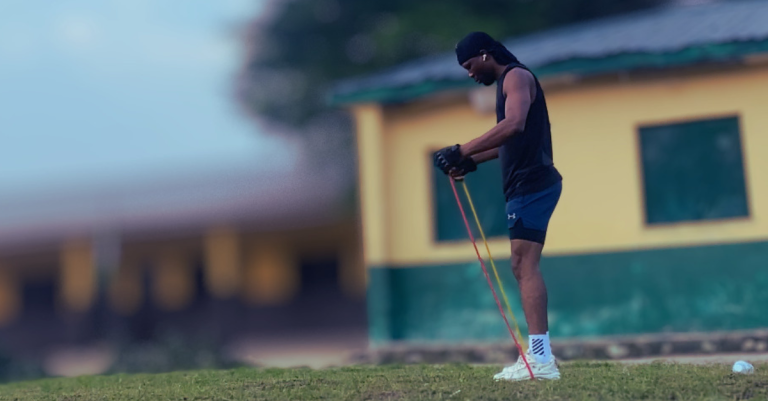
The good news is that you can build muscle at home after 30. You don’t need a fully equipped gym to get started. Bodyweight exercises can provide resistance, while dumbbells, resistance bands, or other equipment can provide more options as you become stronger.
But doing the same exercises repeatedly isn’t enough. To build muscle, you need to gradually challenge your muscles and give your body enough protein, calories, and recovery time to adapt.
In this guide, I’ll show you how to build muscle at home after 30, whether you’re training with no equipment, using basic weights, or starting from scratch.
Can You Actually Build Muscle at Home?
Yes, you can build muscle at home after 30.
You don’t need a commercial gym, expensive machines, or a complicated workout setup to stimulate your muscles. What you need is enough resistance to challenge the muscles you’re training, along with a plan that challenges you over time.
That resistance can come from your body weight, resistance bands, dumbbells, kettlebells, or other external resistance. For someone new to training, even basic bodyweight exercises can be challenging enough to stimulate progress.
However, doing the same exercises repeatedly isn’t enough. As your muscles adapt, the exercises need to become more challenging. This is where progressive overload becomes important.
Nutrition and recovery matter too. Your body needs adequate protein, energy, and time to recover and adapt to resistance training.
So, yes—you can build muscle at home. The real question isn’t whether your home is equipped like a gym. It’s whether your training provides enough challenge and whether you’re consistently giving your body what it needs to grow.
What Do You Need to Build Muscle at Home?
Building muscle at home doesn’t require a complicated setup. You need a few fundamentals that give your muscles a reason to adapt and allow you to keep progressing.
1. Resistance That Challenges Your Muscles
Your muscles need to work against resistance. That can come from your body weight, resistance bands, dumbbells, kettlebells, or other forms of resistance.
You don’t necessarily need expensive equipment. The American College of Sports Medicine’s 2026 resistance-training guidance notes that bodyweight exercises, elastic bands, and home-based training can be effective for improving muscle size and strength.
2. Progressive Overload
As you become stronger, your workouts need to become more challenging.
You can do that by gradually increasing the weight, repetitions, sets, exercise difficulty, or other aspects of the movement. You don’t have to make every workout harder, but your overall training should progress over time.
3. Enough Training
Consistency matters more than trying to destroy yourself in every workout. You don’t need to train every day to make progress. Instead, focus on following a routine you can maintain consistently while gradually increasing the challenge over time
Your exact training frequency for muscle growth can depend on your experience, routine, recovery, and how you train each muscle group.
4. Adequate Nutrition
Training gives your muscles the stimulus to adapt, but your body also needs adequate nutrition to support that process.
Getting enough protein is particularly important, while your overall calorie and nutrient intake should support your training and goals.
For a complete nutrition guide, read my guide Nutrition After 30
5. Recovery
Your muscles also need time to recover between challenging workouts. Sleep, rest days, and managing your overall training load all contribute to your ability to keep progressing.
You don’t need to train every day to build muscle. You need a routine that challenges your muscles, allows you to recover, and is realistic enough to maintain.
In short, building muscle at home comes down to resistance, progressive workouts, adequate nutrition, recovery, and consistency.
How to Build Muscle at Home
Building muscle at home comes down to creating enough training stimulus and gradually giving your muscles a reason to adapt. You don’t need a complicated program or a large collection of equipment.
1. Choose Exercises That Train All Major Muscle Groups
Start with movements that train all your major muscle groups.
Depending on what you have available, this could include:
- Push-ups for your chest, shoulders, and triceps
- Rows for your back and biceps
- Squats for your quads and glutes
- Lunges or split squats for your legs and glutes
- Hip-hinge movements for your hamstrings and glutes
- Shoulder presses for your shoulders and triceps
- Calf raises for your calves
- Core exercises for your abdominal muscles
You don’t need to perform every exercise in one workout. Choose a manageable selection that fits your current ability and allows you to train consistently.
2. Make Each Set Challenging
Doing the same workout with the same resistance forever can eventually limit your progress.
Instead, look for ways to increase the challenge as you become stronger. You can do this by:
- Adding repetitions
- Increasing resistance
- Adding a set
- Choosing a more difficult variation
- Increasing your range of motion
- Improving your control of the movement
For example, you might begin with standard push-ups and gradually increase your repetitions. Once they become too easy, you could move to a more challenging variation or add resistance.
You don’t have to make every workout harder. What matters is that your training becomes more challenging over time.
3. Train Consistently
You also need to give your muscles repeated exposure to resistance training. Consistency matters more than trying to destroy yourself in every workout.
Choose a routine that fits your schedule and is easy to maintain. If you’re constantly changing your workouts or training so hard that you can’t recover, it becomes harder to make steady progress.
4. Give Your Body Time to Recover
Muscle growth isn’t just about what you do during your workout. Your body also needs time to recover from the training stimulus.
Allow enough recovery between challenging sessions, get adequate sleep, and avoid assuming that training harder or more frequently will automatically produce better results.
The goal is simple: choose effective exercises, challenge your muscles, progressively increase the difficulty, and follow a routine you can sustain.
Related Reading: Discover why recovery matters for building muscle after 30.
Can You Build Muscle at Home Without Weights or Equipment?
Yes, you can build muscle at home without traditional weights, especially if you’re new to resistance training or still have room to progress with bodyweight exercises.
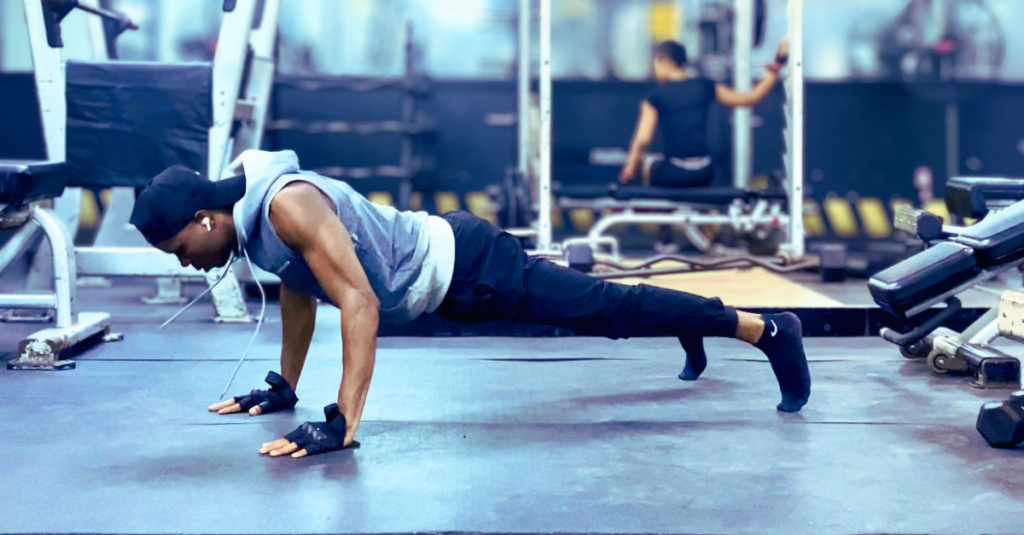
Your body weight can provide resistance through exercises such as push-ups, squats, lunges, split squats, pike push-ups, and other movements.
The challenge is ensuring your muscles continue to receive enough resistance as you become stronger.
1. Start With Exercises That Match Your Strength
You don’t need to begin with advanced variations. Choose an exercise that challenges you while allowing you to maintain good technique.
For example, you might start with:
- Incline push-ups before progressing to standard push-ups
- Bodyweight squats before progressing to split squats
- Reverse lunges before progressing to more demanding single-leg variations
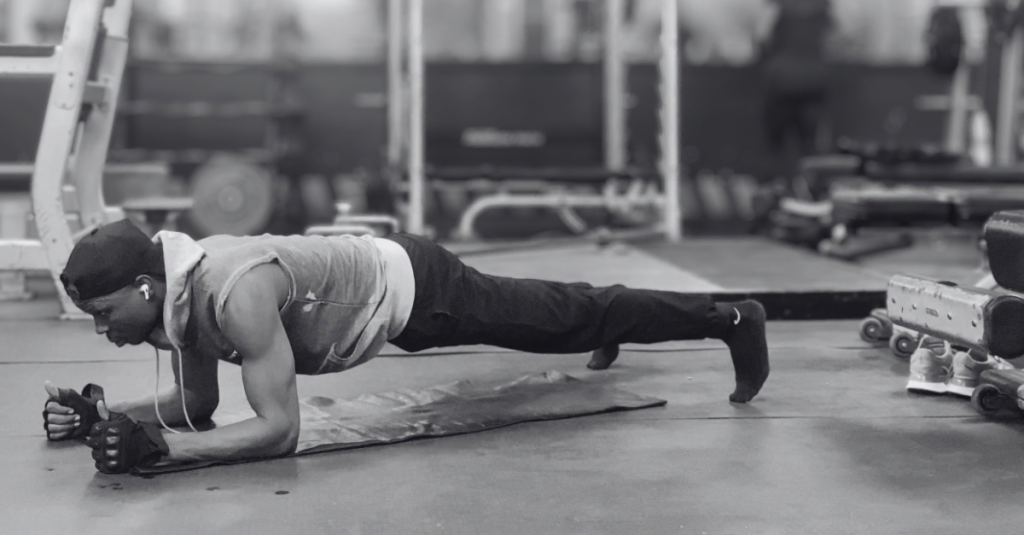
- Regular planks before progressing to more challenging core exercises
As your strength improves, you can gradually move toward more difficult variations.
2. Make Bodyweight Training More Challenging
When an exercise becomes too easy, you can increase the challenge by adding repetitions, sets, slowing the movement, using a longer range of motion, adding pauses, or progressing to a harder variation.
You don’t need to perform hundreds of repetitions just because you don’t have weights. The goal is to find ways to keep the exercise sufficiently challenging.
3. What If Bodyweight Exercises Stop Being Enough?
This is where having some equipment can become useful.
Resistance bands, dumbbells, kettlebells, or adjustable weights can give you more options for progressively increasing resistance without constantly having to find more difficult bodyweight variations.
So you don’t have to choose between training without equipment and training with weights. You can start with what you have and add resistance when your current exercises no longer provide enough challenge.
If you have no equipment at all, you can still start building muscle at home. The key is to choose challenging movements and continue progressing as your strength improves.
Best Exercises to Build Muscle at Home
You don’t need dozens of exercises to build muscle at home. A better approach is to choose movements that train your major muscle groups and that you can progressively make more challenging.
1. Push-Ups
Push-ups are a useful bodyweight exercise for your chest, shoulders, and triceps. As they become easier, you can increase repetitions or progress to a more difficult variation.
Want to know which muscles push-ups really work? Check out my guide, What Muscles Do Push-Ups Work?
2. Rows
Rows train your back and biceps and can be performed with dumbbells, resistance bands, or other suitable equipment. Pulling movements are important because a balanced home routine shouldn’t focus only on pressing exercises.
3. Squats
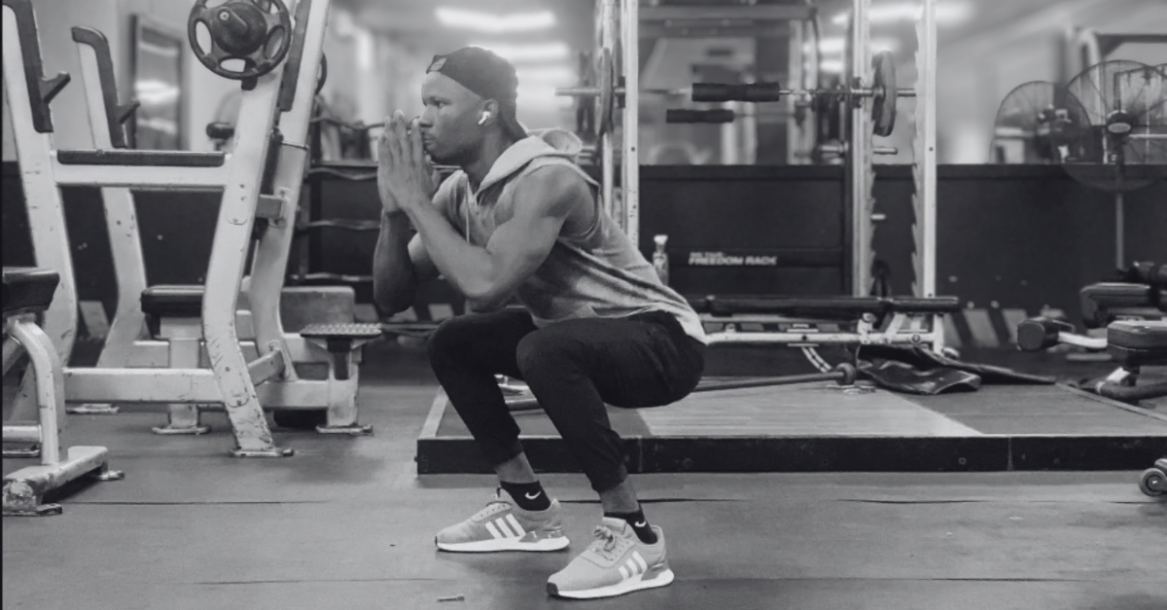
Squats primarily train your quads and glutes. You can start with bodyweight squats and later add resistance or move to more challenging variations as your strength improves.
To improve your squat technique, check out my guide How to Do a Squat Correctly.
4. Lunges and Split Squats
Lunges and split squats work your legs and glutes while also challenging your balance and coordination. Single-leg exercises can be especially useful when you don’t have heavy weights available.
5. Hip-Hinge Exercises
Movements such as Romanian deadlifts can train your hamstrings and glutes. You can perform them with dumbbells or kettlebells, or begin with bodyweight hip-hinge movements while practicing the pattern.
6. Shoulder Presses
Dumbbell or resistance-band shoulder presses can train your shoulders and triceps. If you don’t have weights, pike push-ups can provide a bodyweight alternative.
7. Calf Raises and Core Exercises
Calf raises target your calves, while exercises such as planks, side planks, and controlled leg raises can train your core.
You don’t need to perform all of these exercises in every workout. Choose a manageable combination that covers your major muscle groups and fits your available equipment and fitness level.
The best exercises for building muscle at home are the ones you can perform safely, recover from, and progressively make more challenging over time.
What to Eat to Build Muscle
Your workouts provide the stimulus for muscle growth, but nutrition gives your body the energy and building blocks it needs to support that process.
You don’t need a complicated muscle-building diet. Focus on getting enough protein, eating enough overall food to support your goal, and choosing mostly nutrient-dense foods.
1. Prioritize Protein
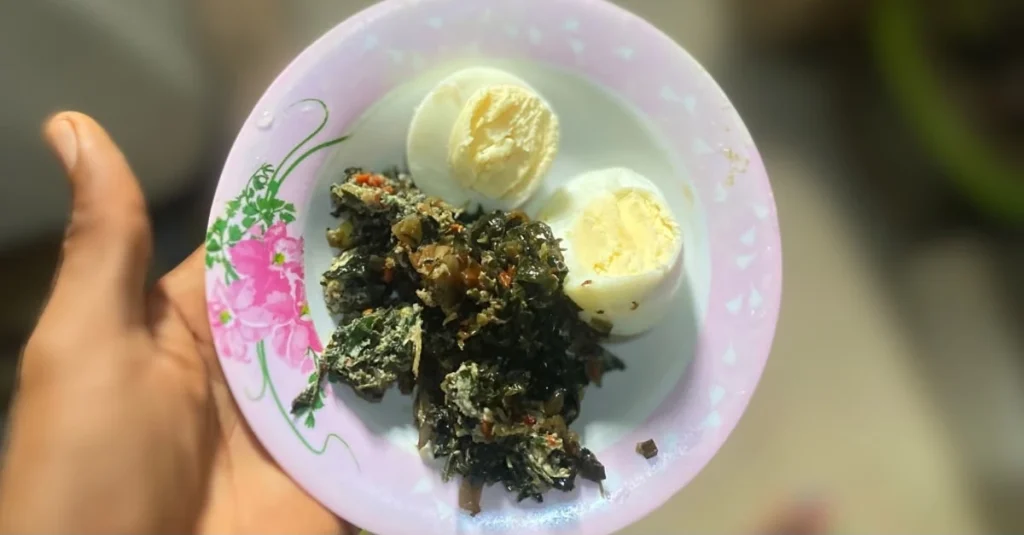
Protein provides amino acids that your body uses to build and repair muscle tissue. Good sources include eggs, chicken, fish, lean meat, milk, Greek yogurt, beans, lentils, tofu, nuts, and seeds.
If you’re regularly doing resistance training, your protein needs may be higher than the minimum amount needed for general health. You can usually meet your protein needs through food, although supplements can be convenient if getting enough from meals is difficult.
Related reading: Want to learn more about protein? Check out Why Protein Matters for Muscle and Fat Loss.
2. Eat Enough to Support Muscle Growth
Protein isn’t the only thing that matters.
If you’re consistently eating too little, your body may have less energy available to support muscle growth and recovery. This can be especially important if you’re naturally lean or you’re trying to gain muscle while keeping your body fat under control.
You don’t need to increase your food intake. Instead, pay attention to your progress, training performance, body weight, and how you feel during your workouts.
3. Build Balanced Meals
Along with protein, include carbohydrates and healthy fats in your diet.
Foods such as oats, rice, potatoes, whole grains, fruits, vegetables, avocado, olive oil, nuts, and seeds can provide energy and important nutrients to support an active lifestyle.
Think beyond individual “muscle-building foods.” Your overall eating pattern matters more than any single food.
If you want to build muscle at home after 30, make your training and nutrition work together rather than treating them as separate goals.
Common Mistakes That Can Limit Muscle Growth
Building muscle at home can work, but a few common mistakes can slow your progress.
1. Doing the Same Workout for Months
If your workouts never become more challenging, your muscles may have little reason to continue adapting. Track your exercises and gradually increase repetitions, resistance, sets, or exercise difficulty as you get stronger.
2. Focusing Only on Exercises You Enjoy
It’s easy to build a routine around push-ups, squats, and other familiar exercises while neglecting certain muscle groups.
Try training your major muscle groups rather than repeatedly working the same muscles.
3. Not Eating Enough Protein
Training alone isn’t enough. Your diet needs to provide adequate protein to support muscle repair and growth.
Include a quality protein source in your meals and pay attention to your overall food intake.
4. Expecting Results Too Quickly
Muscle growth takes time. You may notice improvements in strength before significant changes in your appearance.
Instead of judging your progress from week to week, focus on gradual improvements in your training, nutrition, and consistency.
5. Neglecting Recovery
More training isn’t automatically better. Your body needs time to recover between challenging sessions.
Prioritize sleep, allow adequate recovery, and avoid turning every workout into an all-out effort.
6. Changing Your Routine Too Often
Constantly switching exercises can make it difficult to tell whether you’re actually getting stronger.
You don’t need a new workout every week. Give your routine enough time to work, track your progress, and make changes when you have a reason to.
Building muscle is a long-term process. Consistent training, adequate nutrition, progressive overload, and recovery will take you further than constantly searching for a new workout or shortcut.
Frequently Asked Questions
Can skinny people build muscle at home?
Yes. Being naturally lean doesn’t prevent you from building muscle. Resistance training combined with adequate protein and enough overall food can support muscle growth. If you’re trying to gain weight as well as muscle, consistently eating enough calories becomes particularly important.
Can you build muscle fast at home?
Muscle growth takes time, and there isn’t a reliable shortcut that will make it happen overnight. How quickly you gain muscle depends on factors such as your training experience, genetics, nutrition, recovery, and consistency.
Do you need supplements to build muscle at home?
No. Supplements aren’t required to build muscle. A well-balanced diet that provides enough protein and overall nutrition can support muscle growth. Supplements may be useful for convenience in certain situations, but they shouldn’t replace a solid diet and training routine.
Final Thoughts
Building muscle at home after 30 is absolutely possible. You don’t need a commercial gym or an expensive collection of equipment to get started.
Focus on challenging your muscles with resistance training, increasing intensity, eating enough food to support your goal, and giving your body enough time to recover.
You also don’t need to make your workouts complicated. Start with exercises that match your current ability, stay consistent, and build from there.
The goal isn’t to find the perfect home workout. It’s to create a routine you can follow consistently and improve over time.
Join the Conversation
What’s your biggest challenge with building muscle at home?
Share your experience in the comments—I’d love to hear what you’re working on.