
Dumbbell Upright Row Muscles Worked: Benefits & Proper Form
Table of Contents
ToggleHave you ever wondered which muscles are actually working when you pull a pair of dumbbells upward during an upright row?
I asked myself that same question the first time I tried them. That was when I realized they were more than just a shoulder exercise.
The dumbbell upright row is a simple upper-body exercise that can train several muscles at once, particularly the shoulders and upper trapezius. Because you’re using a dumbbell in each hand, you can also move each arm independently while maintaining control throughout the exercise.
But which muscles does it really work, and how should you perform it to get the most from the movement?
In this guide, I’ll break down the muscles worked by the dumbbell upright row, how to perform it with proper form, its benefits, common mistakes, and how it compares with other popular upper-body exercises.
What Muscles Does the Dumbbell Upright Row Work?
The dumbbell upright row primarily works your shoulders and upper trapezius, while several other muscles assist with the movement. How much each muscle contributes can vary depending on your technique, grip, range of motion, and individual anatomy.
If you’re unfamiliar with the broader movement, you can also read my guide to the upright row exercise before comparing the dumbbell variation.
Here are the muscles worked during the upright row:
1. Deltoids
The deltoids are among the main muscles involved in the dumbbell upright row, particularly as you lift your arms and move your elbows upward.
The lateral deltoids help move your upper arms away from your body, while the anterior deltoids can also contribute to the movement. This makes the exercise another useful shoulder-focused movement to your routine.
2. Trapezius
Your upper trapezius also works during the dumbbell upright row, particularly as your shoulders and elbows move upward.
The trapezius is a large muscle across your upper back and neck that contributes to the shoulder blades and supports shoulder positioning.
3. Biceps
Your biceps assist during the pulling motion. They aren’t the primary target of the exercise, but they help bend the elbows as you bring the dumbbells upward.
4. Forearms and Grip Muscles
Your forearms and grip muscles also have to work to hold and control the dumbbells throughout each repetition. Their role is mainly supportive, not the primary reason to perform the exercise.
Overall, the dumbbell upright row is best viewed as a shoulder and upper-trap exercise with assistance from other upper-body muscles, rather than an isolation exercise for a single muscle group.

How to Do the Dumbbell Upright Row
Proper technique matters with any resistance exercise, especially one that involves lifting your elbows and shoulders together. The goal is to use a controlled range of motion rather than forcing the dumbbells higher than feels comfortable.
Step 1: Start With the Dumbbells at Your Sides
Stand upright with your feet about shoulder-width apart and hold a dumbbell in each hand. Keep your core engaged and your shoulders relaxed.
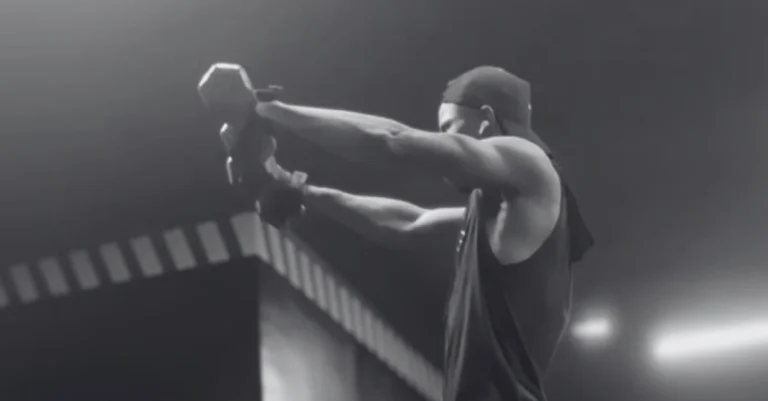
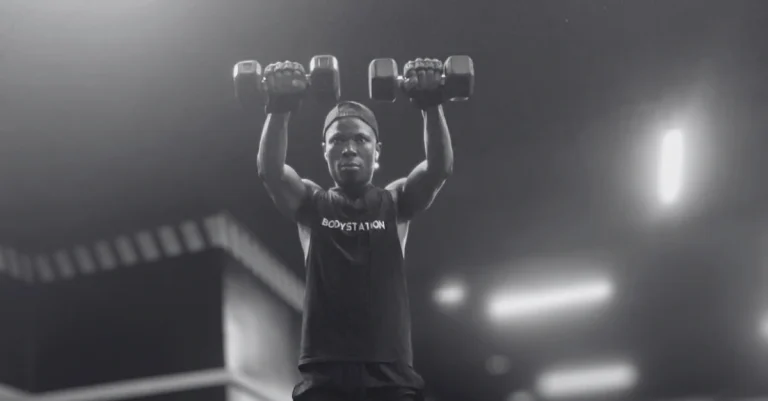
Step 2: Pull the Dumbbells Up
Slowly pull the dumbbells upward while leading with your elbows. Keep the weights close to your body as you move upward.
Step 3: Stop at a Comfortable Height
You don’t need to pull the dumbbells as high as possible. Stop at a range that feels comfortable for your shoulders and allows you to maintain control.
Step 4: Lower the Dumbbells Slowly
Lower the dumbbells back to the starting position in a controlled manner. Avoid letting the weights drop before beginning your next repetition.
The exact range of motion can vary from person to person. If the movement causes shoulder pain or pinching, don’t force the range of motion or continue through the pain.
Dumbbell Upright Row Benefits
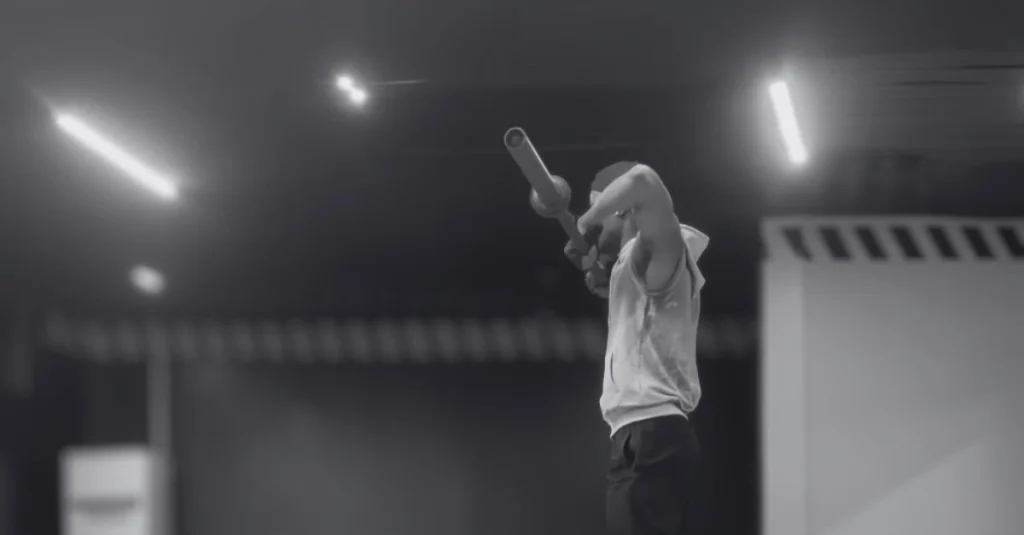
The dumbbell upright row can be a useful addition to an upper-body workout when it feels comfortable and fits your training goals. Its main advantage is that it trains the shoulders and upper trapezius through pulling while allowing you to use a dumbbell in each hand.
Here are some potential benefits:
1. Trains the Shoulders and Upper Traps
The exercise challenges the deltoids and trapezius, making it an option for people who want more shoulder and upper-trap work in their routine.
2. Allows Independent Arm Movement
Using two dumbbells means each arm handles its own weight. This can move feel different from performing an upright row with a barbell and gives you the freedom to adjust your hand position slightly.
3. Adds Variety to Your Upper-Body Training
You don’t have to rely on one exercise to train your shoulders. The dumbbell upright row provides another movement option alongside exercises such as lateral raises and shoulder presses.
4. Requires Minimal Equipment
All you need is a pair of dumbbells and enough space to perform the movement safely, making it practical for both home and gym workouts.
However, you don’t need to incorporate an exercise because it has potential benefits. How comfortable the movement feels and whether it matches your goals should also influence whether you keep it in your routine.
If you’re looking to put the dumbbell upright row into a complete routine, check out my full shoulder workout for a structured session that trains the major shoulder muscles.
Are Dumbbell Upright Rows Worth Doing?
The dumbbell upright row can be worth including if it feels comfortable, fits your goals, and you can perform it with controlled technique. But it isn’t an essential, and you don’t need it in your routine to build your shoulders or upper body.
One reason for this is that different shoulder exercises emphasize different parts of the deltoids. ACE-sponsored research found that no single exercise maximally activates all three heads of the deltoid, which is why a well-rounded shoulder routine can benefit from using different movements.
If the dumbbell upright row feels good for you and you enjoy the movement, there’s no need to remove it because another exercise may target a particular part of the shoulder more directly.
On the other hand, if the movement causes discomfort or doesn’t feel natural for your shoulders, you have plenty of alternatives to choose from. A dumbbell lateral raise, for example, can provide a more direct way to train the lateral deltoids.
Ultimately, the best exercise is the one that fits your goal, feels comfortable, and allows you to train consistently with good technique.
Dumbbell Upright Row vs. Bent-Over Row
Although both exercises involve pulling weights, the dumbbell upright row and bent-over row train your upper body in a different ways.
The dumbbell upright row is more focused on the shoulders and upper trapezius, while the bent-over row is primarily a back exercise that works muscles such as the latissimus dorsi, middle trapezius, and other muscles involved in pulling. ACE-sponsored research found that the bent-over row produced strong activation across several major back muscles, including the middle and lower trapezius, latissimus dorsi, and erector spinae.
The exercises also use different movement patterns. During an upright row, you pull the dumbbells upward with your elbows moving out to the sides. During a bent-over row, you hinge forward at the hips and pull the dumbbells toward your torso.
So, neither exercise is automatically better than the other. Your choice should depend on what you’re trying to train.
- For more shoulder and upper-trap emphasis: the dumbbell upright row may be the better fit.
- For more back-focused pulling work: the bent-over row is a stronger choice.
- For a balanced upper-body routine: you can include both because they train different movement patterns and muscle groups.
If your primary goal is building your back, the bent-over row deserves more attention. If you’re specifically looking for another exercise to train your shoulders and upper traps, the dumbbell upright row may have a place in your routine.
Dumbbell Upright Row vs. High Pull
The dumbbell upright row and dumbbell high pull can look similar, but they have different intentions.
The dumbbell upright row is generally a controlled upper-body movement that emphasizes the shoulders and upper trapezius. The dumbbell high pull, on the other hand, uses explosive movement from the hips and legs to help drive the dumbbells upward, making it more of a power-focused exercise.
The main difference comes down to how you move the weight. With an upright row, you remain upright and use your upper body to control the pull. With a high pull, you use a slight hip hinge and explosive extension of the hips and knees to generate momentum before completing the pull with your upper body.
So which one should you choose?
- For controlled shoulder and upper-trap training: the dumbbell upright row may be the better fit.
- For developing explosive power: the dumbbell high pull is more appropriate.
- For beginners: the upright row may be simpler to learn because it doesn’t require the same explosive coordination.
Neither exercise is automatically better. The right choice depends on your training goal, experience, and how comfortable the movement feels.
Dumbbell Upright Row Alternatives
If the dumbbell upright row doesn’t feel comfortable or doesn’t match your training goal, you have several alternatives. The best replacement depends on which muscles or movement pattern you want to emphasize.
Dumbbell Lateral Raise
The lateral raise is a good option when your main goal is to place more direct emphasis on the lateral deltoids. It also avoids the same pulling pattern used in the upright row.
Dumbbell Shoulder Press
If you’re looking for a compound movement that trains the shoulders while also involving the triceps, the dumbbell shoulder press is another option.
Face Pull
Face pulls can be useful when you want to work on the rear shoulders and upper back rather than reproducing the exact upright-row movement.
45-Degree Incline Row
A 45-degree incline row is another option for shoulder-focused training, particularly when you want to target the rear deltoids and upper back.
You don’t need to replace the dumbbell upright row simply because another exercise exists. Choose an alternative based on your goal, available equipment, and how comfortable you feel with the movement.
Dumbbell Upright Row vs. Lateral Raise
Both exercises can train your shoulders, but they do so differently.
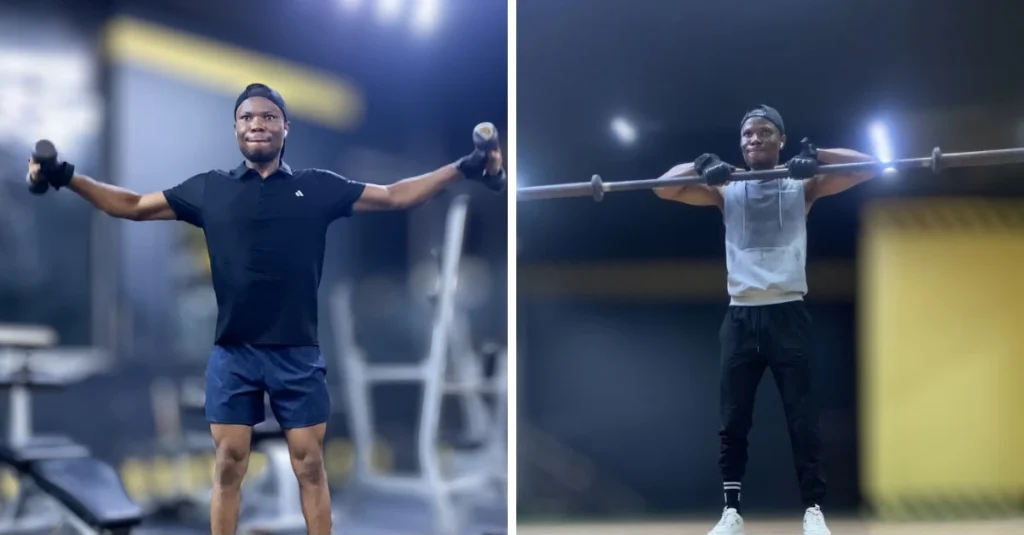
The dumbbell upright row is a compound pulling movement that works the deltoids and upper trapezius, while the lateral raise is more focused on the lateral deltoids.
So, is one better than the other?
Not necessarily. It depends on what you’re trying to accomplish.
If your main goal is to target the side delts, a lateral raise may be the better choice. If you want a movement that involves both the shoulders and upper traps, the dumbbell upright row may be more appropriate.
You also don’t have to choose only one. They can complement each other in a well-rounded shoulder workout, since both exercises feel comfortable and you can perform them with good control.
In short:
- For more direct lateral-delt work: Choose the lateral raise.
- For shoulders and upper-trap involvement: The dumbbell upright row can be useful.
- For overall shoulder training: You can use both if they fit your routine and feel comfortable.
The goal isn’t to find one universally better exercise. It’s to choose movements that match your goals and allow you to train consistently.
Dumbbell Upright Row vs. Shoulder Press
The dumbbell upright row and dumbbell shoulder press both train the shoulders, but they use different movement patterns and target different muscles.
The dumbbell upright row is a pulling movement that primarily involves the deltoids and upper trapezius. The dumbbell shoulder press is a pressing movement that target the anterior deltoids while also involving the triceps.
So, is one better than the other?
Not necessarily. It depends on your goal.
If you want to emphasize the front of your shoulders and develop pressing strength, the dumbbell shoulder press may be the better choice. If you want another movement that involves the shoulders and upper traps, the dumbbell upright row may have a place in your routine.
You can also use both exercises because they serve different purposes. A well-rounded shoulder routine doesn’t need to rely on one exercise alone; ACE notes that different exercises can emphasize different parts of the deltoid.
In short:
- For anterior-delt and pressing work: dumbbell shoulder press
- For shoulder and upper-trap involvement: dumbbell upright row
- For balanced shoulder training: consider using different movements that complement each other
Common Dumbbell Upright Row Mistakes
The dumbbell upright row isn’t necessarily a difficult exercise, but small technique errors can change how the movement feels and where you place the most stress.
Here are some common mistakes to watch for.
1. Pulling the Dumbbells Too High
You don’t need to pull the dumbbells all the way toward your chin. Raising your elbows too high can put the shoulders into a position that may feel uncomfortable for some people.
Instead, use a comfortable range of motion and stop before you feel pinching or discomfort in your shoulders.
2. Using Too Much Weight
Going too heavy can make it difficult to control the movement. You may start swinging your body or using momentum to get the dumbbells higher.
Choose a weight that allows you to perform each repetition with control.
3. Letting Your Hands Lead the Movement
Your elbows should lead the pull, not your hands. If you focus on lifting the dumbbells with your hands, the movement can start to resemble a curl instead of the intended upright-row pattern.
4. Using Momentum
Swinging your torso or jerking the dumbbells upward takes control away from the movement. Keep your torso stable and use a controlled tempo throughout each repetition.
5. Ignoring Shoulder Discomfort
An exercise doesn’t have to hurt to be effective. If the upright row consistently causes sharp pain, pinching, or discomfort in your shoulders, don’t force the movement. Consider reducing the range of motion, adjusting your technique, or choosing an alternative that feels more comfortable.
The goal isn’t to lift the dumbbells as high as possible. The goal is to train effectively while maintaining control and a comfortable range of motion.
Final Thoughts
The dumbbell upright row can train several upper-body muscles, with the deltoids and upper trapezius doing much of the work. It can be a useful exercise when it feels comfortable and fits your training goals, but it isn’t the only way to train your shoulders or upper traps.
The key is to use a manageable weight, maintain control, and work through a range of motion that feels comfortable for your shoulders. If the movement consistently causes discomfort, don’t force it when other exercises can train similar muscle groups.
Ultimately, you don’t need to choose the “perfect” shoulder exercise. Choose movements that match your goals, use good technique, and allow you to train consistently.
Join the Conversation
Have you tried the dumbbell upright row before? Did you notice it working your shoulders, upper back, or another muscle group the most?
Share your experience or questions in the comments below. I enjoy hearing how others are progressing on their fitness journey.