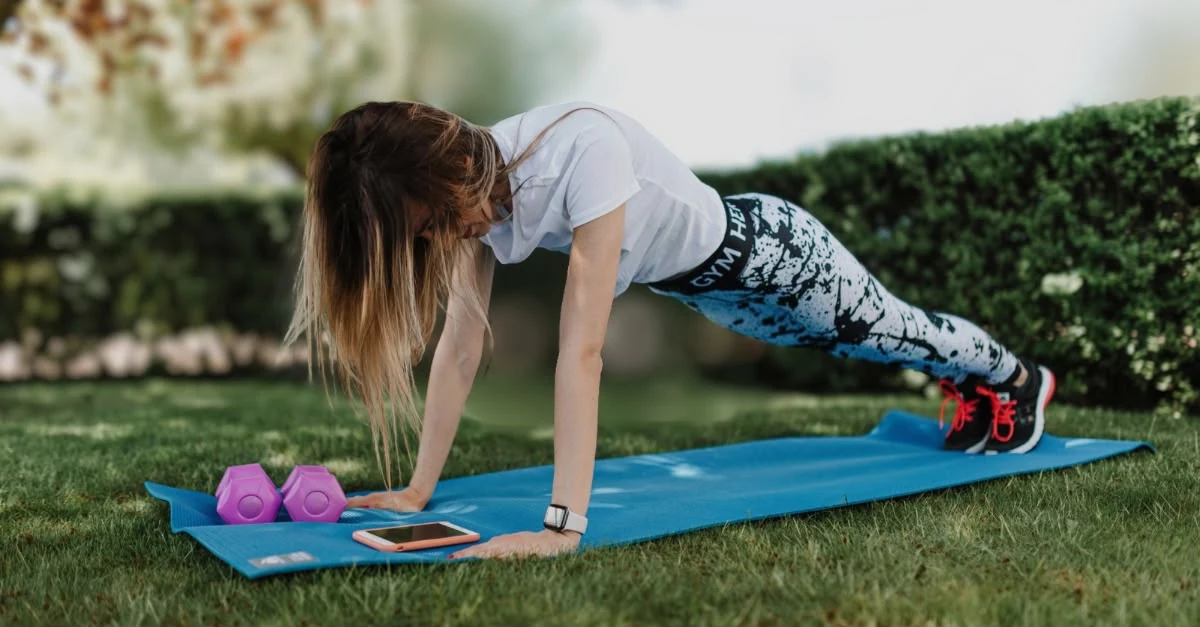
30-Minute Full-Body Home Workout (No Equipment Needed)
Table of Contents
ToggleYou don’t need a gym membership, a rack of dumbbells, or an hour of spare time to get an effective training session.
A well-structured 30-minute full-body home workout using only your body weight trains every major movement pattern—squatting, hinging, pushing, pulling, and bracing—while leaving you energized rather than depleted.
If you are balancing work, family, and tighter recovery windows in your 30s and beyond, short, repeatable sessions are often the difference between staying consistent for months and burning out after two weeks.
In my own training—and when coaching adults over 30—the biggest shift was realizing that 30 focused minutes three times a week beats an exhausting 60-minute session you dread starting.
Once I stopped rushing through warm-ups and treated bodyweight reps with the same control as loaded weights, both strength and joint recovery improved noticeably.
For a broader look at structuring weekly routines, progression strategies, and home-training habits, you can also explore our pillar guide on Home Workouts: A Complete Guide to Staying Fit at Home.
Is a 30-Minute Full-Body Workout Good Enough for Real Results?
Yes—provided the exercises challenge large muscle groups and you stay focused during your work intervals.
A 30-minute full-body session trains your legs, back, chest, shoulders, and core in a single workout, making it one of the most time-efficient ways to build functional strength, muscular endurance, and cardiovascular fitness.
Performing three 30-minute full-body sessions per week also checks off the core CDC physical activity guidelines for adults, which recommend muscle-strengthening activities involving all major muscle groups on two or more days a week alongside regular aerobic movement.
Because full-body workouts stimulate all major muscle groups three times per week rather than once, they give your body frequent strength signals without requiring marathon sessions.
30-Minute Full-Body Home Workout Overview (At a Glance)
Before you start your timer, review how the 30 minutes break down so you can move smoothly from phase to phase without checking your phone between every exercise:
| Workout Phase | Duration | Structure & Work/Rest | Primary Focus |
|---|---|---|---|
| Step 1: Joint-Prep Warm-Up | 5 minutes | 5 dynamic moves (60 sec each) | Lubricate hips, shoulders & spine; raise heart rate |
| Step 2A: Circuit A | 10 minutes | 5 moves × 2 rounds (40s work / 20s rest) | Quads, glutes, chest, shoulders & core stability |
| Step 2B: Circuit B | 10 minutes | 5 moves × 2 rounds (40s work / 20s rest) | Hamstrings, upper back, triceps & rotational core |
| Step 3: Stretch & Cool-Down | 5 minutes | 5 static stretches (45–60 sec each) | Lower heart rate; release tight hips, chest & calves |
Step 1: 5-Minute Joint-Prep Warm-Up
Spend 60 seconds on each movement below at a smooth, controlled pace.
Your goal is to feel warm and loose—not fatigued—before Circuit A begins:
- March in Place with Arm Circles (60 seconds): March with high knees while drawing wide circles forward with both arms for 30 seconds, then reverse directions for 30 seconds.
- World’s Greatest Stretch / Lunge with Thoracic Twist (60 seconds): Step your right foot forward into a low lunge, place your left hand on the floor, and rotate your right arm toward the ceiling. Switch sides smoothly with each rep.
- Bodyweight Good Mornings (60 seconds): Stand with feet hip-width apart and hands lightly behind your head. Push your hips straight back with a flat spine until you feel a mild hamstring stretch, then squeeze your glutes to stand tall.
- Slow Tempo Bodyweight Squats (60 seconds): Lower into a comfortable squat over 3 full seconds, pause briefly at the bottom, and stand back up to wake up your ankles, knees, and hips.
- Walkout Inchworms (60 seconds): Hinge at the hips, walk your hands out to a firm high-plank position, pause for one breath without letting your hips sag, and walk your hands back to stand.
Step 2: The 20-Minute No-Equipment Full-Body Routine
Set an interval timer for 40 seconds of work followed by 20 seconds of rest.
Complete all five exercises in Circuit A, repeat Circuit A a second time (10 minutes total), and then move straight into Circuit B for two rounds (10 minutes total).
Circuit A: Lower Body, Push & Front Core (10 Minutes)
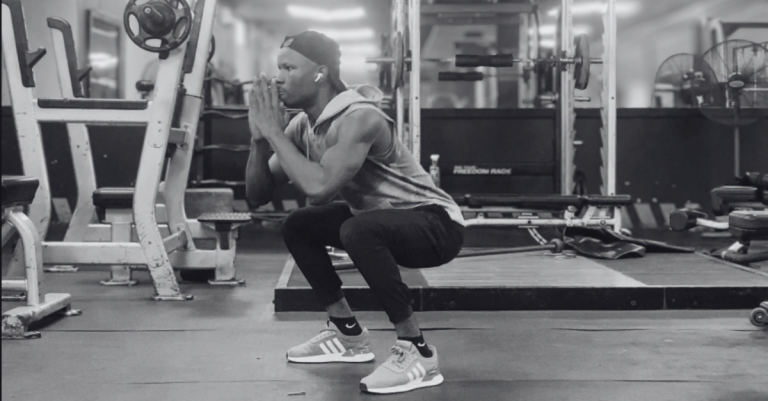
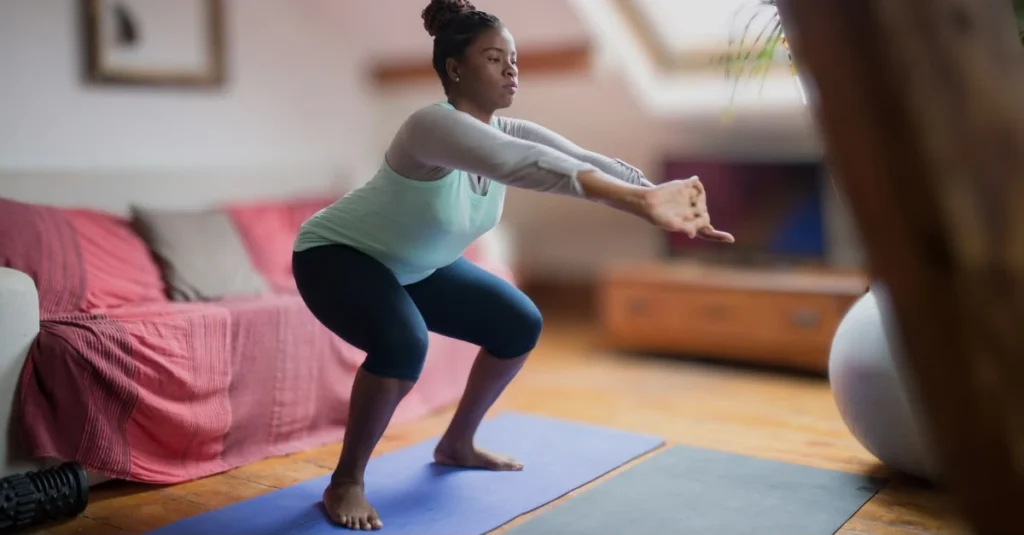
- Bodyweight Squat
- How to do it: Stand with feet slightly wider than shoulder-width, and toes turned out slightly. Sit your hips back and down until your thighs are parallel to the floor (or as low as your mobility allows without rounding your lower back), then drive through your mid-foot to stand.
- Coaching cue: Keep your chest proud and knees tracking in line with your second and third toes.
- Standard or Incline Push-Up
- How to do it: Place your hands slightly wider than shoulder-width on the floor (or on a sturdy couch/countertop for incline push-ups). Lower your chest toward your hands with your elbows angled roughly 45 degrees from your ribs, then press back up.
- Coaching cue: Keep your glutes and abs braced so your head, ribs, and hips move as one solid plank.
- Alternating Reverse Lunge
- How to do it: Step your right foot backward and lower both knees toward 90-degree angles, keeping your front shin vertical and torso upright. Push through your front heel to return to standing, then switch legs.
- Coaching cue: Stepping backward reduces shear stress on the knees compared to forward lunges while loading your glutes effectively.
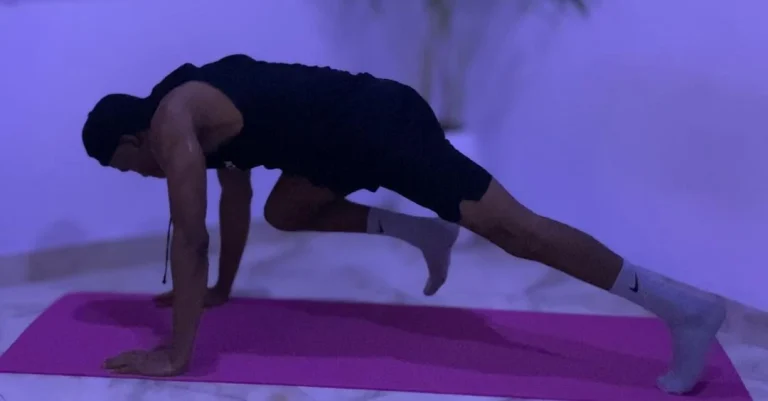
- Plank Shoulder Tap
- How to do it: Start in a high plank with feet set wider than hip-width for stability. Slowly tap your left shoulder with your right hand, place it down with control, and tap your right shoulder with your left hand.
- Coaching cue: Imagine balancing a glass of water on your lower back—keep your hips as square to the floor as possible.
- Low-Impact Squat Jack or Step-Out Jack
- How to do it: Drop into a shallow half-squat, step or hop your feet out wide, and bring them back together while maintaining light tension in your thighs and glutes.
- Coaching cue: Land softly on the balls of your feet and maintain a steady rhythm that elevates your heart rate without sloppy form.
Circuit B: Posterior Chain, Upper Back & Rotational Core (10 Minutes)
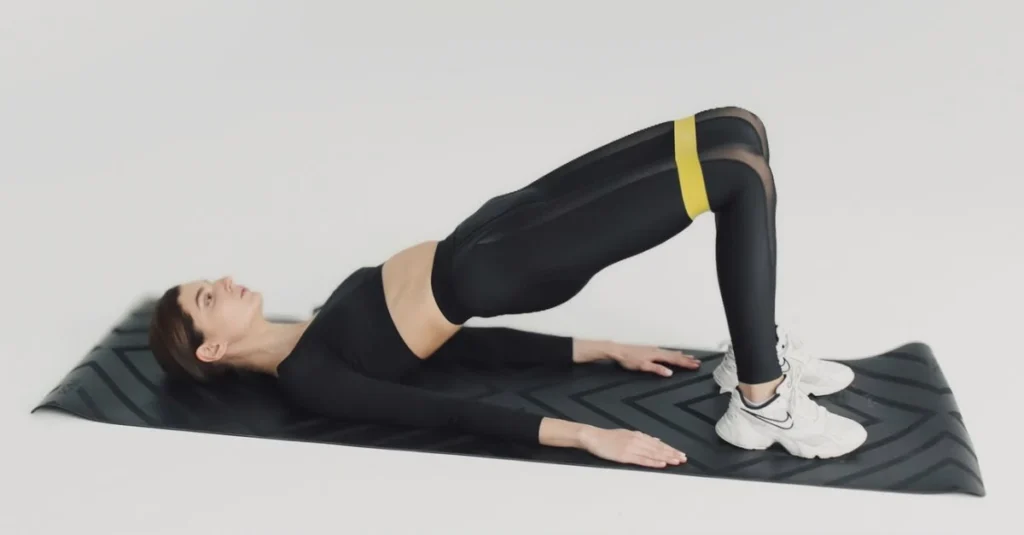
- Single-Leg Glute Bridge (Switch Halfway at 20 Seconds)
- How to do it: Lie on your back with knees bent and feet flat on the floor. Extend one leg straight out, drive through your planted heel to lift your hips until your body forms a straight line from shoulders to knee, and lower slowly. Switch legs at the 20-second mark.
- Coaching cue: Squeeze your glute at the top rather than arching your lower back.
- Prone Y-T-W Back Extensions
- How to do it: Lie face down with your forehead resting lightly on a folded towel and neck neutral. Lift your chest slightly off the floor and move your arms smoothly from an overhead Y, out to a T, and into a bent-elbow W while squeezing your shoulder blades together.
- Coaching cue: Bodyweight routines often neglect pulling muscles—focus on pinching your mid-back rather than lifting your head high.
- Side-to-Side Lateral Lunge
- How to do it: Stand tall, take a wide step to your right, and sit your hips back into your right heel while keeping your left leg straight. Push off your right foot to return to center, then repeat to the left.
- Coaching cue: Keep both feet pointing forward and your chest lifted throughout the shift.
- Pike Push-Up or Downward-Dog Shoulder Press
- How to do it: Start in a downward-dog position with your hips high and hands shoulder-width apart. Bend your elbows to lower the crown of your head toward a spot slightly ahead of your hands, then press back up.
- Coaching cue: Bend your knees slightly if tight hamstrings pull your lower back out of alignment.
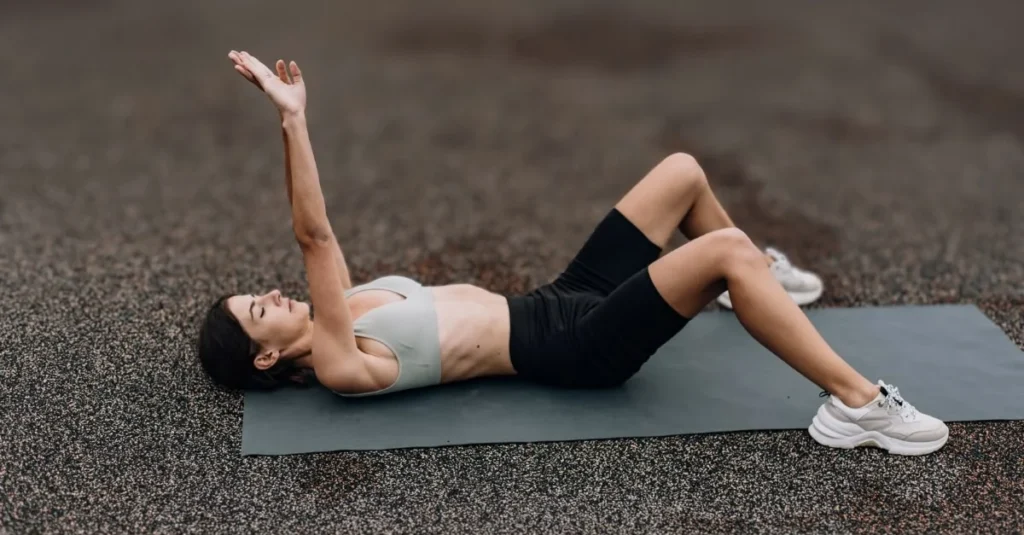
- Dead Bug (Slow & Controlled)
- How to do it: Lie on your back with arms extended toward the ceiling and knees bent at 90 degrees over your hips. Press your lower back flat into the floor, slowly extend your right arm overhead and left leg toward the floor, return to start, and switch sides.
- Coaching cue: Exhale fully as you extend your limbs; only lower your heel as far as you can without your lower back arching off the mat.
How to Scale This Workout for Your Fitness Level (Beginner to Advanced)
One size rarely fits everyone.
Whether you are returning to exercise after a layoff or already have a solid strength base, use the table below to adjust individual exercises and work-to-rest intervals without changing the 30-minute clock:
| Training Level | Work / Rest Ratio | Push-Up & Shoulder Option | Lower-Body Option |
|---|---|---|---|
| Beginner | 30s work / 30s rest | Hands-elevated incline push-ups & high plank holds | Box/chair squats & supported reverse lunges |
| Intermediate | 40s work / 20s rest | Floor push-ups, shoulder taps & pike push-ups | Full bodyweight squats, reverse & lateral lunges |
| Advanced | 45s work / 15s rest | Feet-elevated decline push-ups & deep pike push-ups | 1.5-rep squats & rear-foot-elevated split squats |
Common Mistakes That Waste a 30-Minute Workout (And How to Fix Them)
Short workouts reward precision.
Avoid these three habits that often stall progress during home sessions:
- Skipping the warm-up to “save time”: Jumping cold into squats and push-ups limits your range of motion, makes joints feel stiff, and reduces force output during your first round. Those 5 warm-up minutes actually improve your performance across the entire 20-minute workout.
- Rushing through reps with momentum: Because there are no heavy weights in your hands, bouncing out of squats or dropping rapidly into push-ups robs your muscles of mechanical tension. Use a deliberate 2-to-3-second lowering phase on every strength movement.
- Turning strength sets into breathless cardio: You don’t need to move frantically to get results. Pace your squats, lunges, and bridges so you feel steady muscular tension and finish each 40-second interval with 1 to 2 clean reps still in reserve.
5-Minute Full-Body Stretch & Cool-Down
Do not rush straight back to your desk or couch once Circuit B ends.
Spend 45 to 60 seconds in each stretch below while taking slow, deep breaths through your nose to bring your heart rate down and ease post-workout stiffness:
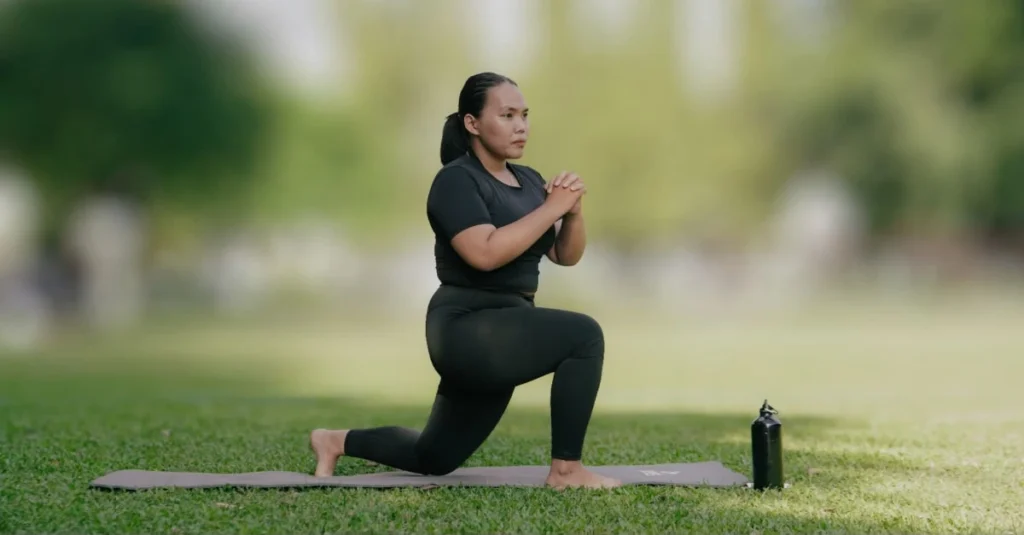
- Kneeling Hip Flexor Stretch (45 seconds per side): Kneel on one knee with your front foot flat, tuck your tailbone slightly under, and shift forward gently until you feel a stretch across the front of your hip.
- Doorway or Floor Chest Opener (60 seconds): Place your forearm against a doorframe (or lie face down with one arm extended out to the side) and rotate gently away to open tight chest and front-shoulder muscles.
- Seated or Supine Figure-Four Glute Stretch (45 seconds per side): Lie on your back, cross your right ankle over your left knee, and pull your left thigh gently toward your chest.
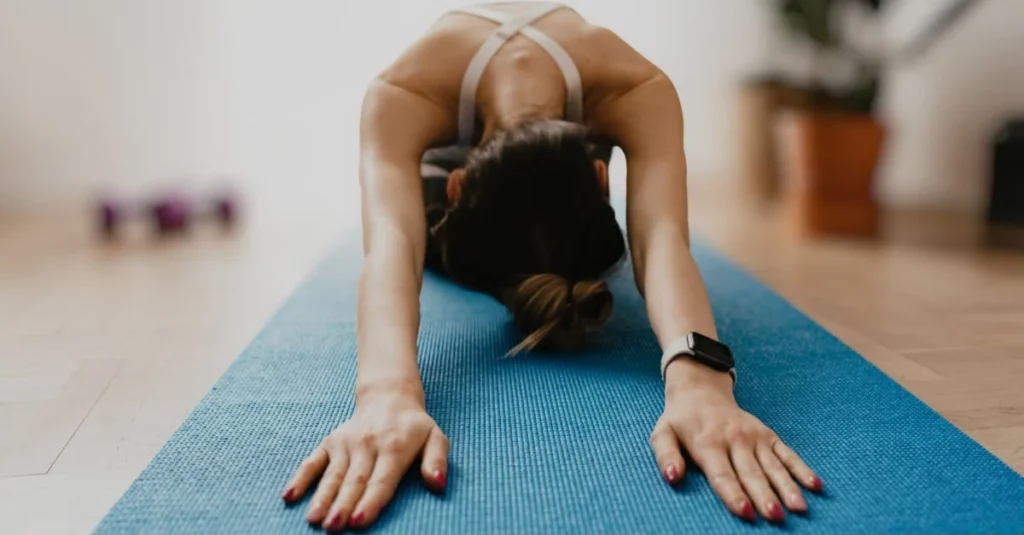
- Child’s Pose with Lat Reach (60 seconds): Sit with your hips back toward your heels, reach both hands forward on the mat, and walk your hands slightly to the left, then right, to lengthen your lats and mid-back.
- Downward Dog Calf Pedal (60 seconds): Press your hands into the floor, lift your hips, and slowly alternate pressing one heel toward the floor at a time to release calf and ankle tension.
How Many Calories Does a 30-Minute Full-Body Workout Burn?
Depending on your body weight, rest intervals, and exercise tempo, a 30-minute bodyweight full-body workout typically burns between 150 and 280 calories.
Smaller individuals moving at a moderate strength pace will land closer to 150–190 calories, while heavier individuals or those maintaining brisk transitions will burn closer to 220–280 calories.
Actual calorie expenditure varies based on body weight, effort, and rest intervals, as outlined in the CDC’s overview of physical activity and calorie burn—which is why pairing consistent strength sessions with balanced nutrition works far better than chasing exact smartwatch numbers.
Resistance training signals your body to preserve and build lean muscle tissue, supporting healthy metabolism, joint stability, and daily energy long after the 30-minute timer stops.
A 4-Week Weekly Schedule & Progression Plan
To turn a single 30-minute workout into measurable progress over the next month, schedule three non-consecutive strength days per week (for example, Monday, Wednesday, and Friday) and keep active recovery light on the days in between:
- Monday: 30-Minute Full-Body Home Workout
- Tuesday: 20–30 minutes of brisk walking or a beginner jump rope exercise session for cardio conditioning
- Wednesday: 30-Minute Full-Body Home Workout
- Thursday: Mobility work, light walking, or full rest
- Friday: 30-Minute Full-Body Home Workout
- Saturday & Sunday: Active leisure (walking, cycling, sports) or rest
How to Progress Without Weights Over 4 Weeks
Use the progression schedule below to build challenge steadily across four weeks without adding external weights:
| Training Phase | Work / Rest Interval | Rounds & Total Time | Focus Cue |
|---|---|---|---|
| Week 1 | 30s work / 30s rest (or 40s / 20s) | 2 rounds each circuit (30 mins total) | Clean posture, steady breathing & form control |
| Week 2 | 40s work / 20s rest | 2 rounds each circuit (30 mins total) | 3-second lowering phase on squats, lunges & push-ups |
| Week 3 | 40s work / 20s rest | 2 rounds each circuit (30 mins total) | 2-second pause at the bottom of squats, lunges & bridges |
| Week 4 | 45s work / 15s rest | 2 rounds each circuit (30 mins total) | Swap 2–3 moves to Advanced scaling options |
Frequently Asked Questions
What happens if you exercise 30 minutes every day?
Exercising 30 minutes every day improves cardiovascular health, mood, insulin sensitivity, and daily energy.
However, if every single day is high-intensity strength training, your muscles and joints never get full recovery.
Alternate 3 days of full-body strength workouts with 3 to 4 days of lower-impact movement such as walking, mobility flows, or light cardio so you stay consistent without nagging soreness.
How often should I do a full-body workout?
For most adults, 3 full-body workouts per week on non-consecutive days (such as Monday, Wednesday, and Friday) hit the sweet spot.
That schedule provides 48 hours of recovery between strength sessions while training each muscle group three times weekly.
What is a good 20-minute full-body workout if I'm short on time?
When your schedule gets compressed, keep the 5-minute warm-up, do 1 round of Circuit A (5 minutes) and 1 round of Circuit B (5 minutes), and finish with a 5-minute cool-down.
Cutting the second round trims the session to 20 minutes flat while still training every major muscle group.
Can I add dumbbells to this routine later?
Yes. Once you can complete all intervals cleanly with a slow tempo and minimal fatigue, holding a pair of dumbbells during squats, reverse lunges, lateral lunges, and glute bridges is a simple way to keep progressing while keeping the same 30-minute structure.
Final Thought
Consistency always beats intensity.
A 30-minute full-body home workout you actually complete three times a week will deliver far better strength, stamina, and mobility than an ambitious 60-minute gym plan you keep postponing.
Clear a small space on your floor, set your timer, and focus on moving well one interval at a time.
Join the Conversation
Which exercise in Circuit A or Circuit B challenges you the most right now—push-ups, lunges, or core stability? Share your experience or ask a form question in the comments below!