Strength Training for Weight Loss After 30
Table of Contents
ToggleHave you ever wondered why losing weight feels different after 30, even when you’re exercising regularly?
I used to think losing weight was mostly about doing more cardio and eating less. But as I got older, I realized that strength training deserved a much bigger place in my routine, not just for getting stronger, but for helping me maintain muscle while working toward a leaner body.
The truth is, strength training can be a valuable part of a weight-loss plan after 30. It helps you build and maintain muscle, improve strength, and support an active lifestyle while you work toward losing excess body fat.
In this guide, I’ll explain how strength training can support weight loss after 30, the best exercises to focus on, how often you should train, and how to combine strength training with nutrition and cardio for better results.
Can Strength Training Help You Lose Weight After 30?
Yes, strength training can be an effective part of a weight loss plan after age 30. However, lifting weights alone doesn’t guarantee fat loss.
Weight loss generally requires a sustained calorie deficit, meaning you consume fewer calories than your body uses over time. Strength training can complement this process by helping you maintain and build muscle while you’re working toward reducing body fat.
But strength training is only one part of a successful weight-loss approach. If you want a broader look at how nutrition, physical activity, calorie balance, and other factors fit together, see our guide to Weight Loss After 30: A Complete Guide to Fat Loss.
Ultimately, the goal shouldn’t be to make the number on the scale smaller. Ideally, you want to lose excess body fat while preserving as much muscle as possible.
Strength training helps your muscles stay strong while you lose weight. Exercises such as squats, lunges, push-ups, rows, and presses improve your strength and make everyday movements easier.
So, if you’re trying to lose weight after 30, strength training shouldn’t necessarily replace walking or cardio. It can work alongside them.
How Strength Training Supports Weight Loss After 30
Strength training can support weight loss in several ways, but its value isn’t about how many calories you burn during a workout.
Here are some ways it can support your weight-loss goals.
1. It Helps You Maintain Muscle
When you lose weight, your body can lose both fat and lean tissue. Including resistance training in your routine can help you maintain muscle while you’re working toward reducing body fat.
This is one reason I wouldn’t recommend relying on cardio alone if your goal is to lose weight and maintain a strong, functional body.
2. It Helps You Build Strength
Getting stronger can make everyday activities easier, from climbing stairs to carrying groceries or staying active throughout the day.
You don’t have to lift extremely heavy weights to make progress. Bodyweight exercises, dumbbells, resistance bands, and kettlebells can all provide enough resistance to challenge your muscles.
If you’re interested in building strength with minimal equipment, you can also explore our guide to the best home workouts for weight loss after 30.
3. It Makes Progress Measurable
Weight loss can sometimes feel frustrating because the scale doesn’t always move.
Strength training provides other ways to measure progress. You may notice that you can perform more repetitions, use heavier resistance, control an exercise better, or complete a workout that once felt difficult.
Those improvements can help you stay motivated while your body composition changes.
4. It Can Complement Cardio and Daily Movement
Strength training doesn’t have to compete with walking, cycling, jogging, or other aerobic activities.
In fact, combining resistance training with regular aerobic activity can help you build a more balanced approach to fitness. The CDC recommends both muscle-strengthening and aerobic activity for adults.
The important thing is to create a routine you can maintain rather than trying to burn as many calories as possible during every workout.
Strength training is one piece of the weight-loss puzzle, not the entire puzzle. Your nutrition, overall activity, sleep, recovery, and consistency also matter.

Best Strength Training Exercises for Weight Loss After 30
You don’t need a complicated gym routine to use strength training for weight loss after 30. A good program can be built around basic movements that train your major muscle groups and can be adapted to your fitness level.
The best exercises are not necessarily the ones that leave you exhausted. Instead, focus on movements you can perform with good form, gradually make them more challenging, and consistently include them in your routine.
Here are some of the best strength training exercises to consider.
1. Squats
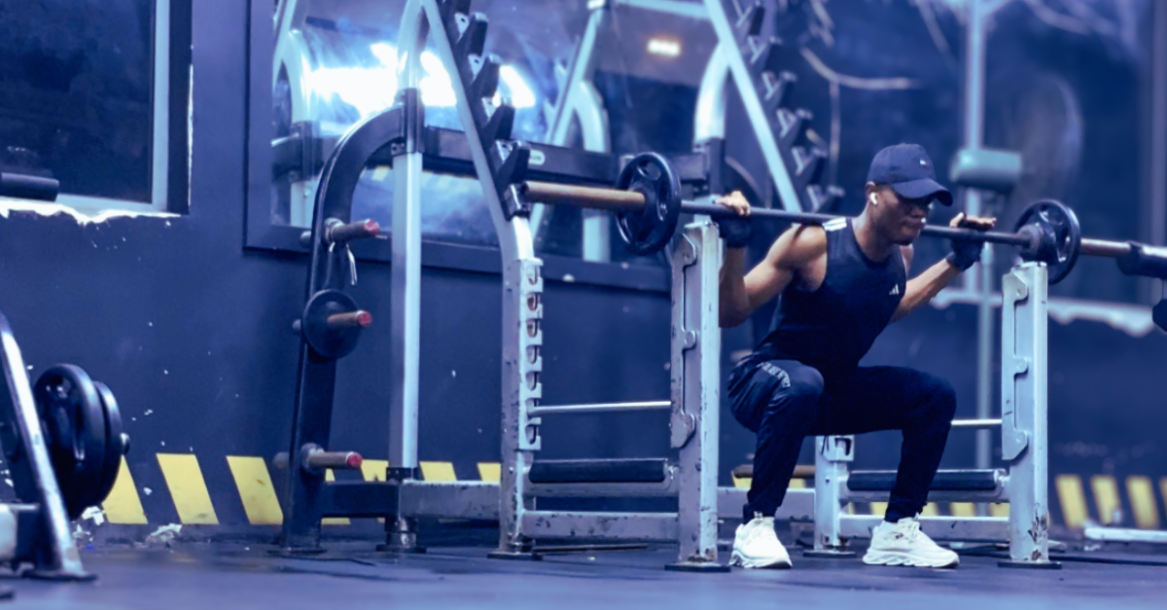
Squats are a fundamental lower-body exercise that primarily trains your quadriceps, glutes, and hamstrings, while your core helps stabilize your body.
If you’re new to strength training, start with bodyweight squats and focus on controlled movement. As you become stronger, you can progress to variations such as goblet squats or barbell squats.
If you experience discomfort while squatting, don’t ignore it. Our article on Why Do My Knees Hurt When I Squat? explains some common reasons knee pain can occur during or after squatting and what you can do about it.
2. Lunges
Lunges train your legs and glutes while requiring you to control your body through a single-leg movement.
You can perform forward, reverse, or walking lunges depending on your experience and available space.
Walking lunges can also be a useful addition to a home workout plan because they require little or no equipment. If you’re interested in adding them to your routine, see our guide on the benefits of walking lunges.
Start with bodyweight lunges and focus on maintaining control before adding dumbbells.
3. Push-Ups
Push-ups primarily target your chest, shoulders, and triceps while also requiring your core to stabilize your body.
If a standard push-up is too difficult, start with an incline variation and gradually progress as your upper-body strength improves.
You can also read our article What Muscles Do Push-Ups Work After 30? to understand which muscles are involved and how to perform the exercise effectively.
4. Rows
Rows help strengthen your upper back, shoulders, and arms. You can perform them with dumbbells, resistance bands, cables, or other suitable forms of resistance.
They’re particularly useful for balancing pushing exercises such as push-ups.
5. Glute Bridges
Glute bridges are a simple exercise that targets your glutes while also involving your hips and core.
They’re a good option for beginners because they require little space and no equipment. As they become easier, you can add resistance to increase the challenge.
6. Overhead Presses
Overhead presses work your shoulders and triceps while requiring your core to help stabilize your body.
You can perform them with dumbbells or resistance bands. Begin with a manageable resistance and prioritize controlled technique before heavy lifting.
Choosing the Right Exercises
You don’t need to perform all six exercises in every workout. Instead, build your routine around different movement patterns:
- Squat: Squats
- Lunge: Lunges
- Push: Push-ups or overhead presses
- Pull: Rows
- Hip extension: Glute bridges
This gives you a balanced foundation without making your workout unnecessarily complicated.
For weight loss after 30, the goal isn’t to find the exercise that supposedly “burns the most fat.” The better approach is to choose effective exercises you can perform consistently and gradually make more challenging.
How Often Should You Strength Train to Lose Weight After 30?
If your goal is to lose weight after 30, you don’t need to strength train every day. In fact, giving your muscles enough time to recover is a crucial part of building a routine you can maintain.
For most beginners, two to three strength-training sessions per week can be a practical starting point.
1. Start With Two Full-Body Workouts
If you’re new to strength training, two non-consecutive workouts per week can be enough to build a foundation.
For example:
- Monday: Full-body strength workout
- Tuesday: Walking or light activity
- Wednesday: Rest
- Thursday: Full-body strength workout
- Friday: Walking or other cardio
- Saturday: Optional light activity
- Sunday: Rest
You can adjust this schedule around your lifestyle. If you’re already experienced with resistance training, you may eventually prefer three sessions per week.
1. Give Your Muscles Time to Recover
Training more often isn’t automatically better.
Your muscles need time to recover and adapt, particularly when you’re new to resistance training or increasing the amount of weight you’re using. Training the same muscle groups hard on consecutive days may also make it harder to maintain good performance.
This is another reason full-body workouts on non-consecutive days can be a better choice for beginners.
2. Don’t Try to Make Every Workout Exhausting
A workout doesn’t have to leave you completely exhausted to be effective.
Instead, focus on gradually improving your strength and consistency. Over time, you can increase the resistance, repetitions, sets, or difficulty of an exercise as your fitness improves.
If you’re starting from a low activity level, begin with what you can comfortably manage and build from there.
3. Keep Moving on Your Other Days
Your strength workouts don’t have to be your only form of physical activity.
Walking, cycling, swimming, jogging, or simply being more active throughout the day can complement your resistance training. For weight loss, your overall activity and nutrition matter, not just what happens during your strength workouts.
The best schedule is one you can consistently follow. Two effective strength workouts every week are more useful than an ambitious routine that you abandon after a few weeks.
A Simple Beginner Strength Training Plan for Weight Loss After 30
If you’re ready to start strength training, keep your first routine simple. You don’t need a complicated split or hours in the gym. A full-body workout two days a week is enough for a solid starting point.
Workout 1
- Bodyweight Squats — 2–3 sets of 8–12 reps: Focus on controlled movement and good form. Once these become easy, you can progress to a goblet squat.
- Incline Push-Ups — 2–3 sets of 8–12 reps: Use a sturdy elevated surface if regular push-ups are too difficult.
- Reverse Lunges — 2–3 sets of 8–10 reps per leg: Keep your movements controlled and use support if you need help with balance.
- Dumbbell Rows — 2–3 sets of 8–12 reps: Pull the weight toward your body while keeping your back stable.
- Glute Bridges — 2–3 sets of 10–15 reps: Pause briefly at the top and squeeze your glutes.
- Plank — 2 sets of 20–40 seconds: Keep your core engaged and avoid letting your hips sag.
Workout 2
You can repeat the same routine later in the week rather than constantly changing exercises.
As you become more comfortable, however, you can introduce small variations or increase the resistance. The goal is progressive overload to challenge your muscles as your strength improves.
For example, if you can comfortably perform 12 bodyweight squats in every set, you could add a light dumbbell rather than continuing dozens of repetitions.
How to Progress Safely
Don’t rush to increase the weight.
First, ensure you can perform the exercise with controlled technique. Then gradually increase the resistance, repetitions, or difficulty.
You should also remember that soreness isn’t a requirement for an effective workout. You can make progress without feeling extremely sore after every session.
Most importantly, give yourself time. Strength and fitness develop through repeated training, not from trying to transform your body in a few workouts.
Your goal in the beginning isn’t to do everything. It’s to build a routine you can actually keep doing.
Strength Training vs. Cardio for Weight Loss After 30
If you’re trying to lose weight after 30, you don’t necessarily have to choose between strength training and cardio. Both can play different but complementary roles in a well-rounded fitness routine.
Strength training focuses on challenging your muscles through resistance. Cardio, such as brisk walking, cycling, jogging, or swimming, challenges your cardiovascular system while increasing the amount of energy used through physical activity.
If you combine both types of training in the same workout, you may also wonder whether you should do cardio before or after weights for fat loss after 30. The order can depend on your primary training goal, workout intensity, and how you want to structure your session.
Which Is Better for Weight Loss?
Neither is automatically “better.”
Your overall calorie intake, physical activity, consistency, sleep, and other lifestyle factors all influence your weight-loss results.
Strength training can be particularly useful when your goal is to lose body fat while maintaining muscle, while cardio can help you increase your overall physical activity and energy expenditure.
For example, you might strength train twice a week and add several walking sessions throughout the week.
You don’t have to reach that amount immediately if you’re starting from a low fitness level. Begin with a manageable activity and gradually increase as you get stronger.
What About Walking?
Walking can be an excellent complement to strength training, especially if you prefer lower-impact exercise or are returning to fitness after a long break.
If you’re wondering whether walking alone can contribute to your weight-loss goals, you can also read our article on Can You Lose Weight by Walking After 30?.
A simple approach could be:
- 2 days: Strength training
- 3–5 days: Walking or other moderate activity
- 1–2 days: Rest or light movement
Your exact schedule can be adjusted based on your fitness level and lifestyle.
The important thing is not to turn weight loss into a competition to see how much exercise you can tolerate. Choose activities you enjoy and can maintain consistently.

Nutrition Tips to Support Weight Loss After 30
Strength training can help you build and maintain muscle, but your diet still plays a major role in whether you lose body fat.
You don’t need an extreme diet to support your workouts. Instead, focus on eating in a way that creates a manageable calorie deficit while providing your body with enough protein, fiber, and nutrients.
1. Prioritize Protein
Protein is particularly important when you’re trying to lose weight while strength training.
Good options include eggs, fish, chicken, lean meat, Greek yogurt, beans, lentils, tofu, and other protein-rich foods.
Including a source of protein in your meals can also make it easier to build a balanced diet around your training.
If you’re interested in this topic, you can also read our guide on why protein matters for muscle and fat loss.
2. Eat More Whole, Nutrient-Dense Foods
Build most of your meals around foods that provide plenty of nutrients without making it difficult to manage your overall calorie intake.
Think:
- Vegetables and fruits
- Whole grains
- Beans and legumes
- Lean protein sources
- Nuts and seeds in sensible portions
- Healthy sources of dietary fat
You don’t have to eliminate foods you enjoy. A sustainable approach is usually easier to maintain than a highly restrictive diet.
3. Pay Attention to Portions
Even nutritious foods can contribute more calories than you need if portions become too large.
You don’t necessarily need to weigh every food or track every calorie. Start by becoming more aware of your portions and how different foods affect your hunger and energy levels.
If your weight is not changing after several weeks despite regular exercise, reviewing your food intake may be useful.
4. Don’t Forget Hydration
Water is important for normal body function and physical activity. Make water your primary beverage and pay attention to your fluid intake, particularly when you’re exercising or sweating heavily.
5. Don’t Try to “Out-Exercise” Your Diet
One of the most common mistakes is assuming that a hard workout permits you to eat whatever you want.
Strength training is valuable, but it doesn’t cancel your overall eating habits.
Think of your approach as a combination of:
Strength training + regular movement + nutritious food + appropriate calorie intake + recovery.
You don’t need perfection in any one area. Consistency across all of them is what matters most.
Next, we’ll look at some common strength-training mistakes that can slow your progress after 30.
FAQs About Strength Training for Weight Loss After 30
Can you lose weight with strength training after 30?
Yes. Strength training can support weight loss by helping you maintain muscle while you work toward reducing body fat. However, your overall calorie intake and physical activity still play an important role. Combining strength training with a balanced diet and regular movement can provide a more complete approach to weight management.
How many days a week should I strength train after 30?
For beginners, two full-body strength-training sessions per week can be a good starting point. You can increase to three sessions if your fitness level, schedule, and recovery allow. The key is to train consistently rather than trying to exercise every day.
Is strength training better than cardio for weight loss?
Neither is automatically better. Strength training can help maintain muscle and build strength, while cardio can increase aerobic fitness and overall energy expenditure. Combining both can be an effective approach to weight loss.
Can I strength train at home to lose weight?
Yes. You don’t need a gym to begin strength training. Bodyweight exercises such as squats, lunges, push-ups, and glute bridges can provide a good starting point. As you become stronger, you can add resistance bands, dumbbells, or other equipment to increase the challenge.
How long does it take to see results from strength training?
There’s no exact timeline because results depend on factors such as your starting point, nutrition, training consistency, activity level, sleep, and genetics. You may notice improvements in strength and fitness before seeing major changes on the scale. Focus on consistent training and gradual progress rather than expecting overnight results.
Final Thoughts
Losing weight after 30 doesn’t have to mean spending hours doing cardio or following an extreme diet. Strength training can help you build and maintain muscle, become stronger, and support your goal of reducing excess body fat.
Start with what you can manage. Two full-body strength workouts per week, regular walking or other physical activity, nutritious meals, and adequate recovery can give you a strong foundation.
Don’t worry about making your routine perfect from the beginning. Focus on consistency, gradually challenge yourself, and give your body time to adapt.
Your goal isn’t to weigh less. It’s to become stronger, healthier, and more capable while building habits you can maintain for years.
Join the Conversation
Have you started strength training after 30, or are you thinking about adding it to your weight-loss routine? Share your experience or questions in the comments below.